Water Innovation and Research Centre, Department of Chemical Engineering, University of Bath, Bath, United Kingdom.
Centre for Networks and Collective Behaviour, Department of Mathematical Sciences, University of Bath, Bath, United Kingdom.
PLoS One. 2019 May 9;14(5):e0216126. doi: 10.1371/journal.pone.0216126. eCollection 2019.
Enhanced Biological Phosphorus Removal (EBPR) is a technology widely used in wastewater treatment to remove phosphorus (P) and prevent eutrophication. Establishing its operating efficiency and stability is an active research field that has generated almost 3000 publications in the last 40 years. Due to its size, including over 119 review articles, it is an example of a field where it becomes increasingly difficult to manually recognize its key research contributions, especially for non-experts or newcomers. Therefore, this work included two distinct but complementary objectives. First, to assemble for the first time a collection of bibliometric techniques into a framework for automating the article selection process when preparing a literature review (section 2). Second, to demonstrate it by applying it to the field of EBPR, producing a bibliometric analysis and a review of the key findings of EBPR research over time (section 3).
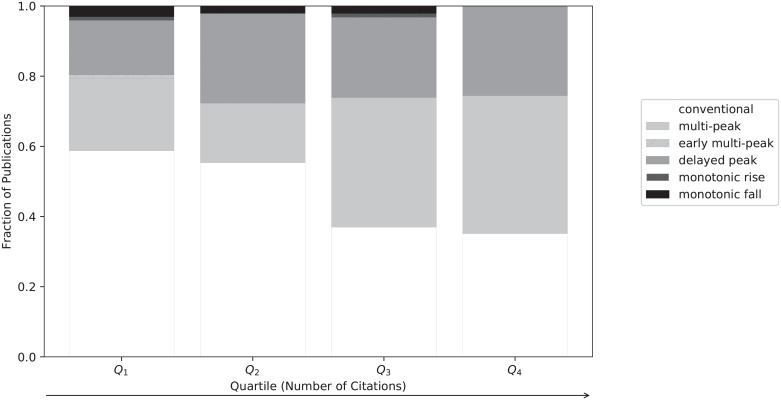
The joint analysis of citation networks, keywords, citation profiles, as well as of specific benchmarks for the identification of highly-cited publications revealed 12 research topics. Their content and evolution could be manually reviewed using a selection of articles consisting of approximately only 5% of the original set of publications. The largest topics addressed the identification of relevant microorganisms, the characterization of their metabolism, including denitrification and the competition between them (Clusters A-D). Emerging and influential topics, as determined by different citation indicators and temporal analysis, were related to volatile fatty acid production, P-recovery from waste activated sludge and aerobic granules for better process efficiency and stability (Clusters F-H).
The framework enabled key contributions in each of the constituent topics to be highlighted in a way that may have otherwise been biased by conventional citation-based ranking. Further, it reduced the need for manual input and a priori expertise compared to a traditional literature review. Hence, in an era of accelerated production of information and publications, this work contributed to the way that we are able to use computer-aided approaches to curate information and manage knowledge.
增强型生物除磷(EBPR)是一种广泛应用于污水处理的技术,用于去除磷(P)并防止富营养化。评估其运行效率和稳定性是一个活跃的研究领域,在过去 40 年中产生了近 3000 篇出版物。由于其规模庞大,包括 119 篇以上的综述文章,因此对于非专家或新手来说,它是一个越来越难以手动识别其关键研究贡献的领域的范例。因此,这项工作包含两个截然不同但互补的目标。首先,首次将一系列文献计量技术集成到一个框架中,以便在准备文献综述时自动选择文章(第 2 节)。其次,将其应用于 EBPR 领域,生成一个 EBPR 研究关键发现的文献计量分析和综述(第 3 节)。
引用网络、关键词、引文概况的联合分析,以及用于识别高被引文献的特定基准的分析,揭示了 12 个研究主题。使用由原始出版物集合的大约 5%的文章组成的精选文章集,可以手动审查它们的内容和演变。处理的最大主题包括识别相关微生物、它们的代谢特征,包括反硝化和它们之间的竞争(A-D 群)。通过不同的引文指标和时间分析确定的新兴和有影响力的主题与挥发性脂肪酸的生产、从废活性污泥中回收 P 以及好氧颗粒用于提高工艺效率和稳定性有关(F-H 群)。
该框架能够突出每个组成主题的关键贡献,而不会受到传统基于引文的排名的偏见。此外,与传统文献综述相比,它减少了对人工输入和先验专业知识的需求。因此,在信息和出版物加速生产的时代,这项工作有助于我们能够使用计算机辅助方法来整理信息和管理知识。