Department of Biological Sciences, Tata Institute of Fundamental Research, Mumbai 400005, India.
Medical Research Centre, Kasturba Health Society, Mumbai 400056, India.
Proc Natl Acad Sci U S A. 2019 May 28;116(22):11028-11037. doi: 10.1073/pnas.1821332116. Epub 2019 May 9.
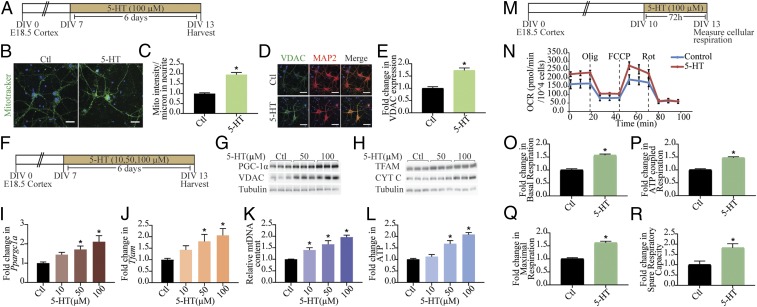
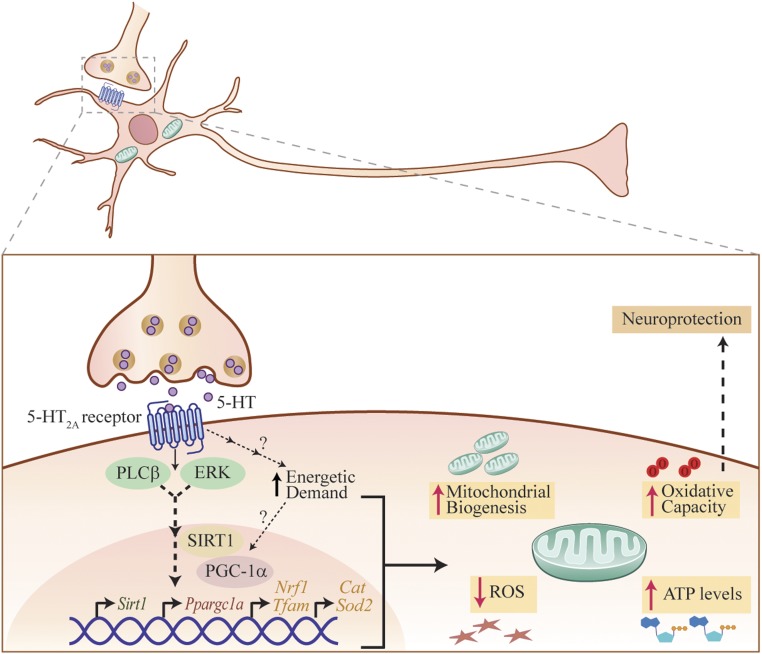
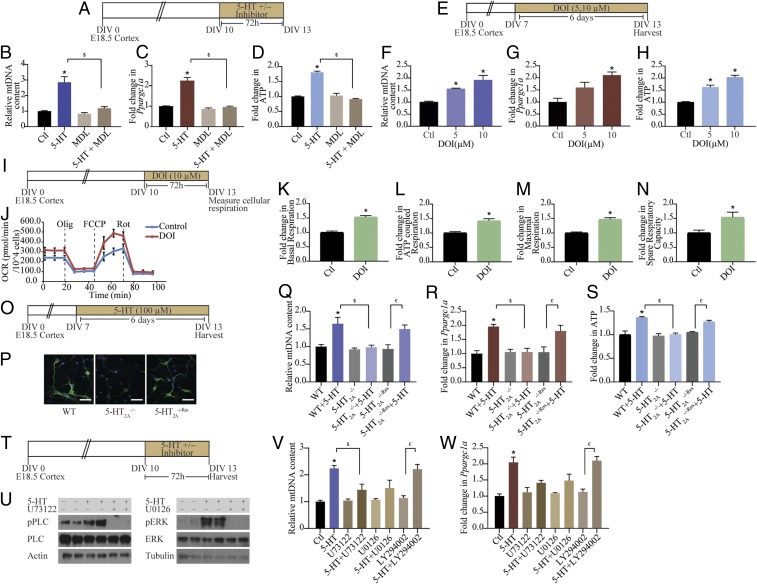
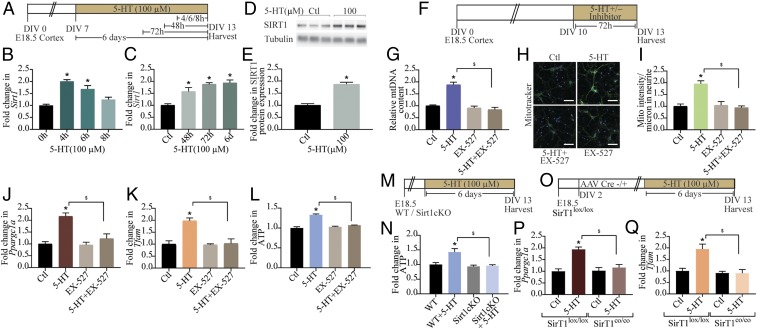
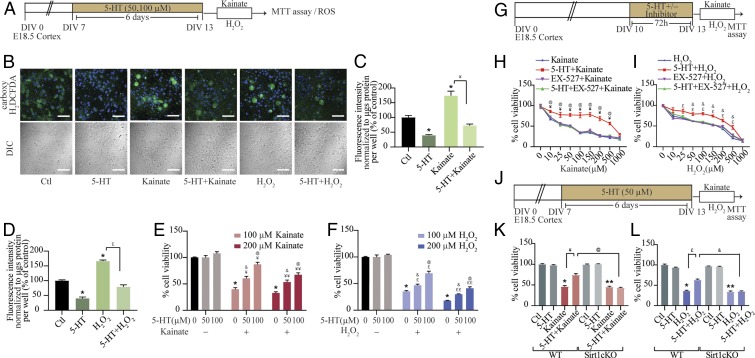
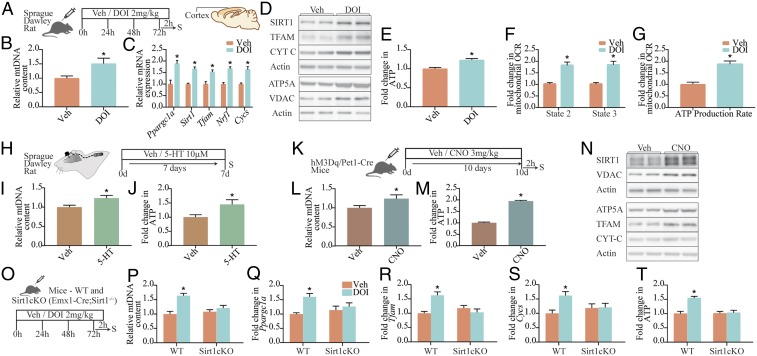
Mitochondria in neurons, in addition to their primary role in bioenergetics, also contribute to specialized functions, including regulation of synaptic transmission, Ca homeostasis, neuronal excitability, and stress adaptation. However, the factors that influence mitochondrial biogenesis and function in neurons remain poorly elucidated. Here, we identify an important role for serotonin (5-HT) as a regulator of mitochondrial biogenesis and function in rodent cortical neurons, via a 5-HT receptor-mediated recruitment of the SIRT1-PGC-1α axis, which is relevant to the neuroprotective action of 5-HT. We found that 5-HT increased mitochondrial biogenesis, reflected through enhanced mtDNA levels, mitotracker staining, and expression of mitochondrial components. This resulted in higher mitochondrial respiratory capacity, oxidative phosphorylation (OXPHOS) efficiency, and a consequential increase in cellular ATP levels. Mechanistically, the effects of 5-HT were mediated via the 5-HT receptor and master modulators of mitochondrial biogenesis, SIRT1 and PGC-1α. SIRT1 was required to mediate the effects of 5-HT on mitochondrial biogenesis and function in cortical neurons. In vivo studies revealed that 5-HT receptor stimulation increased cortical mtDNA and ATP levels in a SIRT1-dependent manner. Direct infusion of 5-HT into the neocortex and chemogenetic activation of 5-HT neurons also resulted in enhanced mitochondrial biogenesis and function in vivo. In cortical neurons, 5-HT enhanced expression of antioxidant enzymes, decreased cellular reactive oxygen species, and exhibited neuroprotection against excitotoxic and oxidative stress, an effect that required SIRT1. These findings identify 5-HT as an upstream regulator of mitochondrial biogenesis and function in cortical neurons and implicate the mitochondrial effects of 5-HT in its neuroprotective action.
神经元中的线粒体除了在生物能量学中发挥主要作用外,还参与了特定功能,包括调节突触传递、Ca2+ 稳态、神经元兴奋性和应激适应。然而,影响神经元中线粒体生物发生和功能的因素仍未得到充分阐明。在这里,我们发现 5-羟色胺(5-HT)作为一种调节物,通过 5-HT 受体介导的 SIRT1-PGC-1α 轴的募集,对啮齿动物皮质神经元中线粒体生物发生和功能发挥重要作用,而 SIRT1-PGC-1α 轴与 5-HT 的神经保护作用有关。我们发现 5-HT 增加了线粒体生物发生,表现为 mtDNA 水平、线粒体追踪染色和线粒体成分的表达增强。这导致了更高的线粒体呼吸能力、氧化磷酸化(OXPHOS)效率,以及细胞内 ATP 水平的相应增加。从机制上讲,5-HT 的作用是通过 5-HT 受体和线粒体生物发生的主要调节物 SIRT1 和 PGC-1α 介导的。SIRT1 是介导 5-HT 对皮质神经元中线粒体生物发生和功能影响所必需的。体内研究表明,5-HT 受体刺激以 SIRT1 依赖的方式增加皮质 mtDNA 和 ATP 水平。5-HT 直接注入新皮层和化学遗传激活 5-HT 神经元也导致体内线粒体生物发生和功能增强。在皮质神经元中,5-HT 增强抗氧化酶的表达,减少细胞内活性氧,并表现出对兴奋毒性和氧化应激的神经保护作用,这种作用需要 SIRT1。这些发现确定了 5-HT 作为皮质神经元中线粒体生物发生和功能的上游调节剂,并暗示了 5-HT 对线粒体的影响与其神经保护作用有关。