Valencia-González Heriberto Abraham, Ruíz Graciela, Ortiz-Sánchez Elizabeth, García-Carrancá Alejandro
Programa de Maestría y Doctorado en Ciencias Bioquímicas, Facultad de Química, Universidad Nacional Autónoma de México (UNAM), Ciudad de México, Mexico.
Laboratorio de Virus y Cáncer, Unidad de Investigación Biomédica en Cáncer, Instituto de Investigaciones Biomédicas, Universidad Nacional Autónoma de México & Instituto Nacional de Cancerología, Secretaría de Salud, Ciudad de México, Mexico.
Stem Cells Int. 2019 Apr 3;2019:7038953. doi: 10.1155/2019/7038953. eCollection 2019.
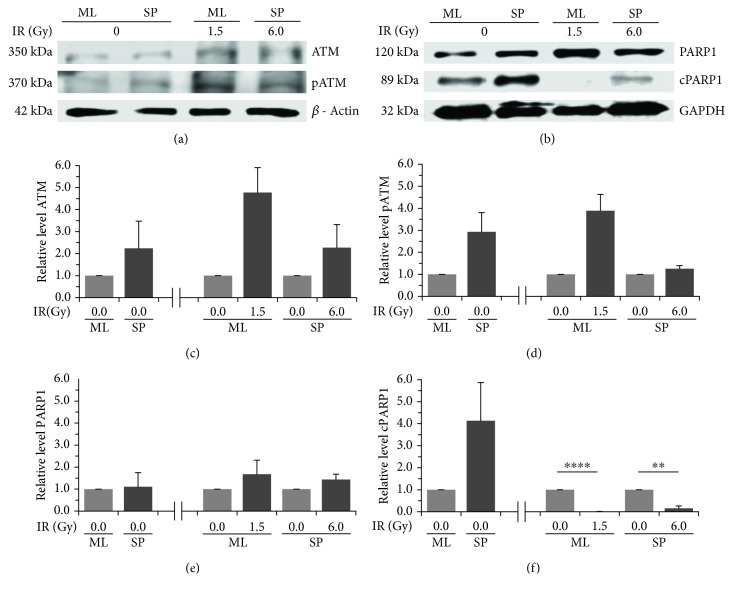
Recently, a subpopulation of tumor cells, called cancer stem cells (CSC), has been characterized, and these have emerged as a major topic in cancer research. CSC are proposed to repair DNA damage more efficiently than the rest of tumor cells, resisting chemotherapy or radiotherapy and causing clinical recurrence and metastasis. We aimed to determine the molecular basis of radioresistance and first compared the response to ionizing radiation (IR) between cancer stem cell-enriched cultures grown as spheres and conventional tumor cell line cultures grown as monolayer, from HeLa and MCF-7 cancer cell lines. To verify that our sphere cultures were enriched in CSC, we evaluated the double staining of CD49f and ALDH activity for HeLa cells by flow cytometry. We then evaluated whether differences could exist in sensor elements in the DNA damage response pathway among these cultures. We found that CSC cultures showed less sensitivity to radiation than conventional tumor cell line cultures. We observed a higher baseline expression of activated response sensor proteins of DNA damage, such as ATM, H2A.X, and PARP1, in untreated CSC cultures. These findings provide the first evidence, to our knowledge, that DNA damage response sensor proteins are present and preferentially activated in CSC, as opposed to the bulk of cells in monolayer cultures. Likewise, they provide the basis for biological differences in response to IR between CSC and other tumor cell populations. Understanding the DNA damage response pathway may provide therapeutic targets to sensitize CSC to cytotoxic therapies to improve current cancer treatments.
最近,一种被称为癌症干细胞(CSC)的肿瘤细胞亚群已得到表征,并且这些细胞已成为癌症研究中的一个主要课题。有人提出,癌症干细胞修复DNA损伤的效率比其他肿瘤细胞更高,能够抵抗化疗或放疗,并导致临床复发和转移。我们旨在确定抗辐射的分子基础,首先比较了HeLa和MCF-7癌细胞系中,以球体形式生长的富含癌症干细胞的培养物与以单层形式生长的传统肿瘤细胞系培养物对电离辐射(IR)的反应。为了验证我们的球体培养物富含癌症干细胞,我们通过流式细胞术评估了HeLa细胞中CD49f和ALDH活性的双重染色。然后,我们评估了这些培养物在DNA损伤反应途径中的传感元件是否可能存在差异。我们发现,癌症干细胞培养物对辐射的敏感性低于传统肿瘤细胞系培养物。我们观察到,在未处理的癌症干细胞培养物中,DNA损伤激活反应传感蛋白如ATM、H2A.X和PARP1的基线表达较高。据我们所知,这些发现首次证明,与单层培养中的大多数细胞不同,DNA损伤反应传感蛋白在癌症干细胞中存在并优先被激活。同样,它们也为癌症干细胞与其他肿瘤细胞群体对电离辐射反应的生物学差异提供了基础。了解DNA损伤反应途径可能会提供治疗靶点,使癌症干细胞对细胞毒性疗法敏感,从而改善当前的癌症治疗方法。