Zhang Yaqi, Hu Su, Shangguan Junjie, Pan Liang, Zhou Xin, Yaghmai Vahid, Velichko Yuri, Hu Chunhong, Yang Jia, Zhang Zhuoli
Department of Radiology, Feinberg School of Medicine, Northwestern University, Chicago, IL, USA.
Department of Radiology, The First Affiliated Hospital of Soochow University, Suzhou, Jiangsu, China.
Intern Med Open Access. 2019;9(1). doi: 10.4172/2165-8048.1000301. Epub 2019 Feb 8.
As the major thermogenic tissue in body, the brown adipose tissue (BAT) was recently identified as an important factor to induce the rapid weight loss and malnutrition in malignancy. Current methods for detecting and quantifying brown adipose tissue (BAT) are in limited use. The aim of this study was to evaluate the changes of BAT tissue and its function in the development of pancreatic ductal adenocarcinoma (PDAC) by using magnetic resonance imaging (MRI).
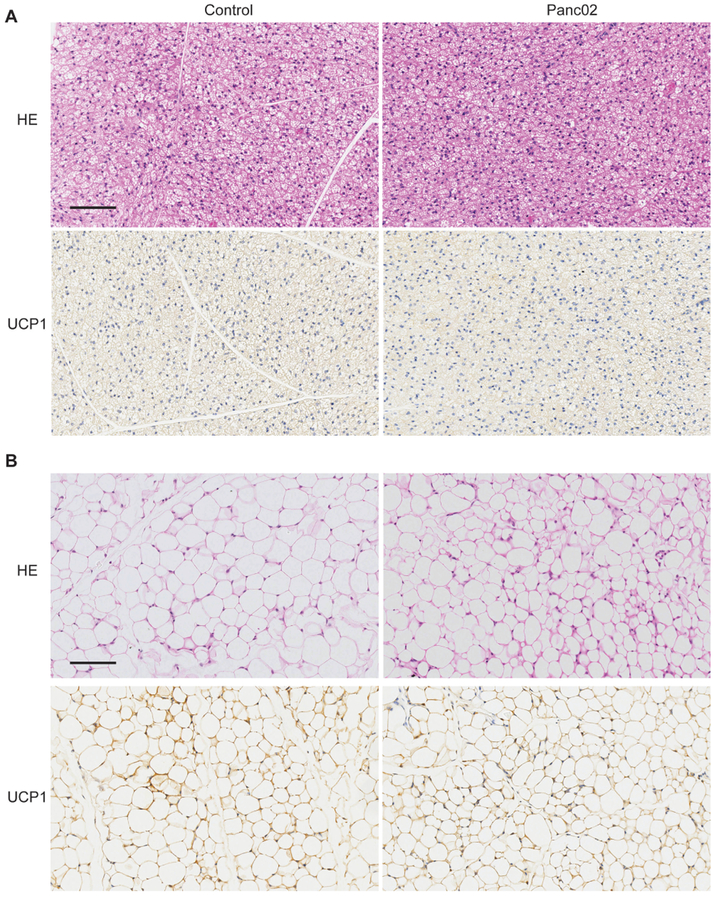
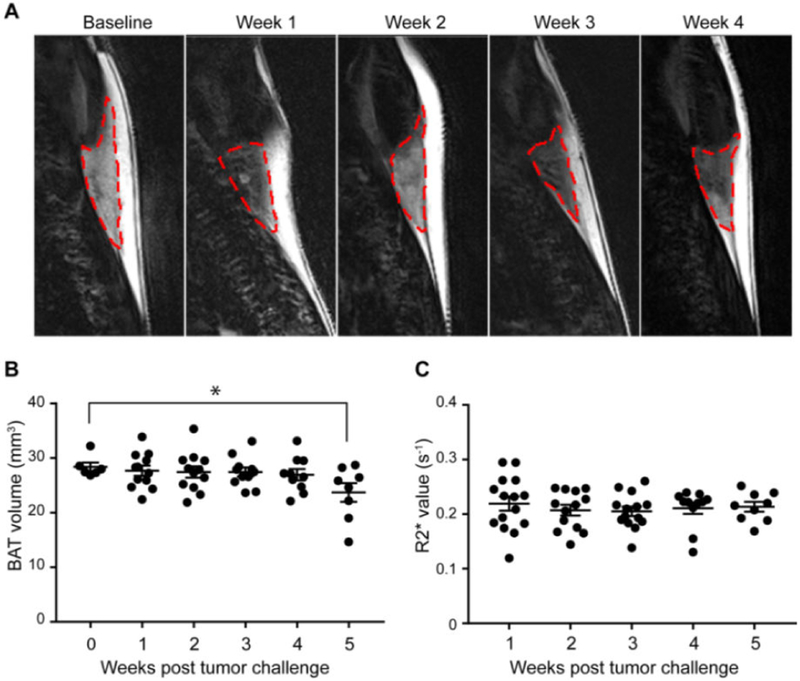
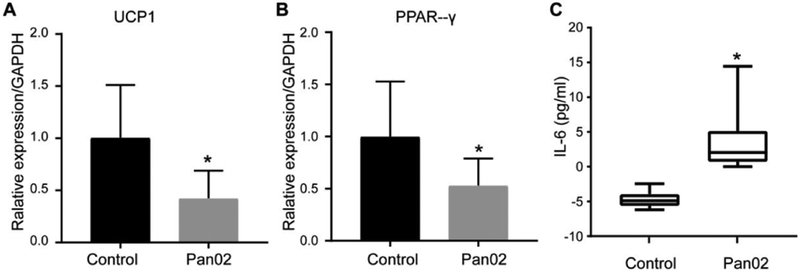
Ten-week-old female C57BL/6 mice were inoculated orthotopically with Pan02 tumor cells. R2* maps and two-point Dixon MRI were performed weekly for evaluation of BAT function and volume, respectively. The T2-weighted MRI was applied weekly for monitoring tumor growth. Meanwhile, the body weight was measured daily as another indication of malnutrition. The UCP1 levels in BAT and white adipose tissue (WAT) were assessed. The serum IL-6 was also measured as the biomarker of cancer-associated cachexia.
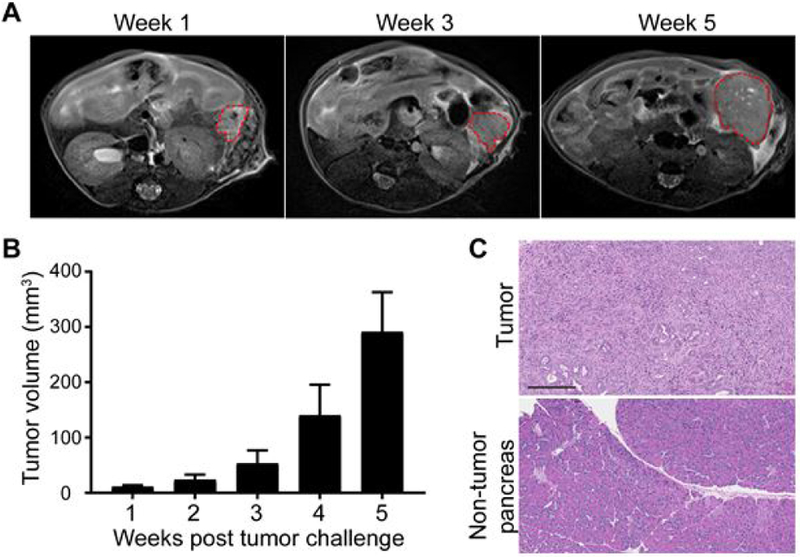
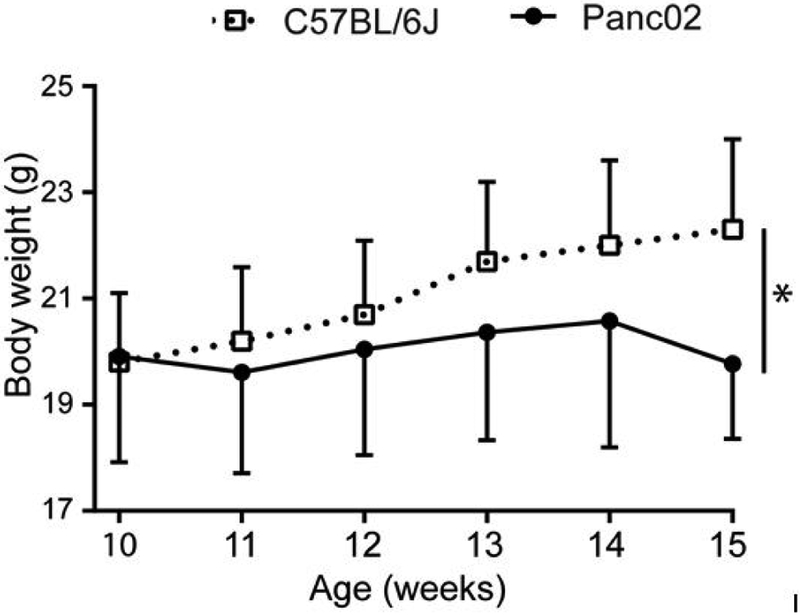
T2-weighted MRI indicated the rapid tumor growth from week 3 to week 5 after tumor cell inoculation. The water-fat separated MRI could clearly identify and quantify the BAT. The function and volume of BAT could be monitored by weekly MRI measurement in tumor-bearing mice. The total body weights of PDAC tumor-bearing mice were relatively stable, however, was significantly lower than that of control C57BL/6 mice.
The results of this study demonstrated the feasibility of detection and quantification of BAT by MRI during the development of pancreatic cancer.
棕色脂肪组织(BAT)作为机体主要的产热组织,最近被确定为恶性肿瘤中导致快速体重减轻和营养不良的一个重要因素。目前检测和定量棕色脂肪组织(BAT)的方法应用有限。本研究的目的是利用磁共振成像(MRI)评估胰腺导管腺癌(PDAC)发生发展过程中BAT组织及其功能的变化。
将Pan02肿瘤细胞原位接种于10周龄雌性C57BL/6小鼠。每周分别进行R2*图和两点 Dixon MRI检查,以评估BAT功能和体积。每周应用T2加权MRI监测肿瘤生长。同时,每天测量体重作为营养不良的另一指标。评估BAT和白色脂肪组织(WAT)中解偶联蛋白1(UCP1)的水平。还检测血清白细胞介素-6(IL-6)作为癌症相关性恶病质的生物标志物。
T2加权MRI显示肿瘤细胞接种后第3周~第5周肿瘤快速生长。水脂分离MRI能够清晰地识别和定量BAT。通过对荷瘤小鼠每周进行MRI测量可监测BAT的功能和体积。PDAC荷瘤小鼠的总体重相对稳定,然而,显著低于对照C57BL/6小鼠。
本研究结果证明了在胰腺癌发生发展过程中利用MRI检测和定量BAT的可行性。