Department of Pharmacy, Universidade Estadual de Maringa, Maringa, Brazil.
Department of Medical and Pharmaceutical Sciences, Universidade Estadual do Oeste do Parana, Cascavel, Brazil.
Curr Neuropharmacol. 2019;17(10):916-925. doi: 10.2174/1570159X17666190409143155.
Advances in basic and molecular biology have promoted the use of cell cultures in a wide range of areas, including the evaluation of drug efficacy, safety and toxicity.
This article aims to provide a general overview of the methodological parameters of cell cultures used to investigate therapeutic options for Attention Deficit Hyperactivity Disorder.
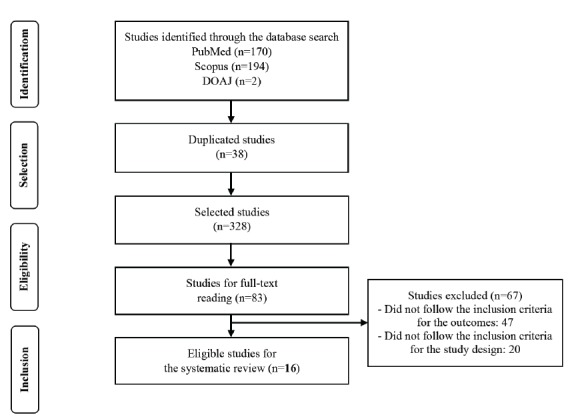
A systematic search was performed in the electronic databases PubMed, Scopus, and DOAJ. In vitro experimental studies using cell cultures were included.
A total of 328 studies were initially identified, with 16 included for qualitative synthesis. Seven studies used neuronal cells (SH-SY5Y neuroblastoma and PC12 cell line) and nine used nonneuronal cells. All the studies described the culture conditions, but most studies were inconsistent with regard to reporting results and raw data. Only one-third of the studies performed cell viability assays, while a further 30% conducted gene expression analysis. Other additional tests included electrophysiological evaluation and transporter activity. More than 50% of the studies evaluated the effects of drugs such as methylphenidate and atomoxetine, while plant extracts were assessed in four studies and polyunsaturated fatty acids in one.
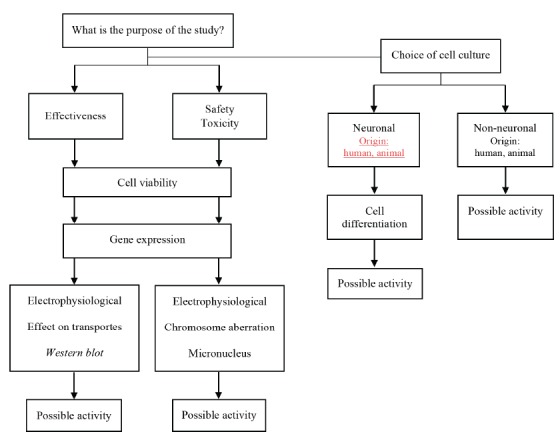
We suggested a flowchart to guide the planning and execution of studies, and a checklist to be completed by authors to allow the standardized reporting of results. This may guide the elaboration of laboratory protocols and further in vitro studies.
基础和分子生物学的进步促进了细胞培养在广泛领域的应用,包括药物疗效、安全性和毒性的评估。
本文旨在提供一个细胞培养方法学参数的概述,用于研究治疗注意缺陷多动障碍的方法。
在电子数据库 PubMed、Scopus 和 DOAJ 中进行了系统检索。纳入了使用细胞培养进行的体外实验研究。
最初确定了 328 项研究,其中 16 项进行了定性综合分析。7 项研究使用神经元细胞(SH-SY5Y 神经母细胞瘤和 PC12 细胞系),9 项研究使用非神经元细胞。所有研究都描述了培养条件,但大多数研究在报告结果和原始数据方面不一致。只有三分之一的研究进行了细胞活力测定,而 30%的研究进行了基因表达分析。其他附加测试包括电生理评估和转运体活性。超过 50%的研究评估了药物的效果,如哌甲酯和托莫西汀,而 4 项研究评估了植物提取物,1 项研究评估了多不饱和脂肪酸。
我们建议了一个流程图来指导研究的规划和执行,并为作者提供了一个检查表,以便标准化报告结果。这可能有助于制定实验室方案和进一步的体外研究。