Department of Molecular Biology and Genetics, Cornell University, Ithaca, NY 14853, USA.
Department of Microbiology and Immunology, Cornell University, Ithaca, NY 14853, USA; Center for Infection and Pathobiology, Cornell University, Ithaca, NY 14853, USA; Cornell Institute of Host-Microbe Interactions and Disease, Cornell University, Ithaca, NY 14853, USA.
Trends Pharmacol Sci. 2019 Jun;40(6):430-445. doi: 10.1016/j.tips.2019.04.006. Epub 2019 May 9.
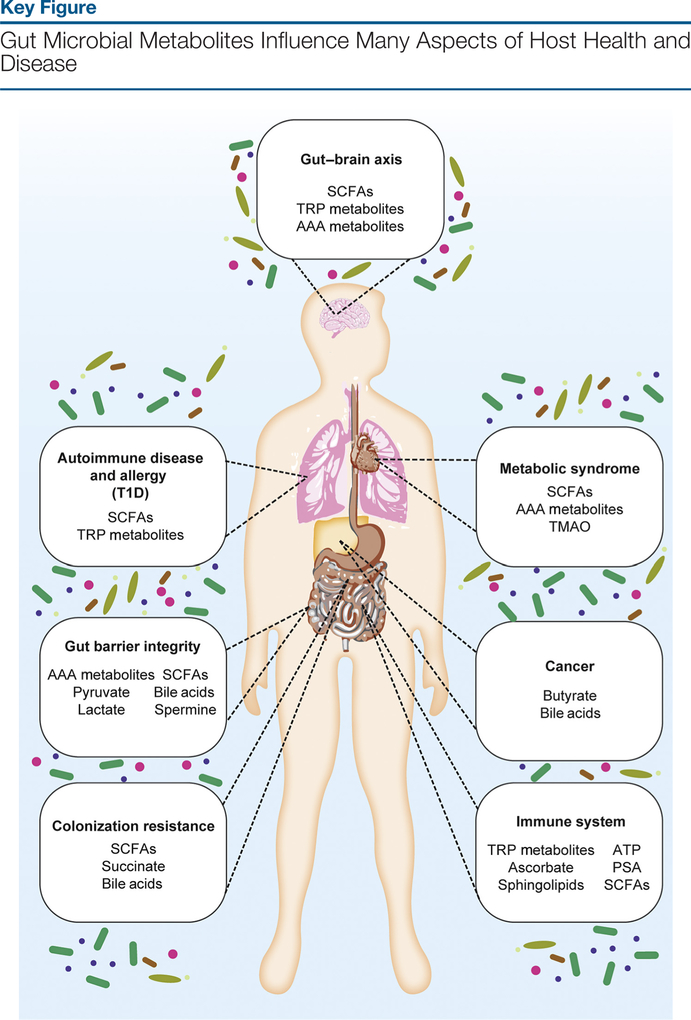
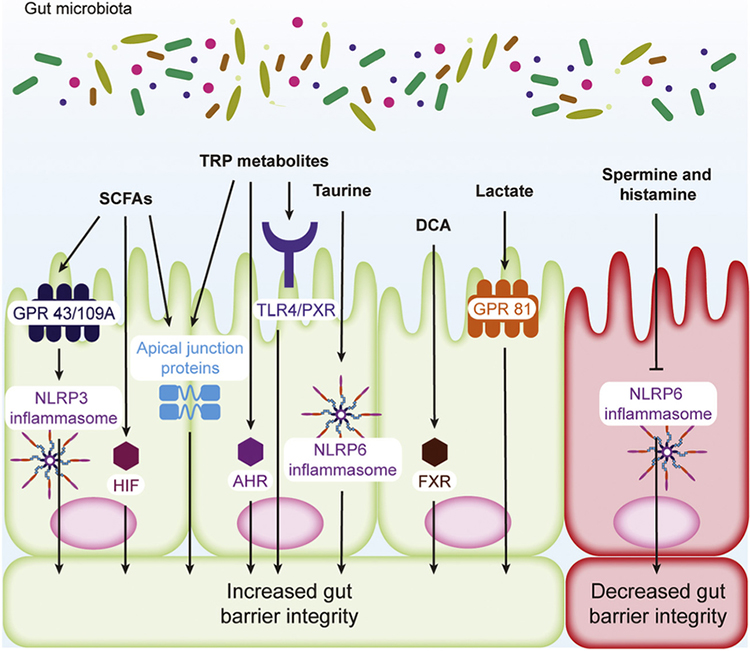
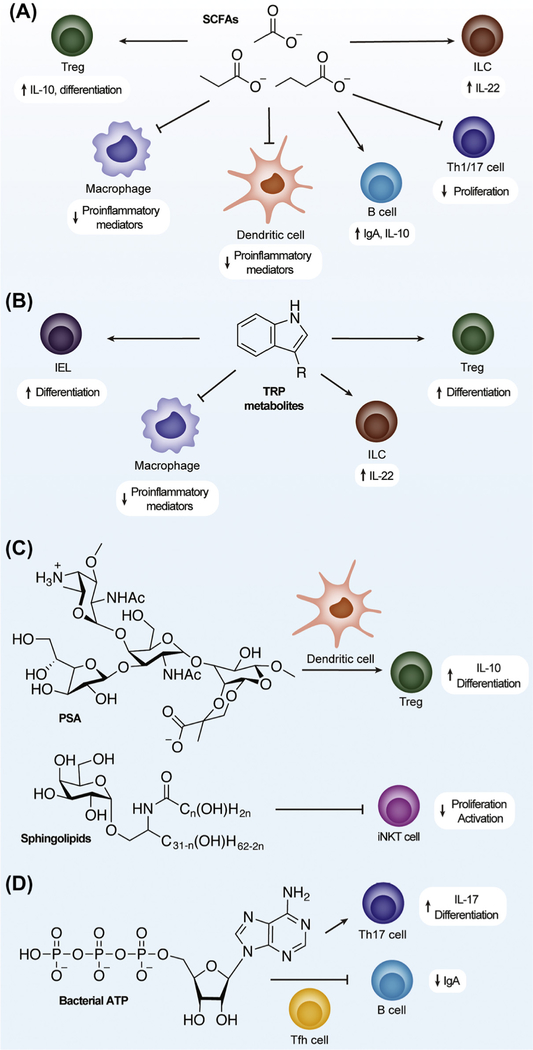
The human intestine harbors an immense, diverse, and critical population of bacteria that has effects on numerous aspects of host physiology, immunity, and disease. Emerging evidence suggests that many of the interactions between the host and the gut microbiota are mediated via the microbial metabolome, or the collection of small-molecule metabolites produced by intestinal bacteria. This review summarizes findings from recent work by focusing on different classes of metabolites produced by the gut microbiota and their effects in modulating host health and disease. These metabolites ultimately serve as a form of communication between the gut microbiome and the host, and a better understanding of this chemical language could potentially lead to novel strategies for treating a wide variety of human disorders.
人类肠道中栖息着庞大、多样且至关重要的细菌群体,这些细菌对宿主生理、免疫和疾病的诸多方面都有影响。新出现的证据表明,宿主与肠道微生物组之间的许多相互作用是通过微生物代谢组来介导的,即肠道细菌产生的小分子代谢物的集合。本综述通过关注肠道微生物组产生的不同类别的代谢物及其对调节宿主健康和疾病的影响,总结了最近的研究结果。这些代谢物最终成为肠道微生物组与宿主之间进行交流的一种形式,对这种化学语言的更好理解可能会为治疗各种人类疾病带来新的策略。