GW Institute for Neuroscience, The George Washington University, Washington, DC 20037, USA; Department of Anatomy and Regenerative Biology, The George Washington University, Washington, DC 20037, USA; GW Institute for Biomedical Sciences, School of Medicine and Health Sciences, The George Washington University, Washington, DC 20037, USA.
GW Institute for Neuroscience, The George Washington University, Washington, DC 20037, USA; Department of Anatomy and Regenerative Biology, The George Washington University, Washington, DC 20037, USA.
Neuron. 2019 Jun 19;102(6):1127-1142.e3. doi: 10.1016/j.neuron.2019.04.013. Epub 2019 May 9.
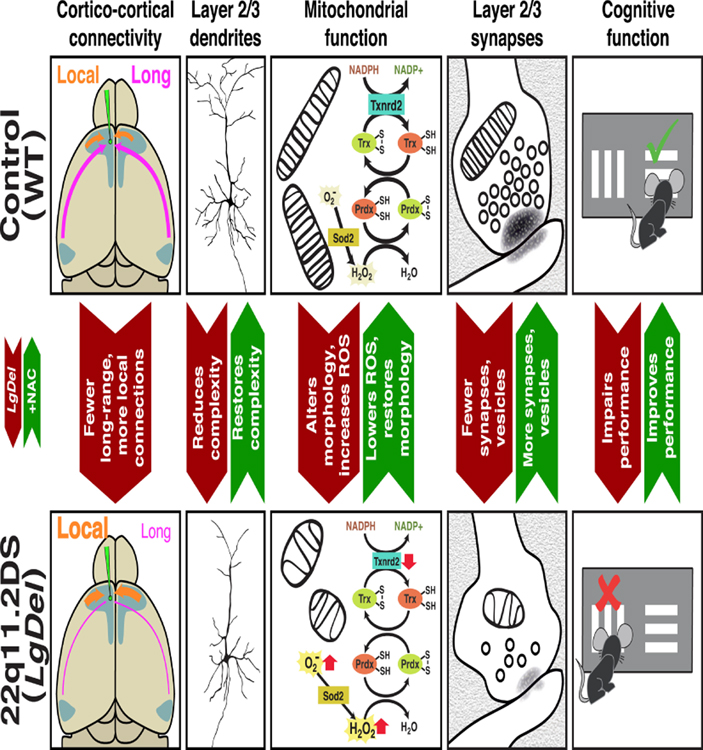
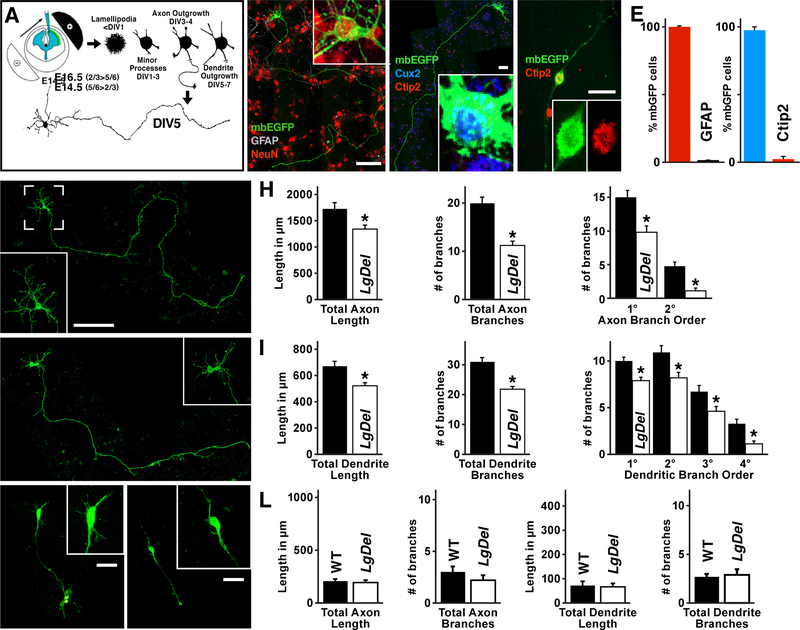
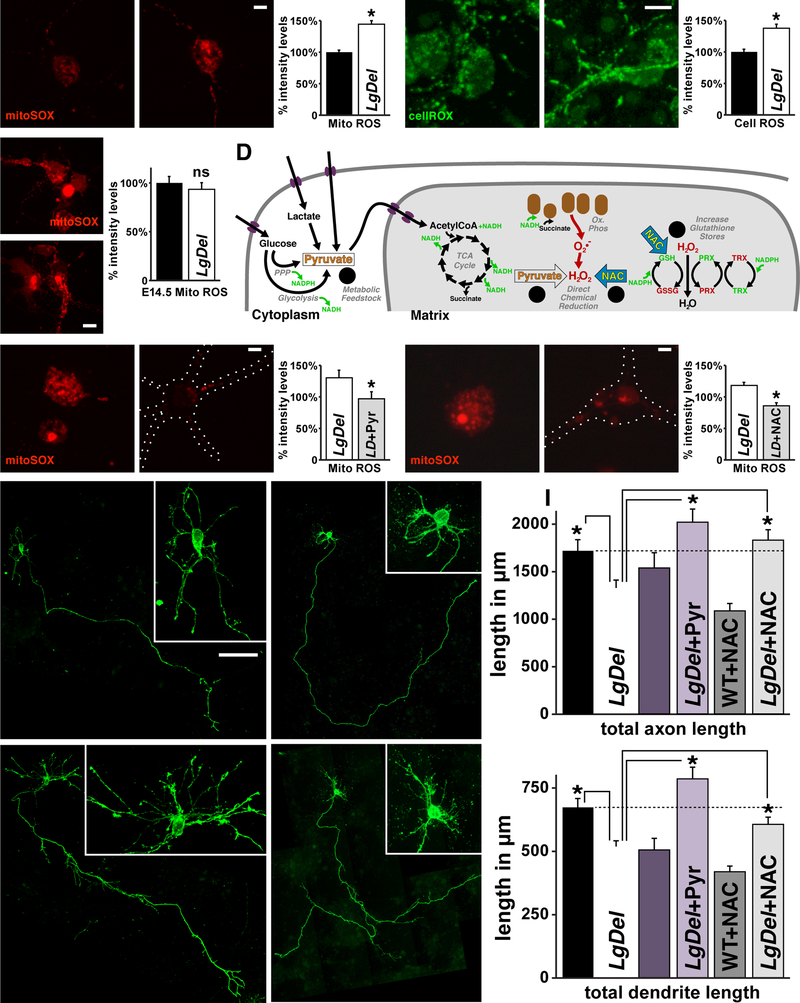
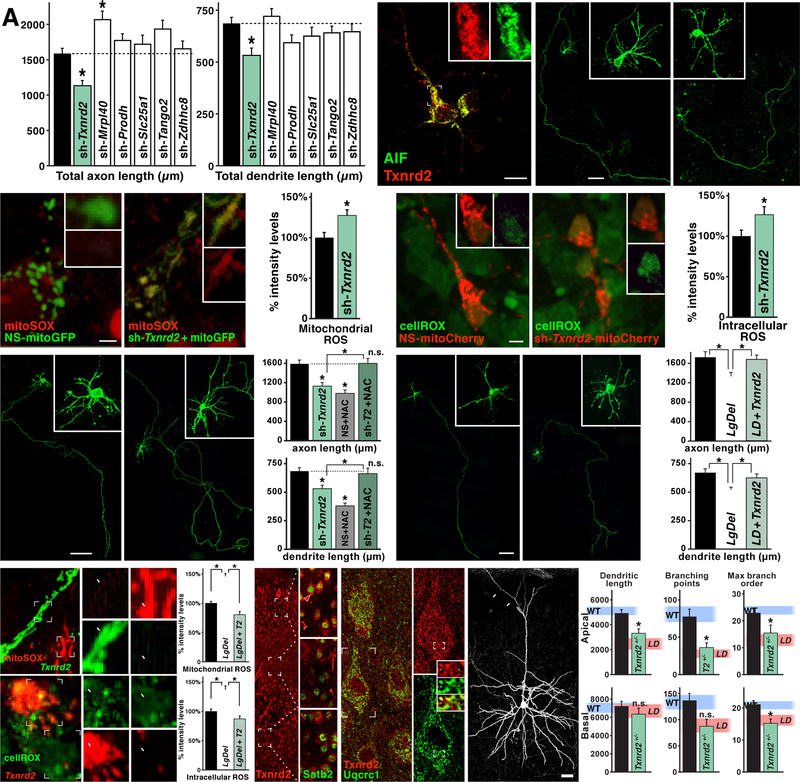
Under-connectivity between cerebral cortical association areas may underlie cognitive deficits in neurodevelopmental disorders, including the 22q11.2 deletion syndrome (22q11DS). Using the LgDel 22q11DS mouse model, we assessed cellular, molecular, and developmental origins of under-connectivity and its consequences for cognitive function. Diminished 22q11 gene dosage reduces long-distance projections, limits axon and dendrite growth, and disrupts mitochondrial and synaptic integrity in layer 2/3 but not 5/6 projection neurons (PNs). Diminished dosage of Txnrd2, a 22q11 gene essential for reactive oxygen species catabolism in brain mitochondria, recapitulates these deficits in WT layer 2/3 PNs; Txnrd2 re-expression in LgDel layer 2/3 PNs rescues them. Anti-oxidants reverse LgDel- or Txnrd2-related layer 2/3 mitochondrial, circuit, and cognitive deficits. Accordingly, Txnrd2-mediated oxidative stress reduces layer 2/3 connectivity and impairs cognition in the context of 22q11 deletion. Anti-oxidant restoration of mitochondrial integrity, cortical connectivity, and cognitive behavior defines oxidative stress as a therapeutic target in neurodevelopmental disorders.
大脑皮质联合区之间的连接不足可能是神经发育障碍(包括 22q11.2 缺失综合征)认知缺陷的基础。我们使用 LgDel 22q11DS 小鼠模型,评估了连接不足的细胞、分子和发育起源及其对认知功能的影响。22q11 基因剂量的减少减少了长程投射,限制了轴突和树突的生长,并破坏了 2/3 层但不破坏 5/6 层投射神经元(PNs)的线粒体和突触完整性。22q11 基因 Txnrd2 的剂量减少,它是大脑线粒体中活性氧代谢所必需的,在 WT 2/3 层 PNs 中重现了这些缺陷;在 LgDel 2/3 PNs 中重新表达 Txnrd2 可挽救这些缺陷。抗氧化剂可逆转 LgDel 或 Txnrd2 相关的 2/3 层线粒体、回路和认知缺陷。因此,22q11 缺失背景下,Txnrd2 介导的氧化应激降低了 2/3 层的连接,并损害了认知。抗氧化剂恢复线粒体完整性、皮质连接和认知行为,将氧化应激定义为神经发育障碍的治疗靶点。