Department for Neuroradiology, University Hospital Leipzig, Leipzig, Germany.
Department of Interventional Neuroradiology, Royal London Hospital, London, UK.
J Neurointerv Surg. 2019 Dec;11(12):1227-1234. doi: 10.1136/neurintsurg-2019-014840. Epub 2019 May 14.
Flow diversion (FD) has emerged as superior minimally invasive therapy for cerebral aneurysms. However, aneurysms of small peripheral vessel segments have not yet been adequately treatable. More specifically, currently established devices necessitate large microcatheters which impede atraumatic maneuvering. The Silk Vista Baby (SVB), a novel flow diverter, offers the as yet unique feature of deliverability via a 0.017 inch microcatheter. This study reports our first experience with the SVB in challenging intracranial vessels employing a vessel-specific tailored microcatheter strategy.
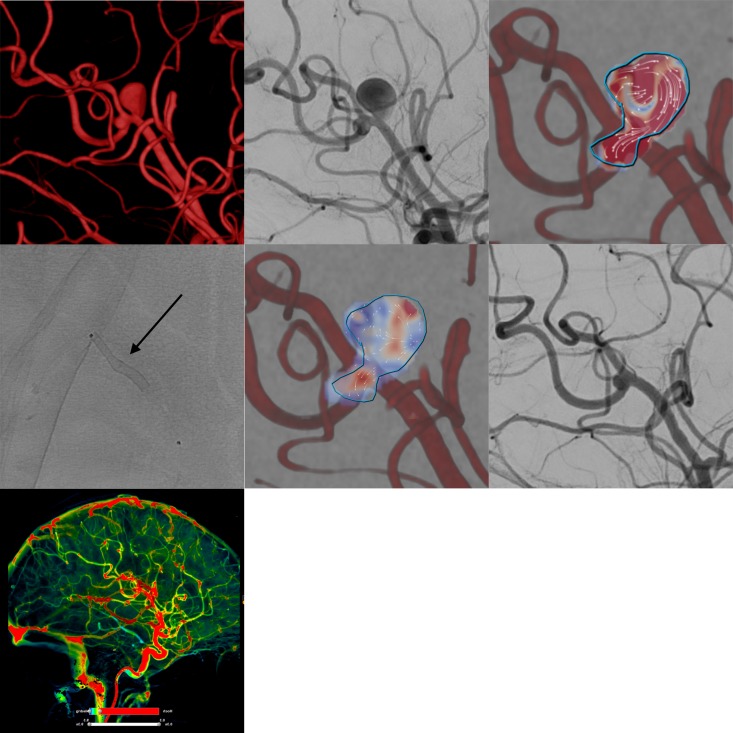
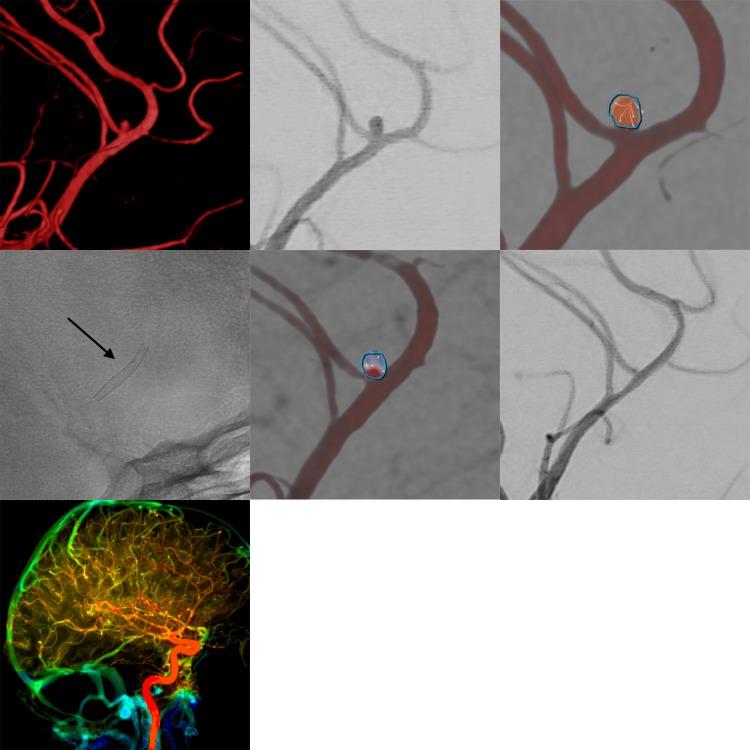
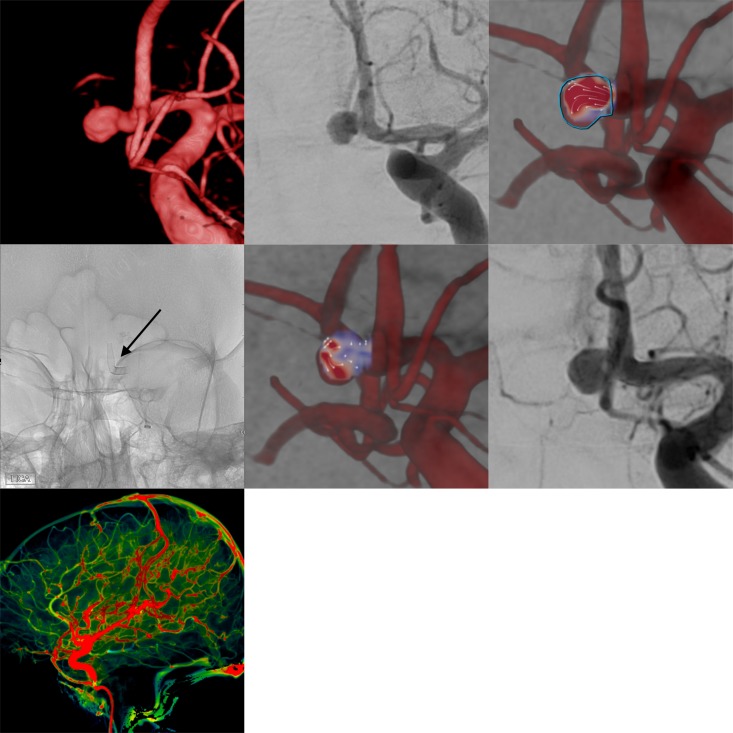
25 patients (27 aneurysms) were prospectively included. A total of 30 SVBs were employed, predominantly targeting demanding aneurysms of the anterior communicating artery complex. The efficacy of the FD was assessed using two-dimensional vector-based perfusion and conventional digital subtraction angiography (DSA) after implantation and at the first follow-up at 3 months. The first follow-up was available in 22 patients.
All devices were implanted without technical or clinical complications. Eleven treatments were performed using the recommended Headway 17. In 14 interventions the even more maneuverable Excelsior SL10 was used, which was previously tried and tested for safety 'in vitro' as an alternative delivery system. Aneurysmal influx was strongly reduced after implantation. All parent vessels remained patent. 17/27 aneurysms were completely occluded at first follow-up (∼2.7 months), 6/27 aneurysms showed decreased influx or delayed washout and one remained unchanged. In three cases follow-up DSAs are remaining.
SVB provides enhanced controllability in vulnerable segments beyond the circle of Willis. Smaller variants (2.25 mm and 2.75 mm) can safely be implanted via the superiorly navigable Excelsior SL10. Hence, the SVB represents the next evolutionary step in minimally invasive treatment of cerebral aneurysms.
血流导向装置(FD)已成为治疗颅内动脉瘤的一种卓越的微创治疗方法。然而,小的周围血管段的动脉瘤仍然无法得到充分治疗。更具体地说,目前使用的装置需要大的微导管,这会阻碍微创操作。新型血流导向装置 Silk Vista Baby(SVB)具有通过 0.017 英寸微导管输送的独特特性。本研究报告了我们在使用特定血管的微导管策略治疗具有挑战性的颅内血管中的首次 SVB 经验。
前瞻性纳入 25 例患者(27 个动脉瘤)。共使用了 30 个 SVB,主要针对前交通动脉复合体的挑战性动脉瘤。在植入后和 3 个月的首次随访时,使用二维基于向量的灌注和传统数字减影血管造影(DSA)评估 FD 的效果。22 例患者可进行首次随访。
所有装置均无技术或临床并发症植入。11 例治疗采用推荐的 Headway 17 进行。在 14 次干预中,使用了更易于操作的 Excelsior SL10,该微导管之前已在体外进行了安全性测试,并作为替代输送系统进行了测试。植入后,动脉瘤的流入明显减少。所有母血管均保持通畅。17/27 个动脉瘤在首次随访时完全闭塞(约 2.7 个月),6/27 个动脉瘤的流入减少或延迟排空,1 个动脉瘤无变化。在三种情况下,仍有随访 DSA。
SVB 在 Willis 环以外的脆弱部位提供了增强的可控性。较小的变体(2.25mm 和 2.75mm)可以通过更易导航的 Excelsior SL10 安全植入。因此,SVB 代表了治疗颅内动脉瘤的微创治疗的下一个进化步骤。