Department of Neurobiology and Behavior, University of California, Irvine, CA 92697.
Department of Biological Chemistry, University of California, Irvine, CA 92697.
Proc Natl Acad Sci U S A. 2019 May 28;116(22):10952-10961. doi: 10.1073/pnas.1814246116. Epub 2019 May 14.
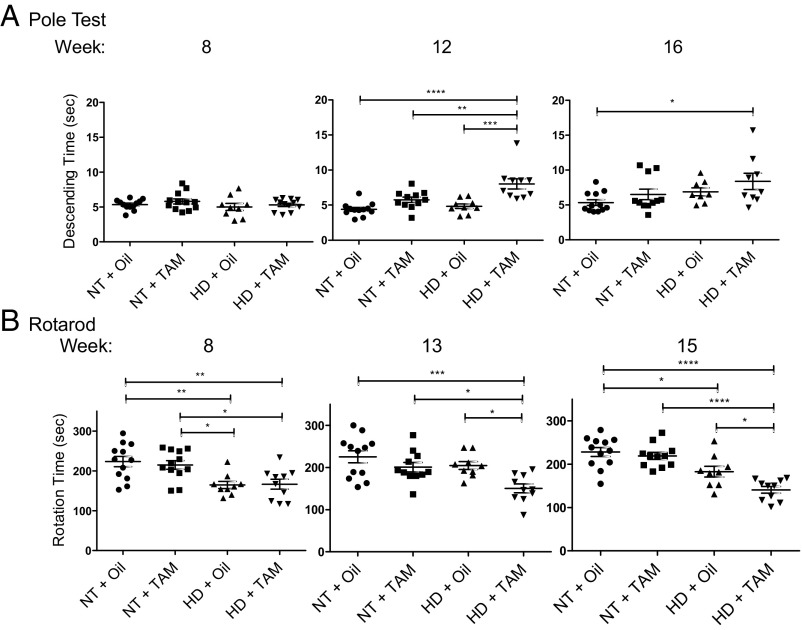
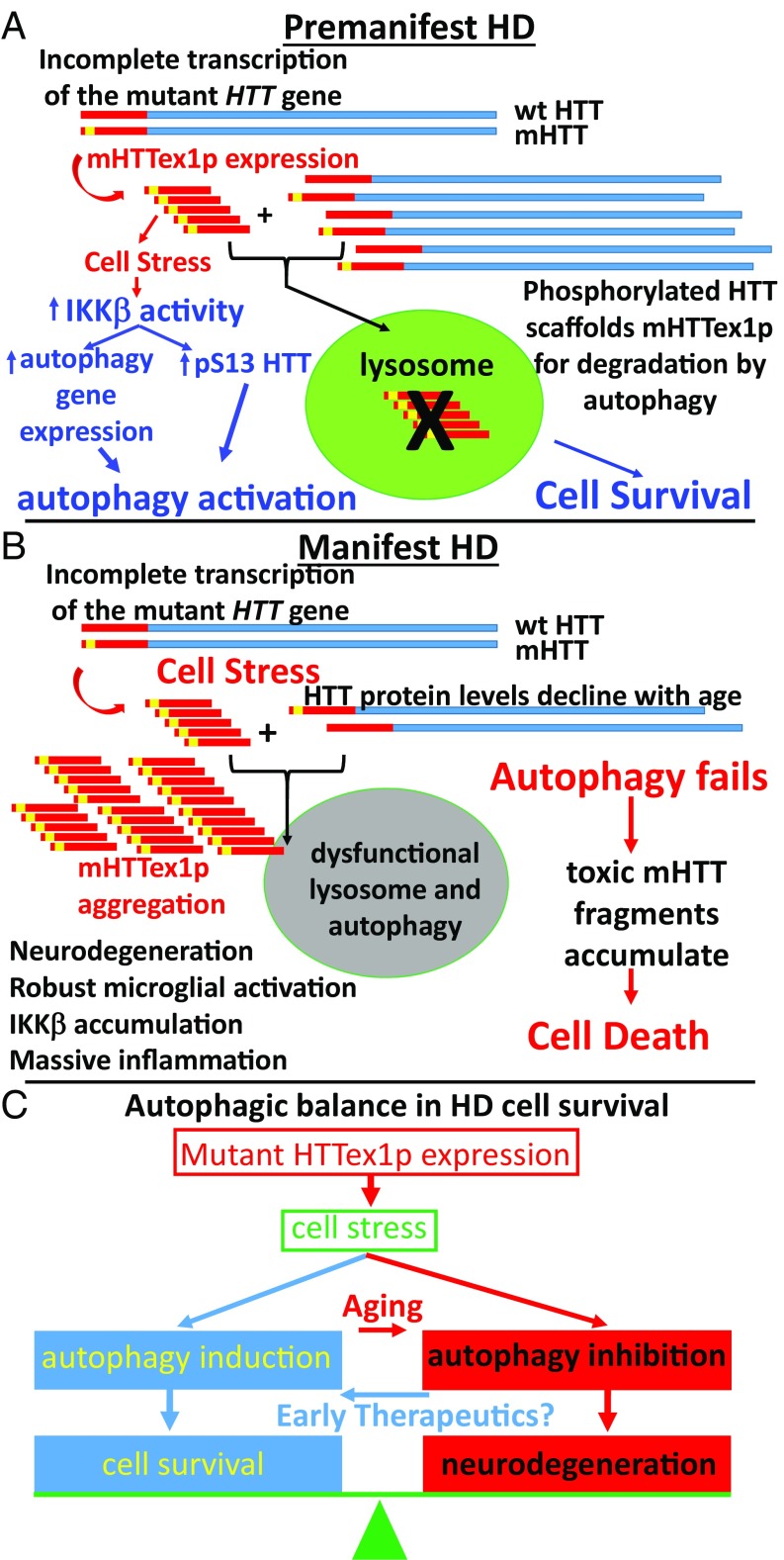
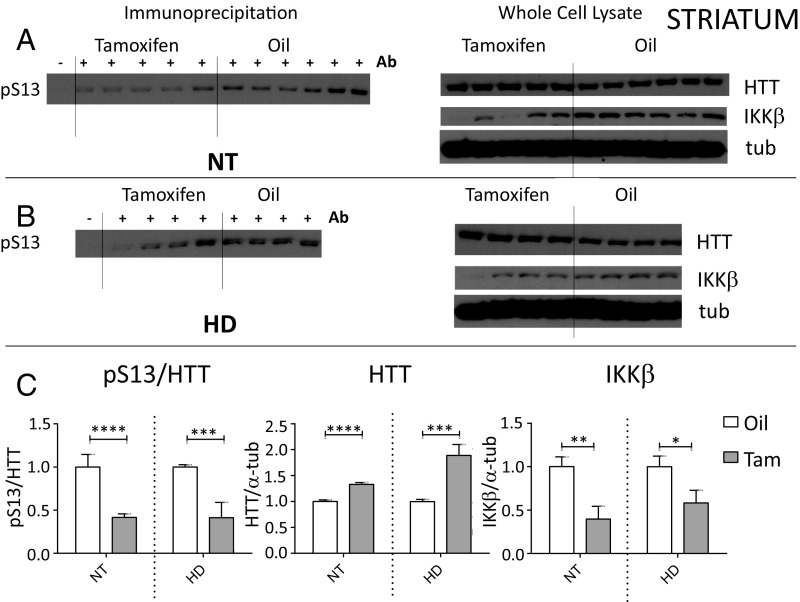
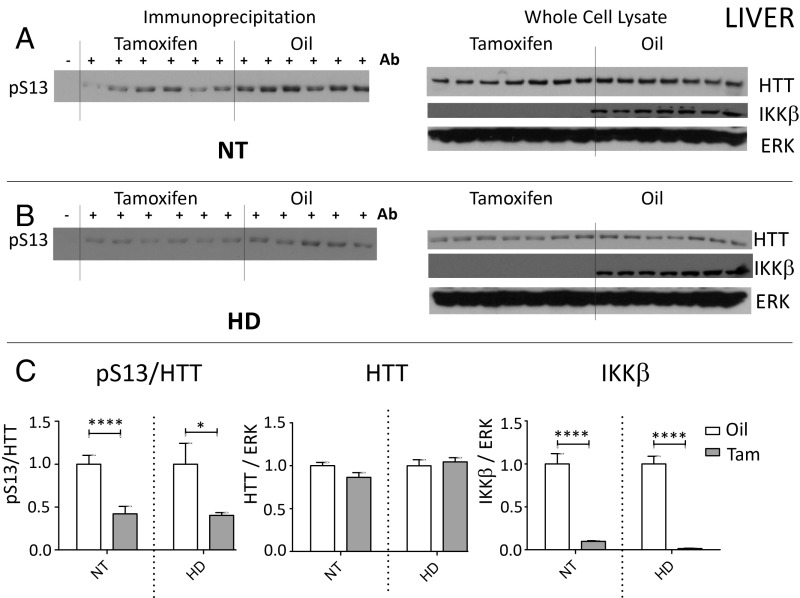
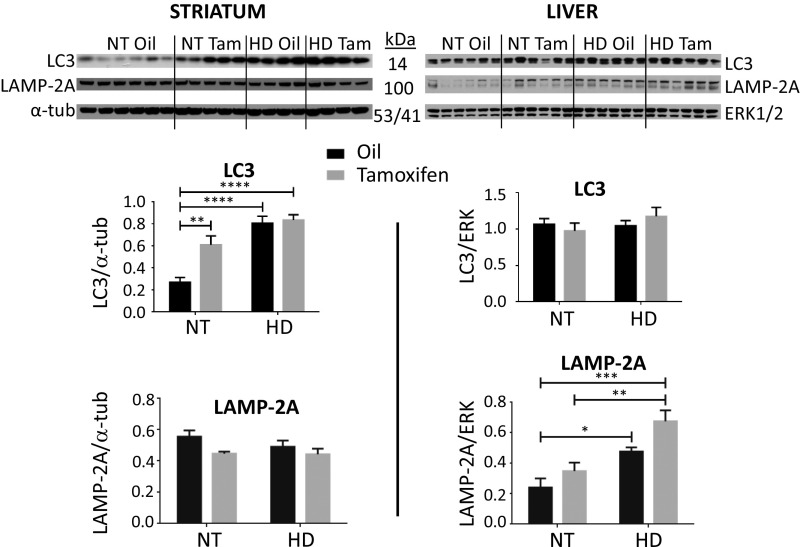
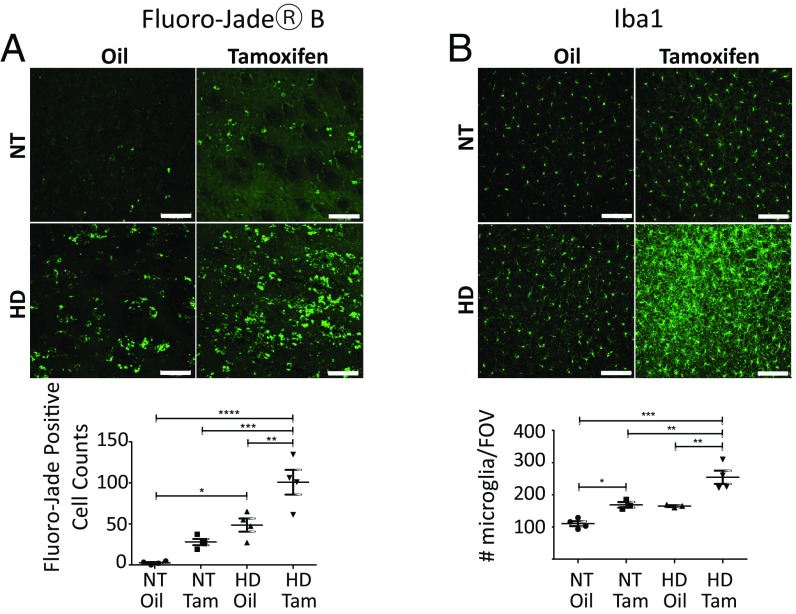
Neuroinflammation is an important contributor to neuronal pathology and death in neurodegenerative diseases and neuronal injury. Therapeutic interventions blocking the activity of the inflammatory kinase IKKβ, a key regulator of neuroinflammatory pathways, is protective in several animal models of neurodegenerative disease and neuronal injury. In Huntington's disease (HD), however, significant questions exist as to the impact of blocking or diminishing the activity of IKKβ on HD pathology given its potential role in Huntingtin (HTT) degradation. In cell culture, IKKβ phosphorylates HTT serine (S) 13 and activates HTT degradation, a process that becomes impaired with polyQ expansion. To investigate the in vivo relationship of IKKβ to HTT S13 phosphorylation and HD progression, we crossed conditional tamoxifen-inducible IKKβ knockout mice with R6/1 HD mice. Behavioral assays in these mice showed a significant worsening of HD pathological phenotypes. The increased behavioral pathology correlated with reduced levels of endogenous mouse full-length phospho-S13 HTT, supporting the importance of IKKβ in the phosphorylation of HTT S13 in vivo. Notably, many striatal autophagy genes were up-regulated in HD vs. control mice; however, IKKβ knockout partially reduced this up-regulation in HD, increased striatal neurodegeneration, and enhanced an activated microglial response. We propose that IKKβ is protective in striatal neurons early in HD progression via phosphorylation of HTT S13. As IKKβ is also required for up-regulation of some autophagy genes and HTT is a scaffold for selective autophagy, IKKβ may influence autophagy through multiple mechanisms to maintain healthy striatal function, thereby reducing neuronal degeneration to slow HD onset.
神经炎症是神经退行性疾病和神经元损伤中神经元病理和死亡的重要因素。在几种神经退行性疾病和神经元损伤的动物模型中,抑制炎症激酶 IKKβ 的活性的治疗干预是具有保护作用的,IKKβ 是神经炎症途径的关键调节因子。然而,在亨廷顿病(HD)中,鉴于 IKKβ 在亨廷顿蛋白(HTT)降解中的潜在作用,阻断或减少 IKKβ 的活性对 HD 病理的影响存在重大问题。在细胞培养中,IKKβ 磷酸化 HTT 丝氨酸(S)13 并激活 HTT 降解,该过程在多聚 Q 扩展时受损。为了研究 IKKβ 与 HTT S13 磷酸化和 HD 进展的体内关系,我们将条件性他莫昔芬诱导的 IKKβ 敲除小鼠与 R6/1 HD 小鼠杂交。这些小鼠的行为测定显示 HD 病理表型明显恶化。增加的行为病理学与内源性小鼠全长磷酸化 S13 HTT 水平降低相关,支持 IKKβ 在体内 HTT S13 磷酸化中的重要性。值得注意的是,与对照小鼠相比,许多纹状体自噬基因在 HD 中上调;然而,IKKβ 敲除部分减少了 HD 中的这种上调,增加了纹状体神经退行性变,并增强了激活的小胶质细胞反应。我们提出,IKKβ 通过磷酸化 HTT S13 在 HD 进展早期对纹状体神经元具有保护作用。由于 IKKβ 也是上调一些自噬基因所必需的,并且 HTT 是选择性自噬的支架,因此 IKKβ 可能通过多种机制影响自噬以维持健康的纹状体功能,从而减少神经元变性以减缓 HD 的发生。