College of Chinese Medicinal Materials, Jilin Agricultural University, Changchun, China.
National & Local Joint Engineering Research Center for Ginseng Breeding and Development, Changchun, China.
Cell Prolif. 2019 Jul;52(4):e12627. doi: 10.1111/cpr.12627. Epub 2019 May 16.
Based on previous reports that ginsenosides have been shown to exert better preventive effects on cisplatin-induced kidney injury, the present work aims to evaluate the protective effects of ginsenoside Rb3 (G-Rb3) on cisplatin-induced renal damage and underlying mechanisms in vivo and in vitro.
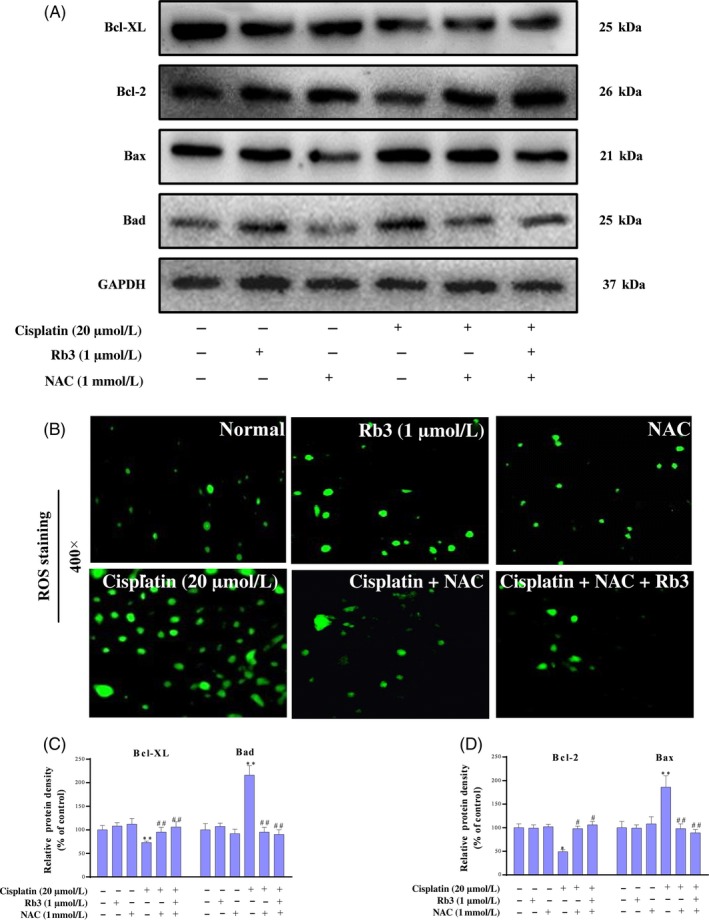
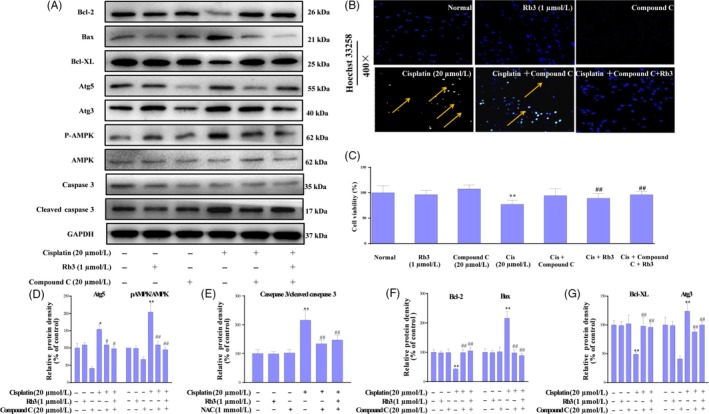
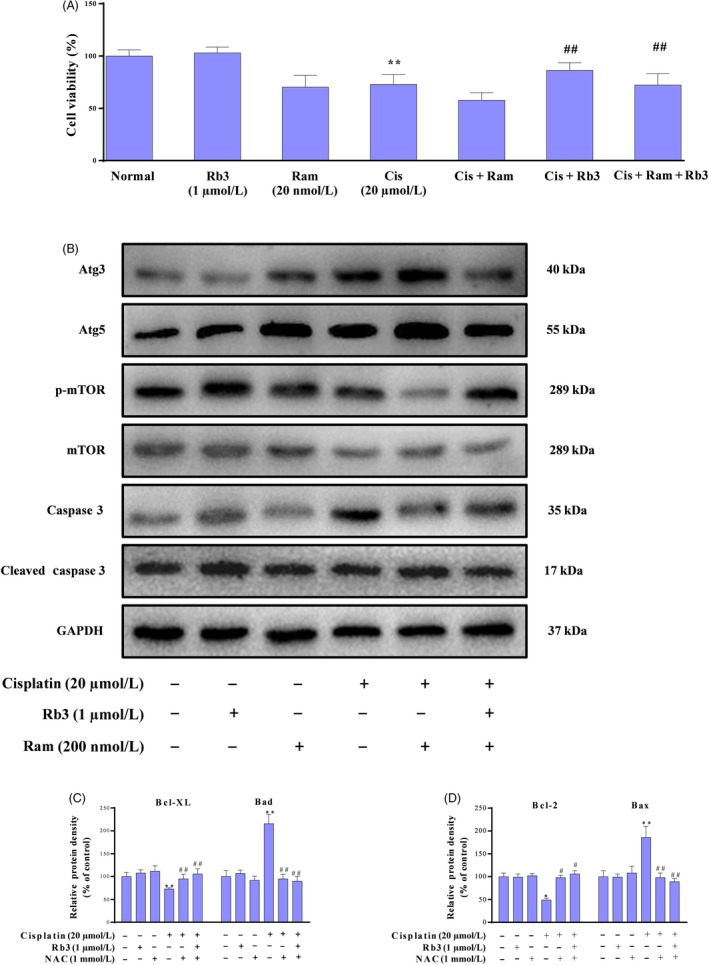
The protective effect of G-Rb3 on cisplatin-induced acute renal failure in ICR mouse model and HEK293 cell model was investigated, and the underlying possible mechanisms were also explored. For animal experiment, renal function, kidney histology, inflammation, oxidative stress, relative protein molecules involved in apoptosis and autophagy signalling pathways were assessed. In addition, rapamycin (a specific inhibitor of mTOR), compound C (a specific inhibitor of AMPK) and acetylcysteine (NAC, a specific ROS scavenger) were employed to testify the effects of AMPK/mTOR signal pathway on the protective effects of G-Rb3 in HEK293 cells.
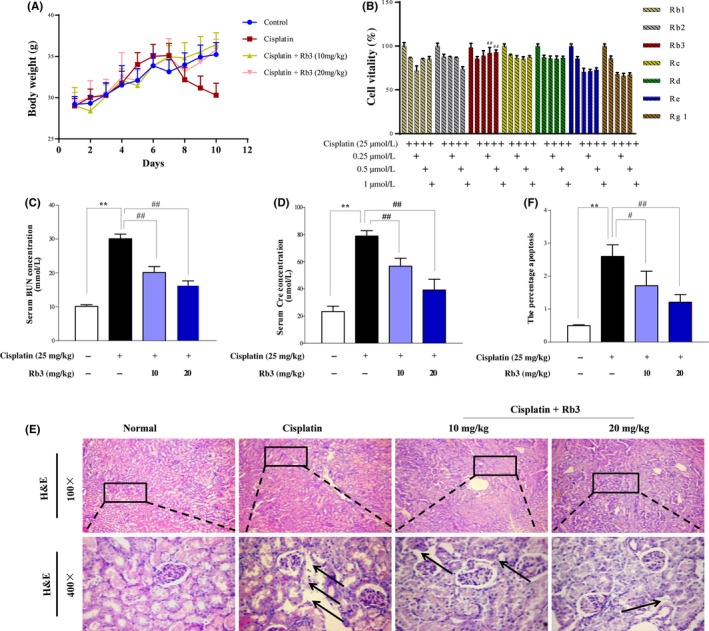
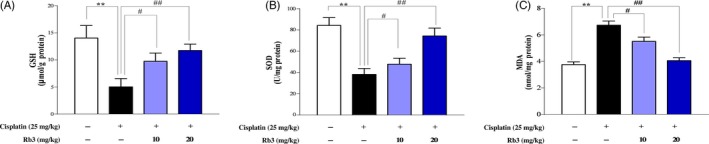
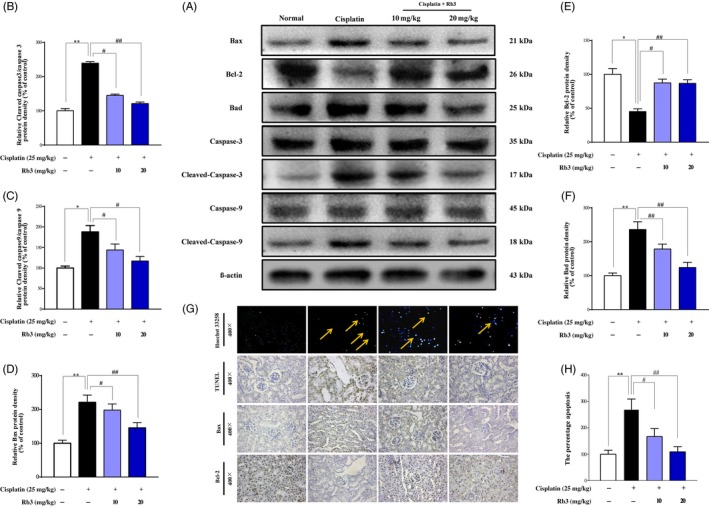
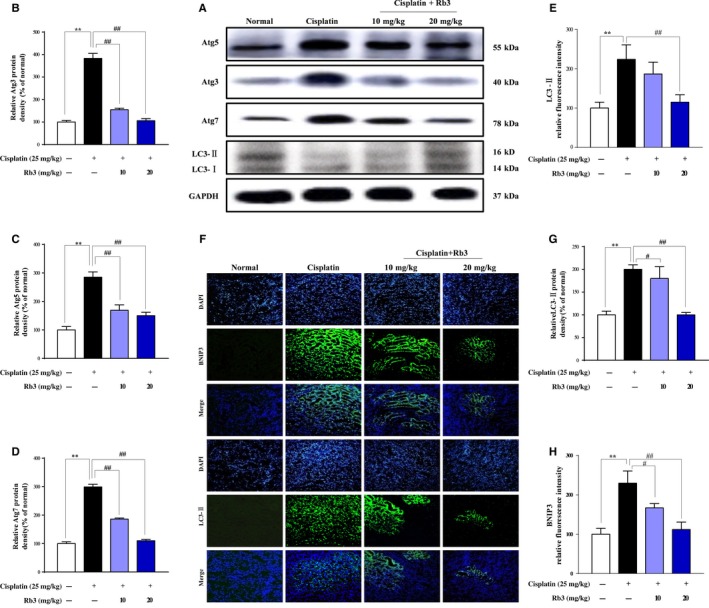
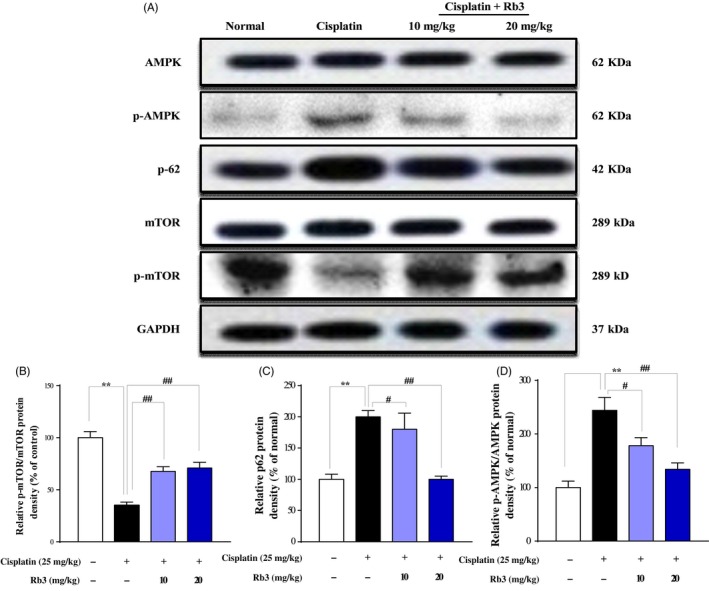
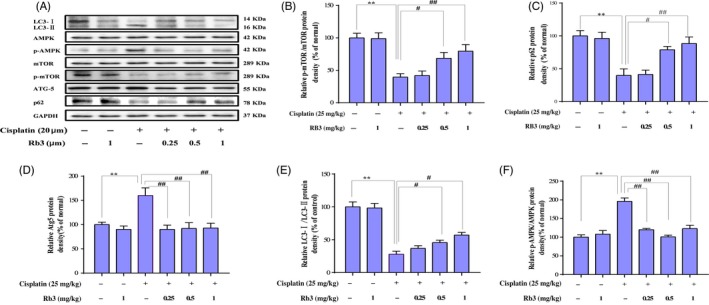
Pre-treatment with G-Rb3 at doses of 10 and 20 mg/kg for ten days significantly reversed the increases in serum creatinine (CRE), blood urea nitrogen (BUN) and malondialdehyde (MDA), and decrease in glutathione (GSH) content and superoxide dismutase (SOD) activity. Histopathological examination further revealed that G-Rb3 inhibited cisplatin-induced nephrotoxicity. G-Rb3 diminished cisplatin-induced increase in protein expression levels of p62, Atg3, Atg5 and Atg7, and decrease in protein expression level of p-mTOR and the ratio of LC3-I/LC3-II, indicating that G-Rb3 suppressed cisplatin-induced activation of autophagy. Inhibition of autophagy induced inactivation of apoptosis, which suggested that autophagy played an adverse effect on cisplatin-evoked renal damage. Further, we found that G-Rb3 might potentially modulate the expressions of AMPK-related signal pathways.
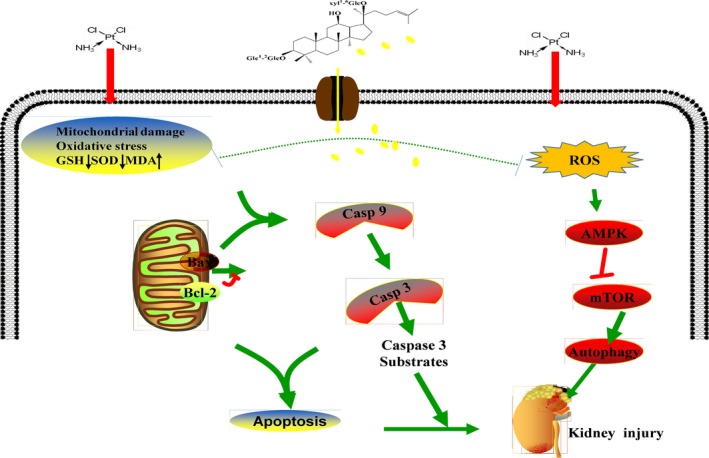
These findings clearly suggested that G-Rb3-mediated alleviation of cisplatin-induced nephrotoxicity was in part due to regulation of AMPK-/mTOR-mediated autophagy and inhibition of apoptosis in vitro and in vivo.
基于以往的研究报告表明,人参皂苷对顺铂诱导的肾损伤具有更好的预防作用,本研究旨在评估人参皂苷 Rb3(G-Rb3)在体内和体外对顺铂诱导的肾损伤的保护作用及其潜在机制。
在 ICR 小鼠模型和 HEK293 细胞模型中,研究了 G-Rb3 对顺铂诱导的急性肾衰竭的保护作用,并探讨了潜在的可能机制。对于动物实验,评估了肾功能、肾脏组织学、炎症、氧化应激、参与细胞凋亡和自噬信号通路的相关蛋白分子。此外,还使用雷帕霉素(mTOR 的特异性抑制剂)、化合物 C(AMPK 的特异性抑制剂)和乙酰半胱氨酸(NAC,一种特定的 ROS 清除剂)来验证 AMPK/mTOR 信号通路对 G-Rb3 在 HEK293 细胞中的保护作用的影响。
连续 10 天每天用 10 和 20 mg/kg 的 G-Rb3 预处理,显著逆转了血清肌酐(CRE)、血尿素氮(BUN)和丙二醛(MDA)的升高,以及谷胱甘肽(GSH)含量和超氧化物歧化酶(SOD)活性的降低。组织病理学检查进一步表明,G-Rb3 抑制了顺铂诱导的肾毒性。G-Rb3 降低了顺铂诱导的 p62、Atg3、Atg5 和 Atg7 蛋白表达水平的增加,以及 p-mTOR 和 LC3-I/LC3-II 比值的降低,表明 G-Rb3 抑制了顺铂诱导的自噬激活。自噬的抑制诱导了细胞凋亡的失活,这表明自噬对顺铂引起的肾损伤有不良影响。此外,我们发现 G-Rb3 可能潜在地调节 AMPK 相关信号通路的表达。
这些发现清楚地表明,G-Rb3 介导的减轻顺铂诱导的肾毒性部分是由于调节 AMPK/mTOR 介导的自噬和抑制体内外细胞凋亡。