Department of Microbiome Science, Max Planck Institute for Developmental Biology, Max Planck Ring 5, 72076, Tübingen, Germany.
TU Wien, Institute of Chemical, Environmental and Bioscience Engineering, Research Group for Environmental Microbiology and Molecular Diagnostics 166/5/3, Gumpendorfer Straße 1a, 1060, Vienna, Austria.
Nat Commun. 2019 May 16;10(1):2200. doi: 10.1038/s41467-019-10191-3.
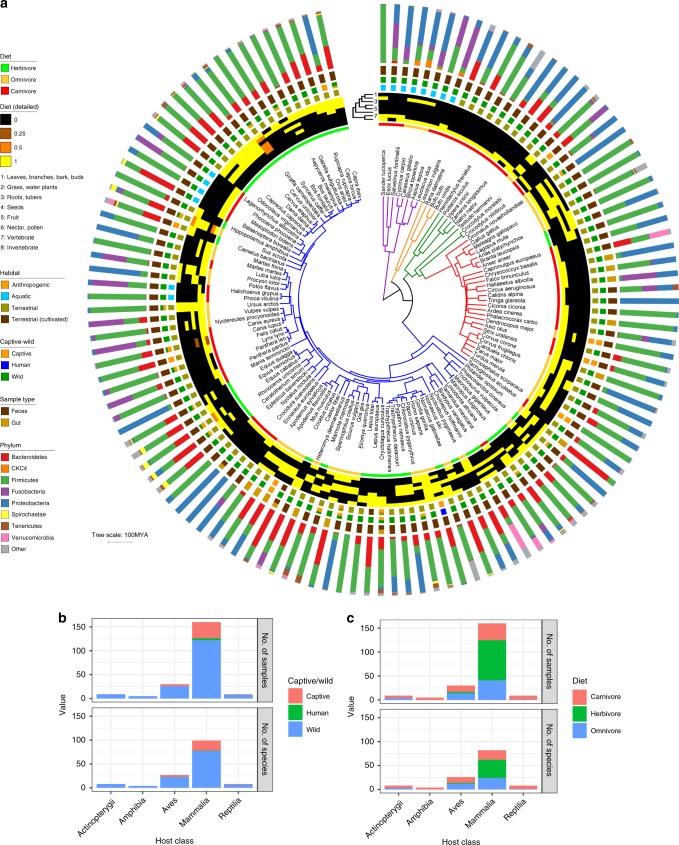
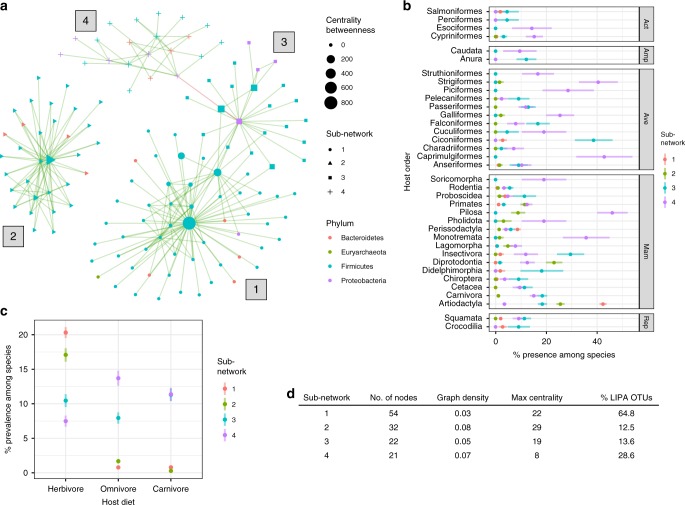
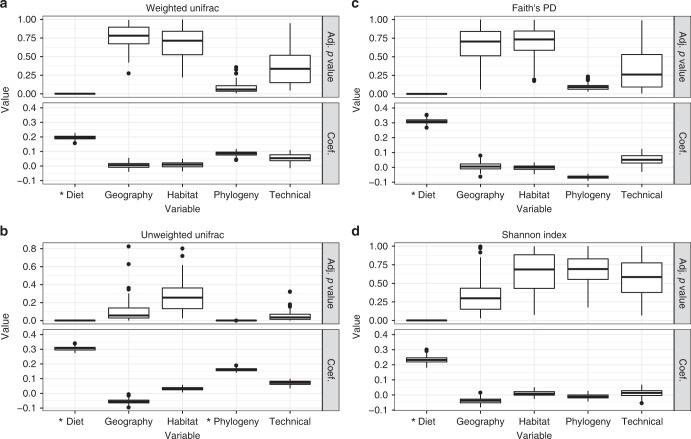
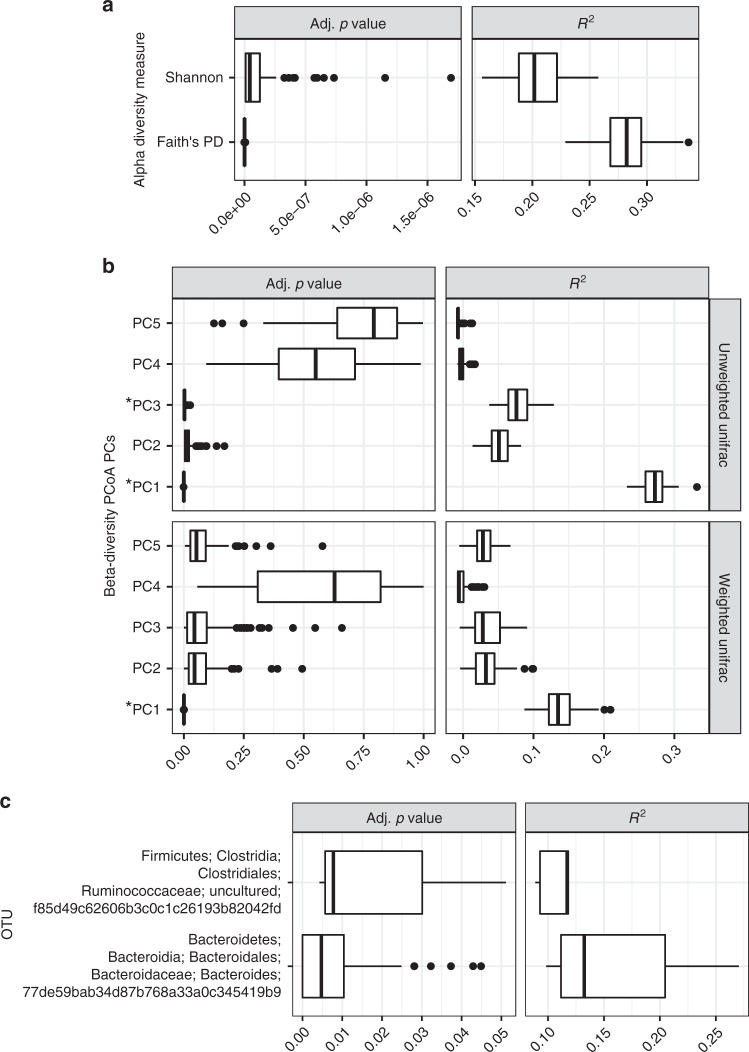
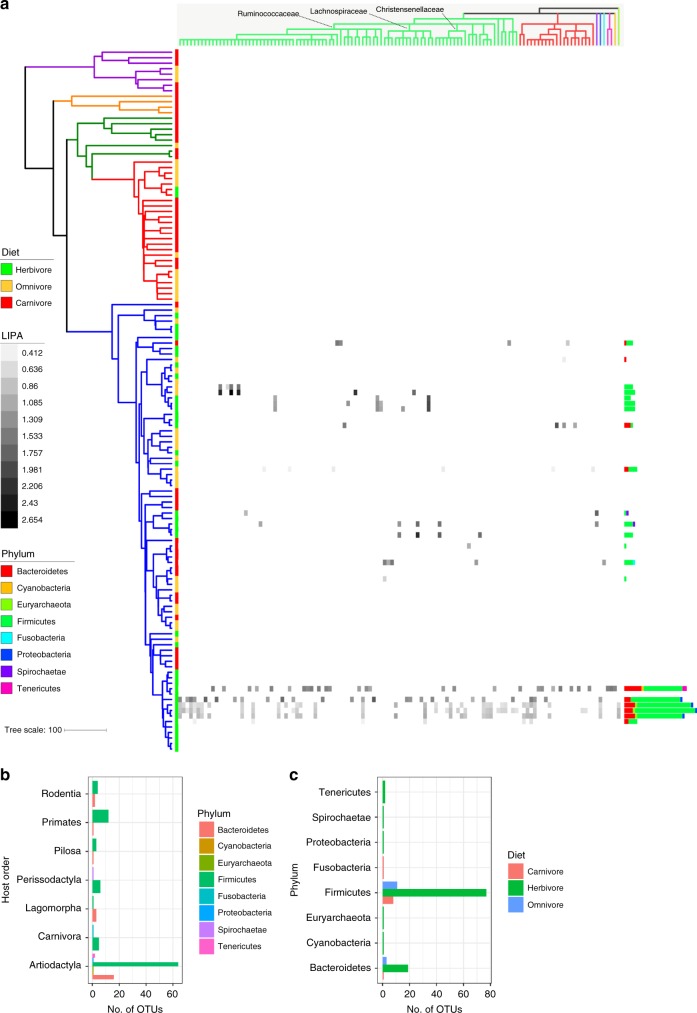
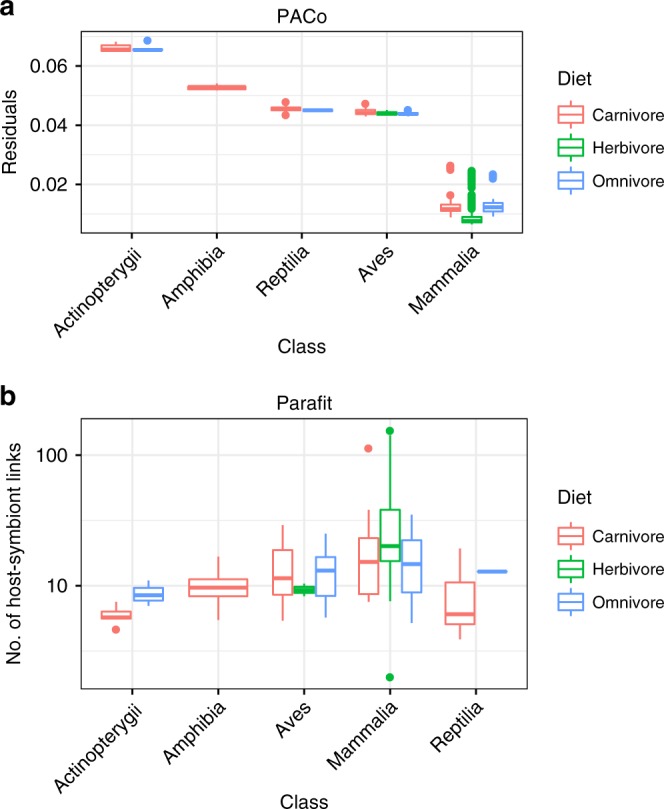
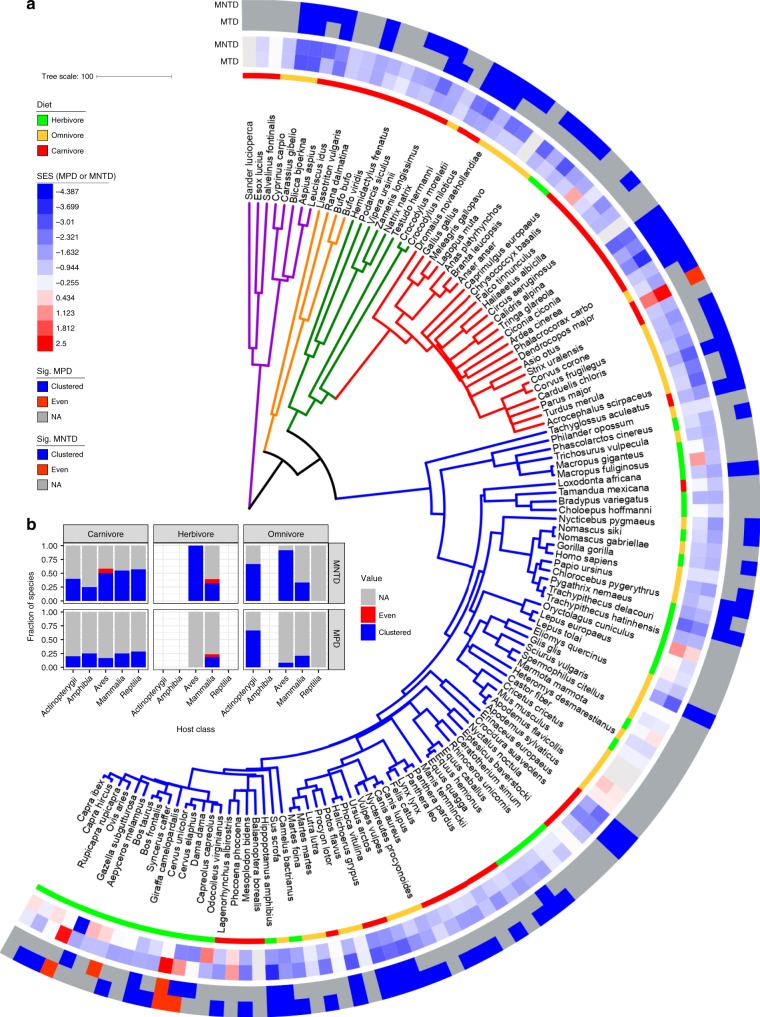
Multiple factors modulate microbial community assembly in the vertebrate gut, though studies disagree as to their relative contribution. One cause may be a reliance on captive animals, which can have very different gut microbiomes compared to their wild counterparts. To resolve this disagreement, we analyze a new, large, and highly diverse animal distal gut 16 S rRNA microbiome dataset, which comprises 80% wild animals and includes members of Mammalia, Aves, Reptilia, Amphibia, and Actinopterygii. We decouple the effects of host evolutionary history and diet on gut microbiome diversity and show that each factor modulates different aspects of diversity. Moreover, we resolve particular microbial taxa associated with host phylogeny or diet and show that Mammalia have a stronger signal of cophylogeny. Finally, we find that environmental filtering and microbe-microbe interactions differ among host clades. These findings provide a robust assessment of the processes driving microbial community assembly in the vertebrate intestine.
多种因素调节脊椎动物肠道中的微生物群落组装,但研究结果对其相对贡献存在分歧。一个原因可能是依赖于圈养动物,与野生动物相比,圈养动物的肠道微生物群可能非常不同。为了解决这一分歧,我们分析了一个新的、大型的、高度多样化的动物远端肠道 16S rRNA 微生物组数据集,其中包含 80%的野生动物,包括哺乳动物、鸟类、爬行动物、两栖动物和硬骨鱼纲动物。我们将宿主进化史和饮食对肠道微生物组多样性的影响分离开来,并表明每个因素都调节多样性的不同方面。此外,我们确定了与宿主系统发育或饮食相关的特定微生物类群,并表明哺乳动物具有更强的共生进化信号。最后,我们发现环境过滤和微生物-微生物相互作用在宿主进化枝之间存在差异。这些发现为驱动脊椎动物肠道微生物群落组装的过程提供了可靠的评估。