Department of Environmental Sciences, Faculty of Science and Engineering, Macquarie University, Macquarie, NSW, 2109, Australia.
Sci Rep. 2019 May 16;9(1):7498. doi: 10.1038/s41598-019-43896-y.
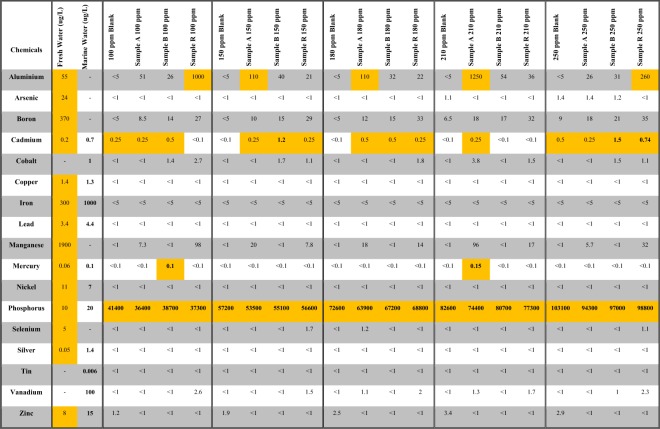
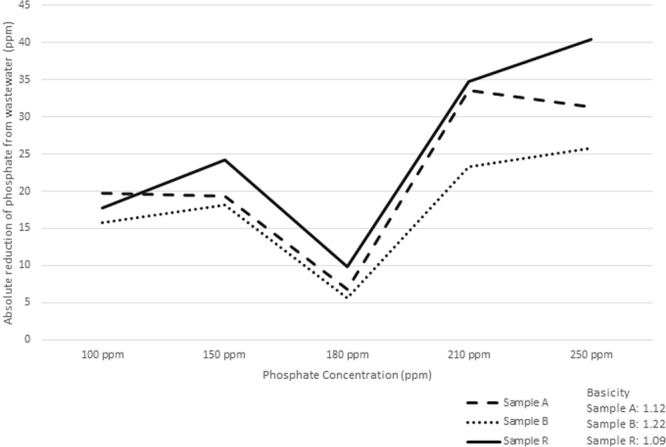
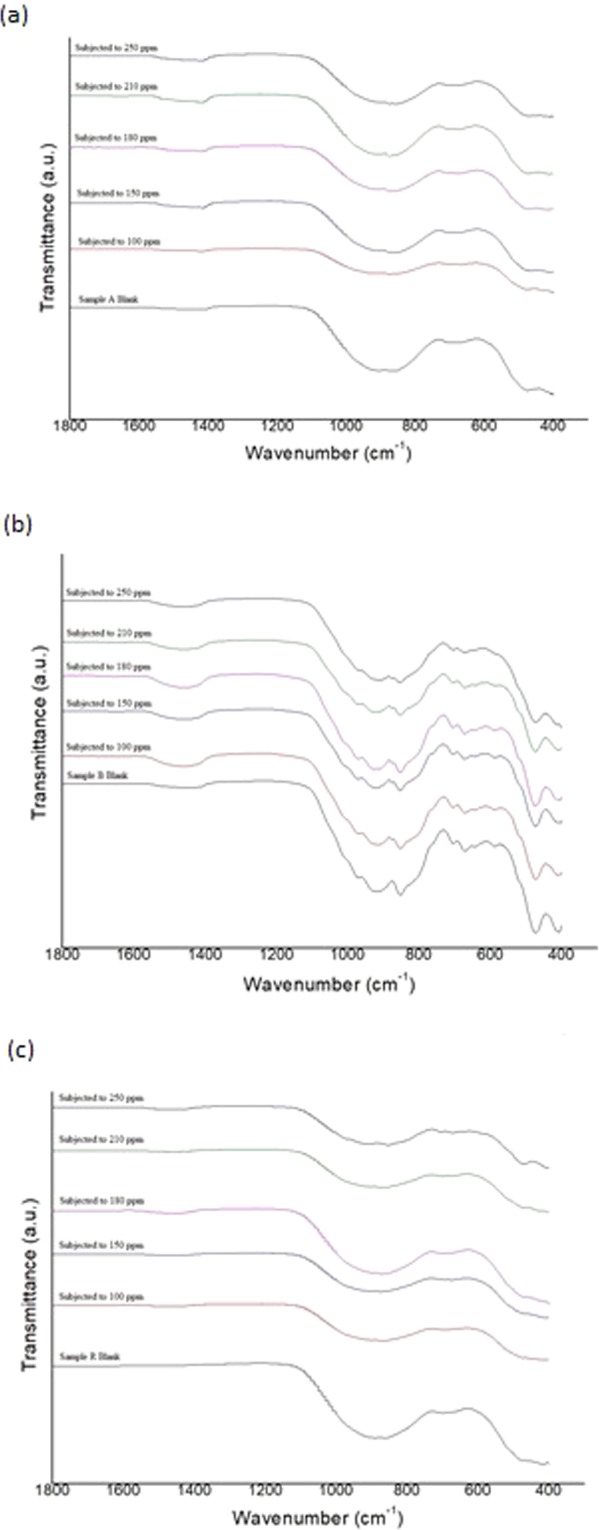
Blast Furnace Slag (BFS) is a by-product of iron making with a potential to be used in different applications. In this research, BFS is used to investigate the phosphate removal ability in wastewater. BFS has the required concentrations of surface calcium to potentially precipitate phosphate from wastewater. Removal of phosphate from wastewater depends on variety of conditions, such as the size of BFS particles, adsorbent dose, contact time and pH. The conditions responsible for phosphate removal from wastewater with BFS were analysed and the phosphate removal capacity optimised according to the BFS chemical content. The results in this work demonstrated that the basicity (CaO/SiO) of BFS has a reverse effect on phosphate removal capacity. High basicity reduces the capability of BFS for removal of phosphate. BFS composition before and after phosphate removal was determined with Energy Dispersive Spectroscopy (EDS), Fourier Transfer Infrared Spectroscopy (FTIR) and UV-Vis spectrophotometry. The results revealed that the slag samples added varying concentrations of trace metals Al, Cd, Co and Hg into the treated water, which will need to be further conditioned by dilution with unpolluted water or other treatments before disposal or re-use.
高炉渣(BFS)是炼铁的副产品,具有在不同应用中使用的潜力。在这项研究中,BFS 被用于研究废水中的磷酸盐去除能力。BFS 具有表面钙的所需浓度,可将磷酸盐从废水中沉淀出来。废水中磷酸盐的去除取决于多种条件,如 BFS 颗粒的大小、吸附剂剂量、接触时间和 pH 值。分析了导致 BFS 从废水中去除磷酸盐的条件,并根据 BFS 的化学含量优化了磷酸盐去除能力。这项工作的结果表明,BFS 的碱度(CaO/SiO)对磷酸盐去除能力有反作用。高碱度降低了 BFS 去除磷酸盐的能力。用能量色散光谱仪(EDS)、傅里叶变换红外光谱仪(FTIR)和紫外可见分光光度法测定了去除磷酸盐前后 BFS 的组成。结果表明,渣样向处理水中添加了不同浓度的痕量金属 Al、Cd、Co 和 Hg,需要通过用未污染的水稀释或其他处理方法进一步调节,然后再进行处置或再利用。