De Felice F, Tombolini V, Valentini V, de Vincentiis M, Mezi S, Brugnoletti O, Polimeni A
Department of Radiotherapy, Policlinico Umberto I, "Sapienza" University of Rome, Rome, Italy.
Department of Oral and Maxillofacial Sciences, Policlinico Umberto I, "Sapienza" University of Rome, Rome, Italy.
J Oncol. 2019 Apr 14;2019:9173729. doi: 10.1155/2019/9173729. eCollection 2019.
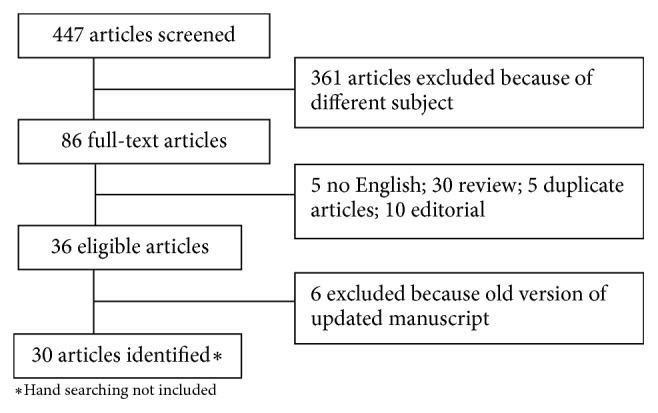
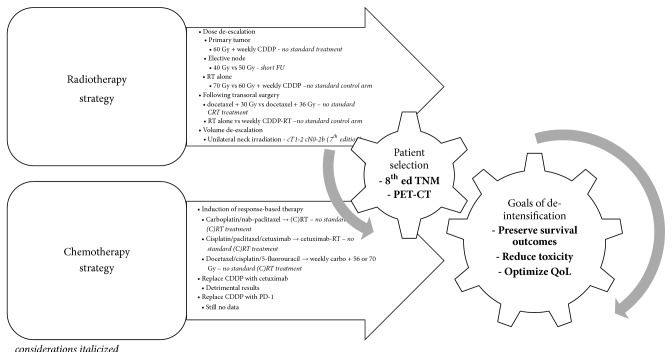
Patients with human papillomavirus- (HPV-) related oropharyngeal squamous cell carcinoma (OPSCC) have a better prognosis than HPV-negative OPSCC when treated with standard high-dose cisplatin-based chemoradiotherapy. Consistent with this assertion and due to younger age at diagnosis, novel approaches to minimize treatment sequelae while preserving survival outcomes become of paramount importance. Here, we critically reviewed the evidence-based literature supporting the deintensification strategies in HPV-related OPSCC management, including radiotherapy dose and/or volume reduction, replacement of cisplatin radiosensitising chemotherapy, and the use of transoral surgery. Undoubtedly, further researches are needed before changing the standard of care in this setting of patients.
与人类乳头瘤病毒(HPV)相关的口咽鳞状细胞癌(OPSCC)患者在接受标准的高剂量顺铂为基础的放化疗时,其预后比HPV阴性的OPSCC患者更好。与这一论断相符,并且由于诊断时年龄较轻,在保持生存结果的同时尽量减少治疗后遗症的新方法变得至关重要。在此,我们严格审查了支持HPV相关OPSCC管理中减量化策略的循证文献,包括放疗剂量和/或体积减少、顺铂放射增敏化疗的替代以及经口手术的使用。毫无疑问,在改变这类患者的治疗标准之前还需要进一步的研究。