Department of Neurosurgery, The Third Xiangya Hospital of Central South University, No. 138, Tongzipo Road, Changsha, 410013, Hunan Province, People's Republic of China.
J Exp Clin Cancer Res. 2019 May 17;38(1):201. doi: 10.1186/s13046-019-1181-4.
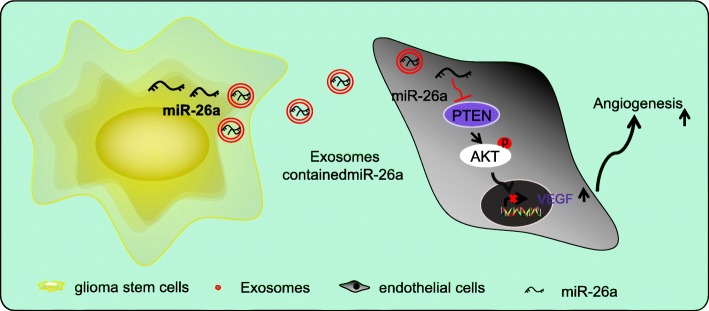
Cancer stem cells (CSCs), which are involved in cancer initiation and metastasis, could potentially release exosomes that mediate cellular communication by delivering microRNAs (miRNAs). Based on the role of miR-26a in angiogenesis of glioma, our study was performed to investigate whether glioma stem cells (GSCs)-derived exosomes containing miR-26a could exert effects on angiogenesis of microvessel endothelial cells in glioma, in order to provide a new therapeutic RNA vehicle for glioma therapies.
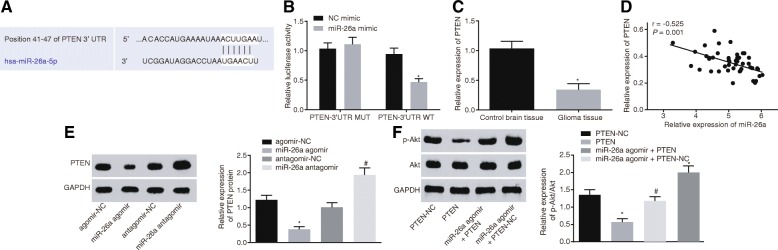
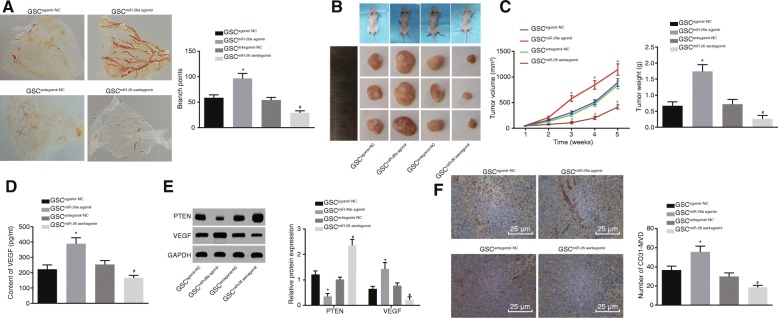
The expression of miR-26a and PTEN in glioma was quantified and the interaction among miR-26a, PTEN and PI3K/Akt signaling pathway was examined. Next, a series of gain- and loss-of function experiments were conducted to determine the role of miR-26a in angiogenesis of human brain microvascular endothelial cells (HBMECs). Subsequently, HBMECs were exposed to exosomes derived from GSCs with the gain-/loss-of-function of miR-26a. Finally, the effect of exosomal miR-26a on angiogenesis of HBMECs was assessed both in vitro and in vivo.
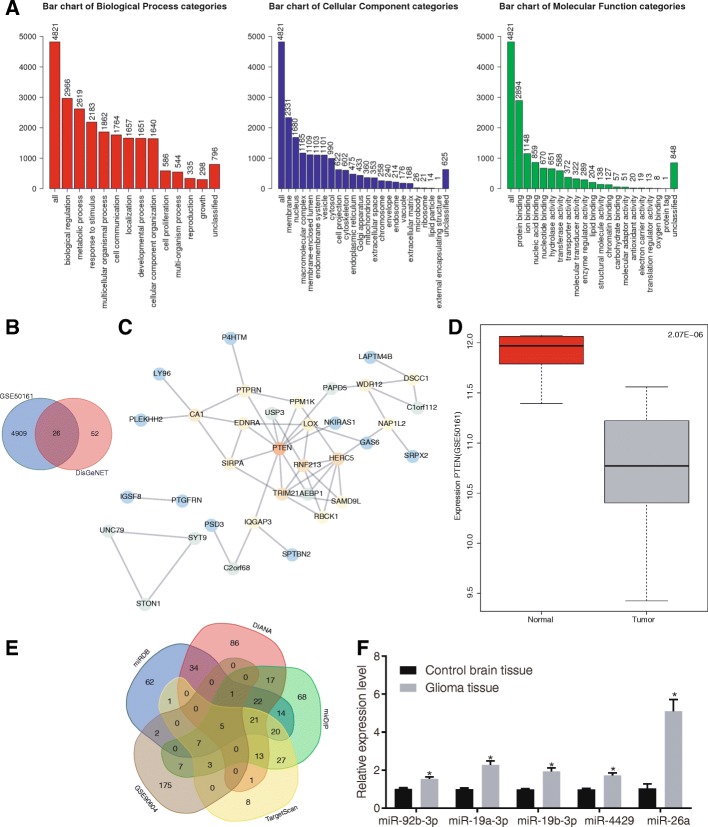
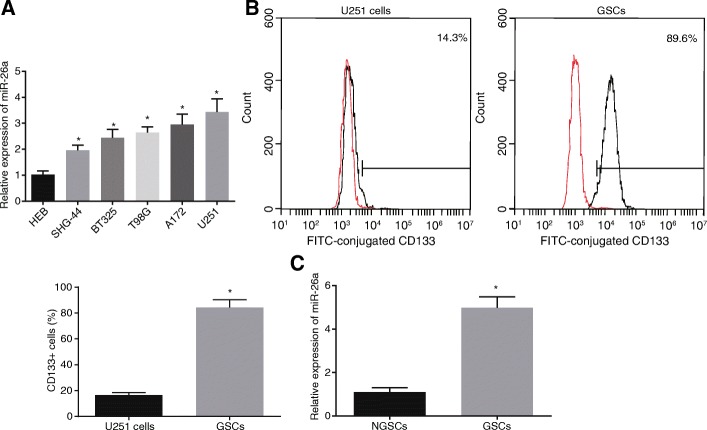
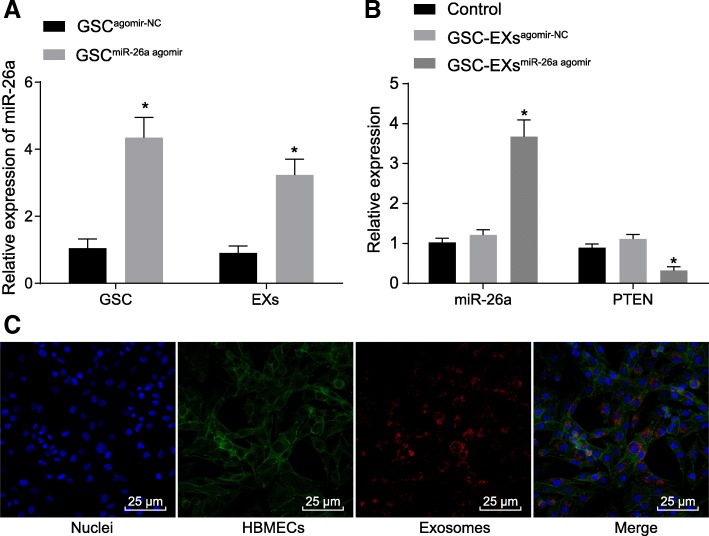
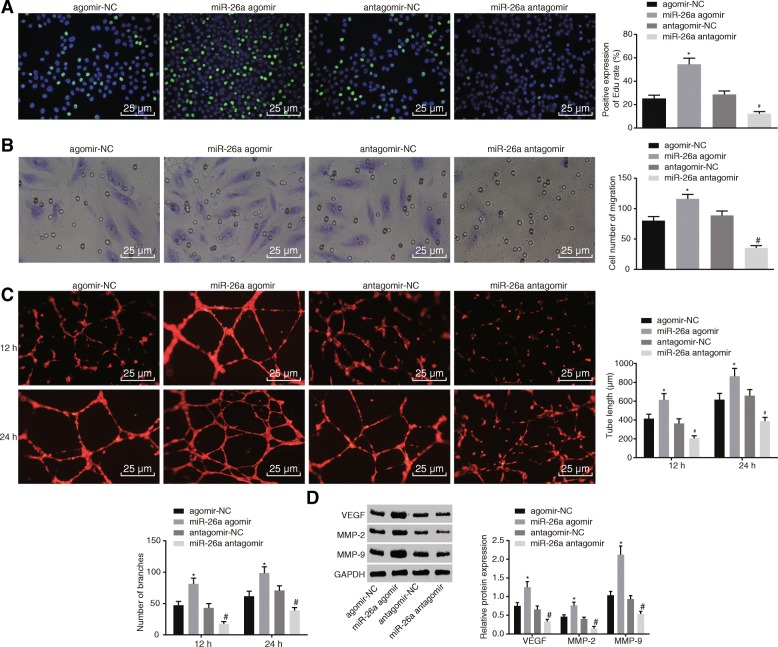
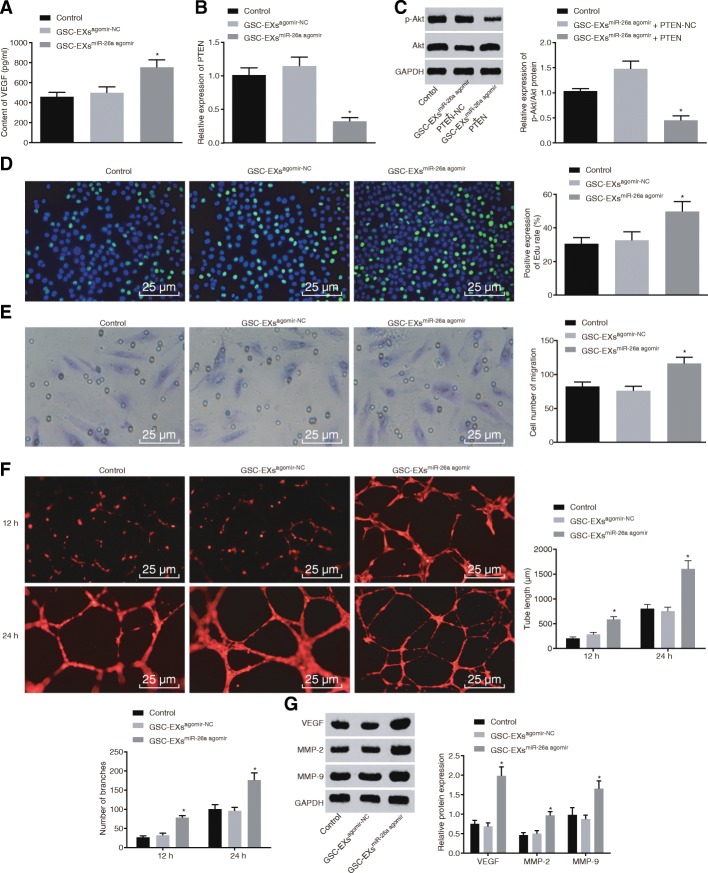
The results revealed that PTEN was down-regulated, while miR-26a was up-regulated in glioma. miR-26a activated the PI3K/Akt signaling pathway by targeting PTEN. Restored miR-26a promoted proliferation, migration, tube formation, and angiogenesis of HBMECs in vitro. In addition, GSCs-derived exosomes overexpressing miR-26a contributed to enhanced proliferation and angiogenesis of HBMECs in vitro through inhibition of PTEN. The angiogenic effects of GSCs-derived exosomes overexpressing miR-26a in vivo were consistent with the above-mentioned in vitro findings.
Collectively, our study demonstrates that GSCs-derived exosomal miR-26a promotes angiogenesis of HBMECs, highlighting an angiogenic role of miR-26a via exosomes.
癌症干细胞(CSCs)参与癌症的发生和转移,它们可能通过释放外泌体来传递 microRNAs(miRNAs)从而介导细胞间通讯。基于 miR-26a 在神经胶质瘤血管生成中的作用,我们研究了含有 miR-26a 的神经胶质瘤干细胞(GSCs)衍生的外泌体是否可以对神经胶质瘤微血管内皮细胞的血管生成产生影响,以期为神经胶质瘤治疗提供新的治疗性 RNA 载体。
定量检测神经胶质瘤中 miR-26a 和 PTEN 的表达,并检测 miR-26a、PTEN 和 PI3K/Akt 信号通路之间的相互作用。接下来,进行一系列的增益和失能实验,以确定 miR-26a 在人脑微血管内皮细胞(HBMECs)血管生成中的作用。随后,将 HBMECs 暴露于具有 miR-26a 增益/失能的 GSCs 衍生的外泌体中。最后,在体外和体内评估外泌体 miR-26a 对 HBMECs 血管生成的影响。
结果表明,PTEN 下调,而 miR-26a 在神经胶质瘤中上调。miR-26a 通过靶向 PTEN 激活 PI3K/Akt 信号通路。恢复 miR-26a 促进了 HBMECs 在体外的增殖、迁移、管形成和血管生成。此外,GSCs 衍生的过表达 miR-26a 的外泌体通过抑制 PTEN 促进了 HBMECs 的增殖和血管生成。GSCs 衍生的过表达 miR-26a 的外泌体在体内的血管生成作用与上述体外发现一致。
综上所述,我们的研究表明 GSCs 衍生的外泌体 miR-26a 促进了 HBMECs 的血管生成,突出了 miR-26a 通过外泌体的血管生成作用。