Complex Carbohydrate Research Center, University of Georgia, Athens, GA 30602, USA.
Research Division, Greenwood Genetic Center, Greenwood, SC 29646, USA.
Dis Model Mech. 2019 Jun 5;12(6):dmm039602. doi: 10.1242/dmm.039602.
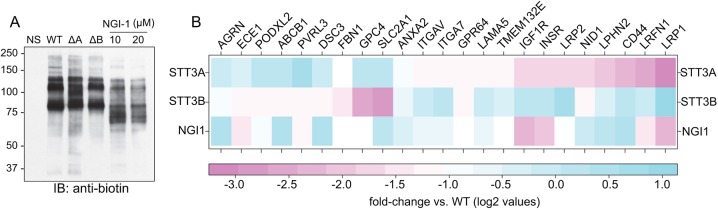
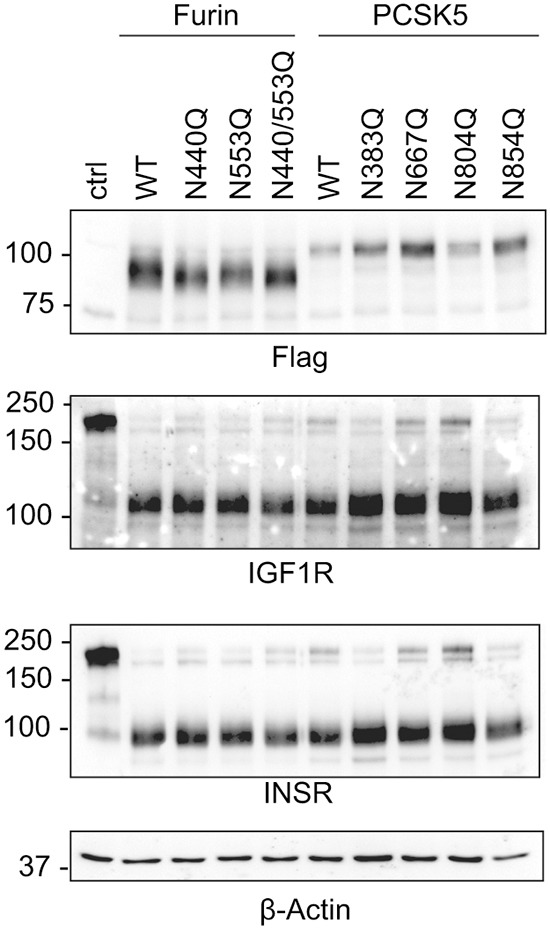
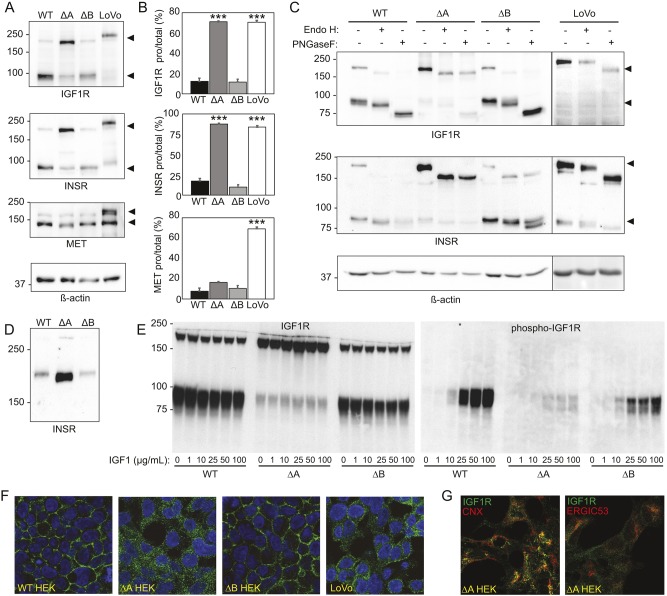
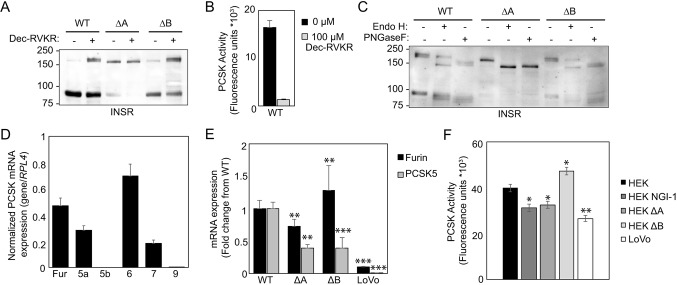
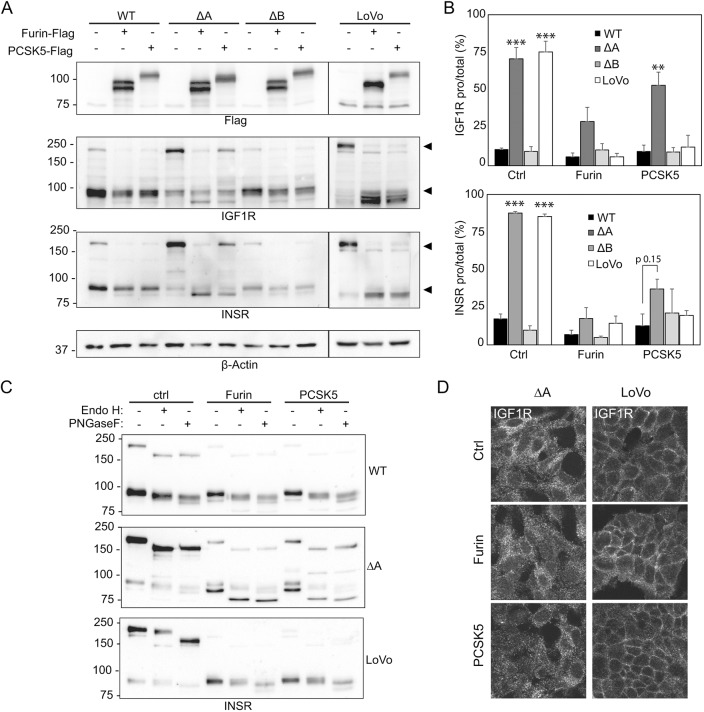
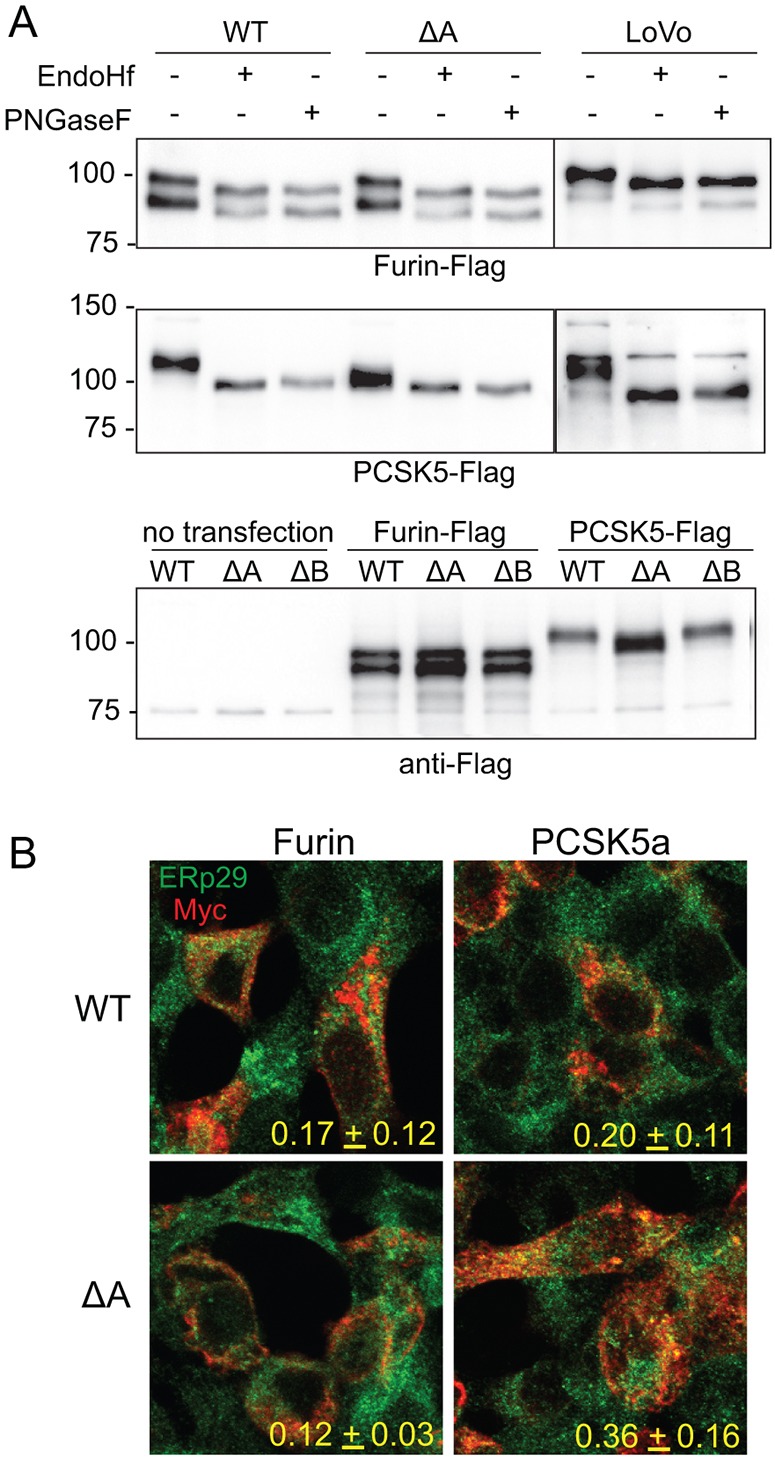
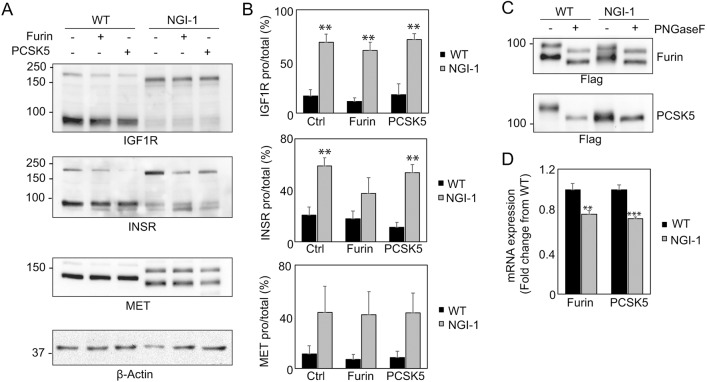
Global inhibition of N-linked glycosylation broadly reduces glycan occupancy on glycoproteins, but identifying how this inhibition functionally impacts specific glycoproteins is challenging. This limits our understanding of pathogenesis in the congenital disorders of glycosylation (CDG). We used selective exo-enzymatic labeling of cells deficient in the two catalytic subunits of oligosaccharyltransferase - STT3A and STT3B - to monitor the presence and glycosylation status of cell surface glycoproteins. We show reduced abundance of two canonical tyrosine receptor kinases - the insulin receptor and insulin-like growth factor 1 receptor (IGF-1R) - at the cell surface in -null cells, due to decreased N-linked glycan site occupancy and proteolytic processing in combination with increased endoplasmic reticulum localization. Providing cDNA for Golgi-resident proprotein convertase subtilisin/kexin type 5a (PCSK5a) and furin cDNA to wild-type and mutant cells produced under-glycosylated forms of PCSK5a, but not furin, in cells lacking STT3A. Reduced glycosylation of PCSK5a in -null cells or cells treated with the oligosaccharyltransferase inhibitor NGI-1 corresponded with failure to rescue receptor processing, implying that alterations in the glycosylation of this convertase have functional consequences. Collectively, our findings show that STT3A-dependent inhibition of N-linked glycosylation on receptor tyrosine kinases and their convertases combines to impair receptor processing and surface localization. These results provide new insight into CDG pathogenesis and highlight how the surface abundance of some glycoproteins can be dually impacted by abnormal glycosylation.
全球抑制 N 连接糖基化广泛减少糖蛋白上糖基的占据,但确定这种抑制如何对特定糖蛋白产生功能影响具有挑战性。这限制了我们对先天性糖基化障碍(CDG)发病机制的理解。我们使用缺乏寡糖基转移酶的两种催化亚基 - STT3A 和 STT3B 的选择性外切酶标记来监测细胞表面糖蛋白的存在和糖基化状态。我们表明,由于 N 连接糖基化位点占据减少和蛋白水解加工与内质网定位增加相结合,-null 细胞表面两种典型的酪氨酸受体激酶 - 胰岛素受体和胰岛素样生长因子 1 受体(IGF-1R)的丰度降低。为野生型和突变细胞提供高尔基驻留蛋白原酶枯草溶菌素/激肽释放酶 5a(PCSK5a)和 furin cDNA 的 cDNA,在缺乏 STT3A 的细胞中产生了低聚糖形式的 PCSK5a,但不是 furin。-null 细胞或用寡糖基转移酶抑制剂 NGI-1 处理的细胞中 PCSK5a 的糖基化减少与受体加工的失败无法恢复相对应,这意味着这种转化酶的糖基化改变具有功能后果。总之,我们的发现表明,受体酪氨酸激酶及其转化酶上 STT3A 依赖性 N 连接糖基化的抑制作用相结合,会损害受体的加工和表面定位。这些结果为 CDG 的发病机制提供了新的见解,并强调了一些糖蛋白的表面丰度如何会受到异常糖基化的双重影响。