Diagnostic and Research Center for Molecular BioMedicine, Diagnostic and Research Institute of Pathology, Medical University of Graz, Neue Stiftingtalstrasse 6, 8010, Graz, Austria.
Institute for Medical Informatics, Statistics and Documentation, Medical University of Graz, Auenbruggerplatz 2, 8036, Graz, Austria.
Diagn Pathol. 2019 May 20;14(1):47. doi: 10.1186/s13000-019-0827-z.
Small cell lung cancer (SCLC) is usually diagnosed in the advanced stage. It has a very poor prognosis, with no advancements in therapy in the last few decades. A recent phase 1 clinical study, using an antibody-drug conjugate directed against DLL3, showed promising results. A prerequisite for this therapy is an immunohistochemical test for DLL3 expression. The antibody used in the clinical trial was bound to a specific platform, which is not available in all pathology laboratories. In this study, the expression of DLL3 was analyzed using different DLL3 antibodies in high-grade neuroendocrine tumors of the lung and cell cultures. Additionally, correlation of DLL3 expression with Rb1 loss and TP53 mutation was evaluated.
The study cohort consisted of surgically resected cases, 24 SCLC and 29 large cell neuroendocrine carcinoma (LCNEC), from which tissue microarrays (TMAs) were constructed. The validation cohort included 46 SCLC samples, mostly small biopsies. Additionally, well-characterized SCLC cell lines were used. Immunohistochemical analysis was performed using four different DLL3 antibodies, as well as TP53 and Rb1 antibodies. Expression was evaluated microscopically and manually scored.
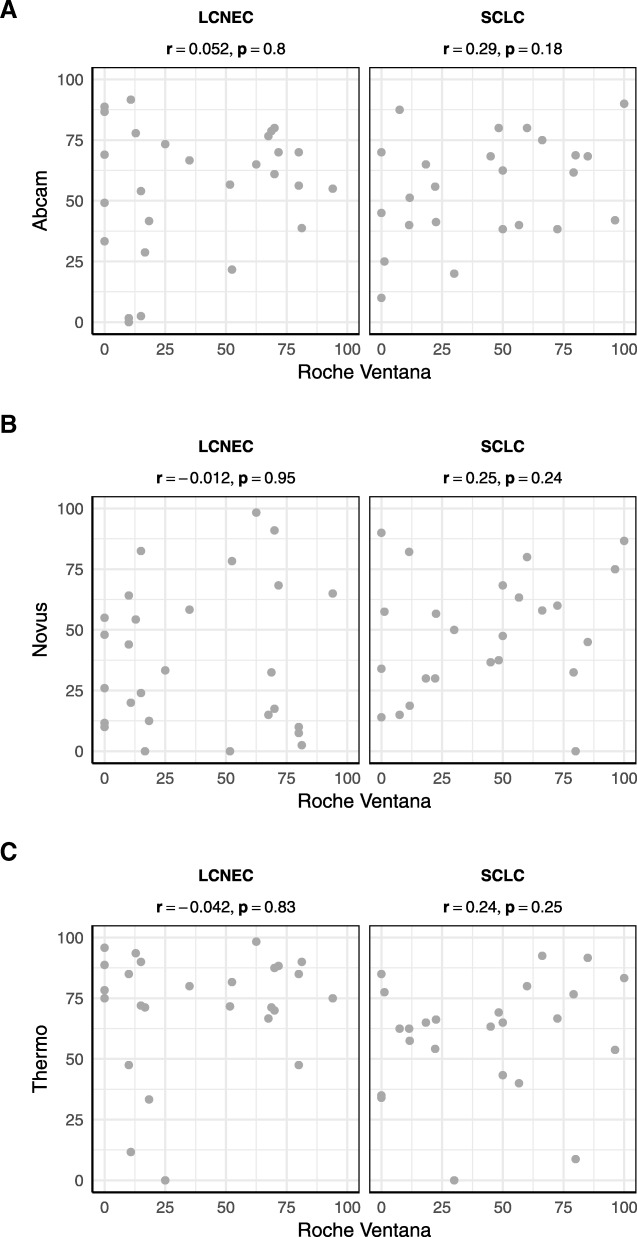
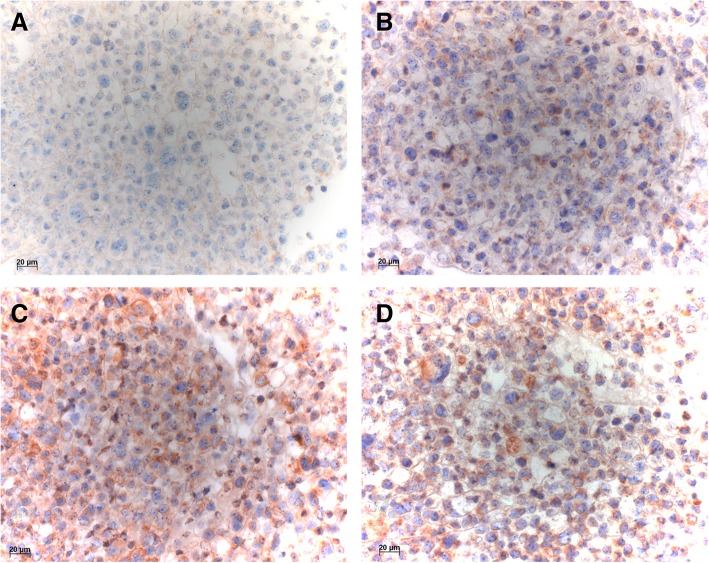
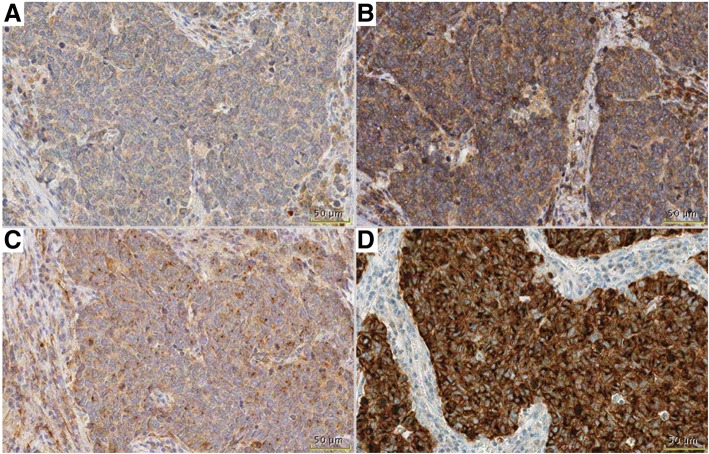
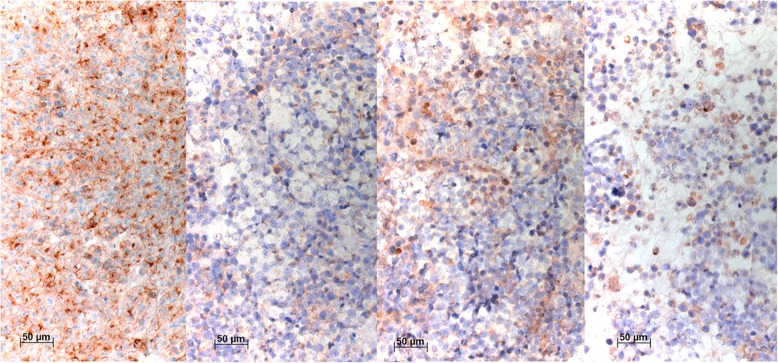
The comparison of all DLL3 antibodies showed poor results for the overall agreement, as well as positive and negative agreement. Differences were observed regardless of the applied cut-off values and the tumor type. The antibody used in the clinical trial was the only which always positively stained the tumor cells obtained from cell cultures with known DLL3 expression and was negative on cells that did not express DLL3. There was no correlation between p53 and DLL3 expression in SCLC and LCNEC. RB1 loss in SCLC showed statistical significant correlation with the DLL3 positivity (p = 0.037), while no correlation was found in LCNEC.
The DLL3 antibody used in the clinical trial demonstrated superiority in the detection of DLL3 expression. Cell cultures, which can be used for DLL3 antibodies as positive and negative probes, were established. Evidence of DLL3 expression in high proportions of patients with LCNEC might provide basis for studies of new therapy options in this group of patients.
小细胞肺癌(SCLC)通常在晚期诊断。它的预后非常差,在过去几十年中,治疗方法没有任何进展。最近的一项针对针对 DLL3 的抗体药物偶联物的 1 期临床试验显示出了有前景的结果。这种治疗的前提是进行 DLL3 表达的免疫组织化学检测。临床试验中使用的抗体与特定平台结合,而并非所有病理实验室都提供该平台。在这项研究中,使用不同的 DLL3 抗体分析了肺内高级别神经内分泌肿瘤和细胞培养物中 DLL3 的表达。此外,还评估了 DLL3 表达与 Rb1 缺失和 TP53 突变的相关性。
研究队列包括手术切除的病例,24 例小细胞肺癌和 29 例大细胞神经内分泌癌(LCNEC),从中构建了组织微阵列(TMA)。验证队列包括 46 例小细胞肺癌样本,主要是小活检。此外,还使用了经过良好特征描述的小细胞肺癌细胞系。使用四种不同的 DLL3 抗体以及 TP53 和 Rb1 抗体进行免疫组织化学分析。通过显微镜评估表达,并手动评分。
所有 DLL3 抗体的比较结果显示,整体一致性以及阳性和阴性一致性均较差。无论应用的截断值和肿瘤类型如何,均观察到差异。在临床试验中使用的抗体总是能很好地染色细胞培养物中具有已知 DLL3 表达的肿瘤细胞,而对不表达 DLL3 的细胞呈阴性。在 SCLC 和 LCNEC 中,p53 和 DLL3 表达之间没有相关性。SCLC 中 RB1 缺失与 DLL3 阳性呈统计学显著相关性(p=0.037),而在 LCNEC 中未发现相关性。
临床试验中使用的 DLL3 抗体在检测 DLL3 表达方面表现出优越性。建立了可用于 DLL3 抗体作为阳性和阴性探针的细胞培养物。在 LCNEC 患者中,高比例的患者存在 DLL3 表达的证据可能为该组患者的新治疗方案研究提供依据。