Department of Molecular and Integrative Physiology, University of Michigan Medical School, Ann Arbor, MI, USA.
Division of Nutritional Sciences, Cornell University, Ithaca, NY, USA.
Nat Immunol. 2019 Jun;20(6):677-686. doi: 10.1038/s41590-019-0396-z. Epub 2019 May 20.
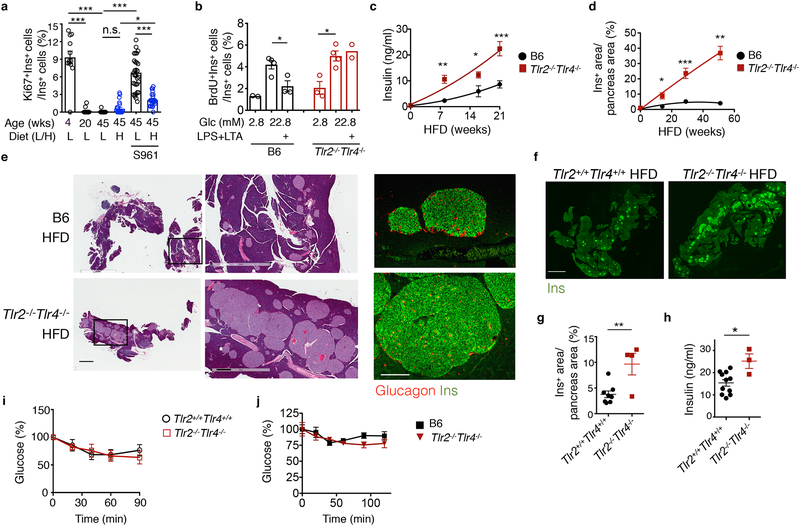
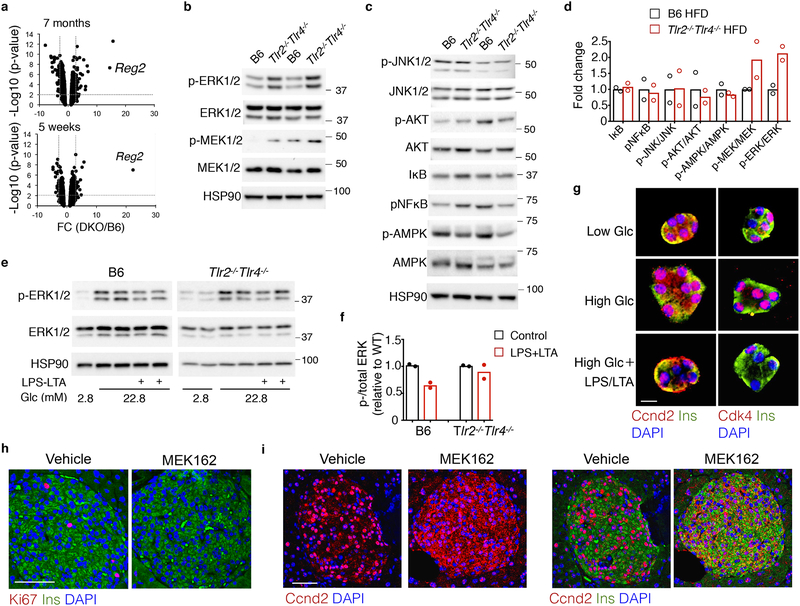
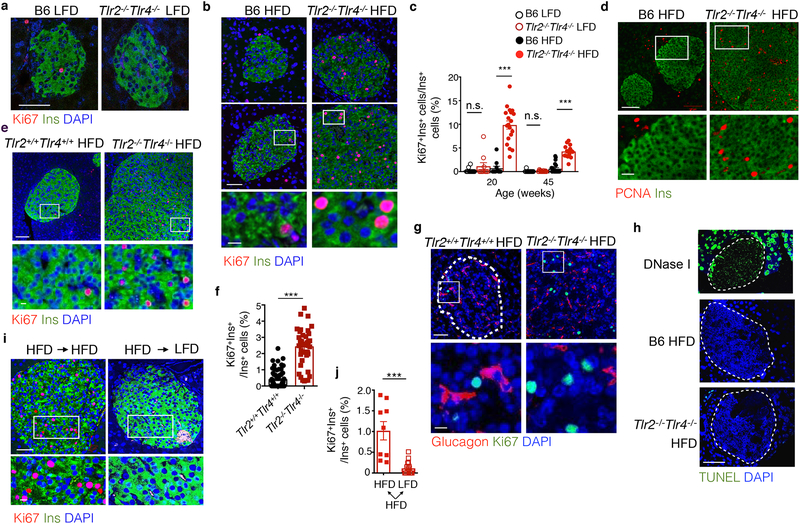
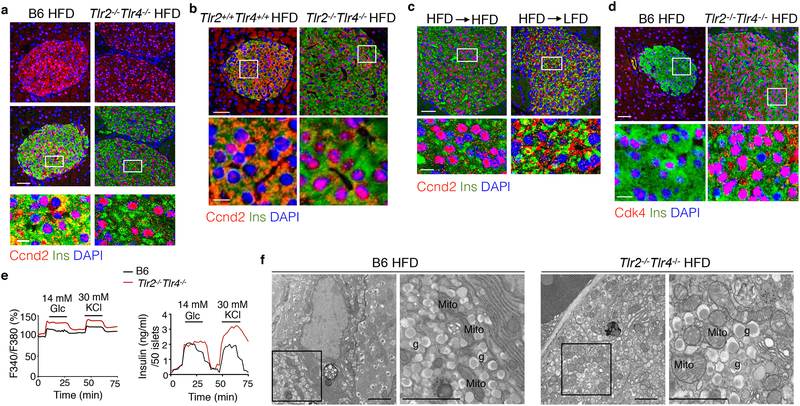
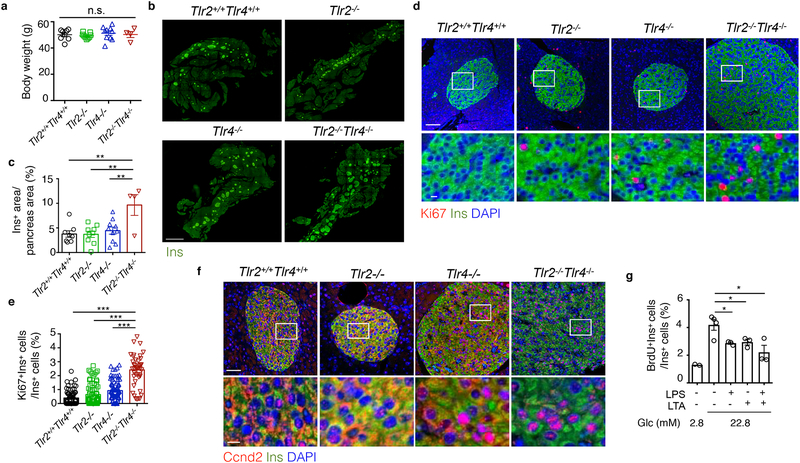
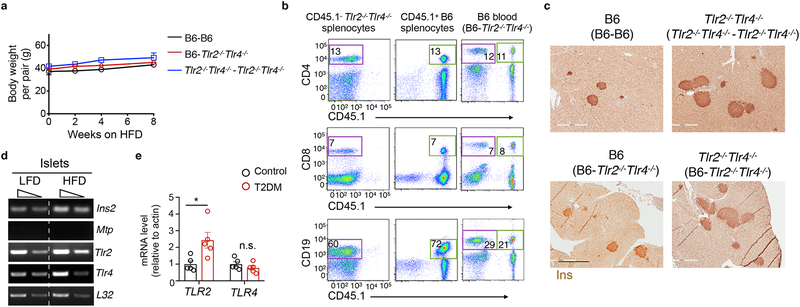
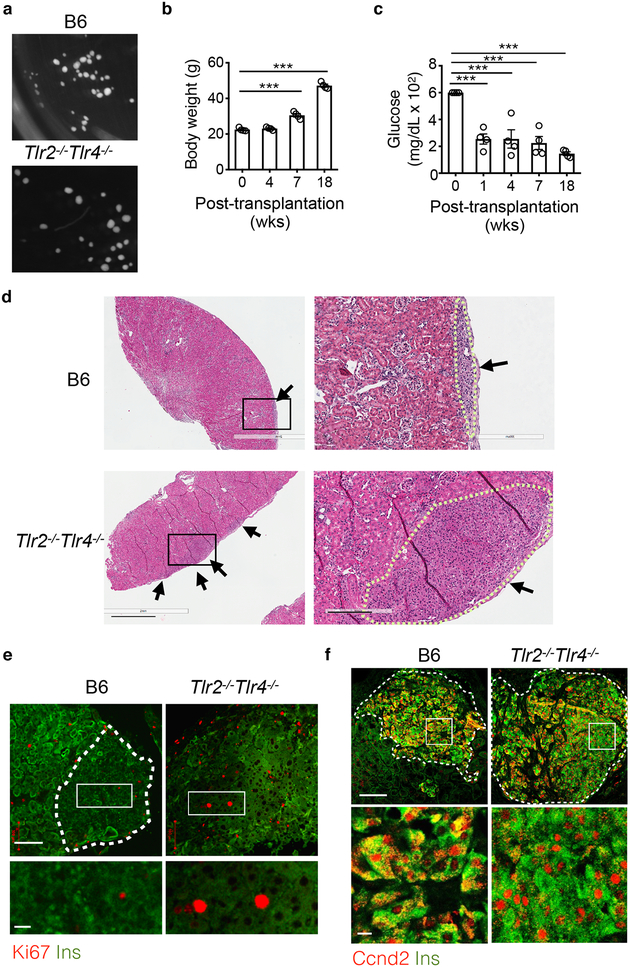
Consumption of a high-energy Western diet triggers mild adaptive β cell proliferation to compensate for peripheral insulin resistance; however, the underlying molecular mechanism remains unclear. In the present study we show that the toll-like receptors TLR2 and TLR4 inhibited the diet-induced replication of β cells in mice and humans. The combined, but not the individual, loss of TLR2 and TLR4 increased the replication of β cells, but not that of α cells, leading to enlarged β cell area and hyperinsulinemia in diet-induced obesity. Loss of TLR2 and TLR4 increased the nuclear abundance of the cell cycle regulators cyclin D2 and Cdk4 in a manner dependent on the signaling mediator Erk. These data reveal a regulatory mechanism controlling the proliferation of β cells in diet-induced obesity and suggest that selective targeting of the TLR2/TLR4 pathways may reverse β cell failure in patients with diabetes.
高能量西方饮食的消耗会引发轻微的适应性β细胞增殖,以补偿外周胰岛素抵抗;然而,其潜在的分子机制尚不清楚。在本研究中,我们表明 Toll 样受体 TLR2 和 TLR4 抑制了小鼠和人类中饮食诱导的β细胞复制。TLR2 和 TLR4 的联合缺失(而非单独缺失)增加了β细胞的复制,但不增加α细胞的复制,导致饮食诱导肥胖中β细胞面积增大和高胰岛素血症。TLR2 和 TLR4 的缺失以依赖于信号转导介质 Erk 的方式增加了细胞周期调节剂细胞周期蛋白 D2 和 CDK4 的核丰度。这些数据揭示了一种调节机制,控制饮食诱导肥胖中β细胞的增殖,并表明选择性靶向 TLR2/TLR4 途径可能逆转糖尿病患者的β细胞衰竭。