The Molecular Biology of Metabolism Laboratory, Francis Crick Institute, London, UK.
Max Planck Institute for Molecular Genetics, Berlin, Germany.
J Inherit Metab Dis. 2019 Sep;42(5):839-849. doi: 10.1002/jimd.12105. Epub 2019 Jun 11.
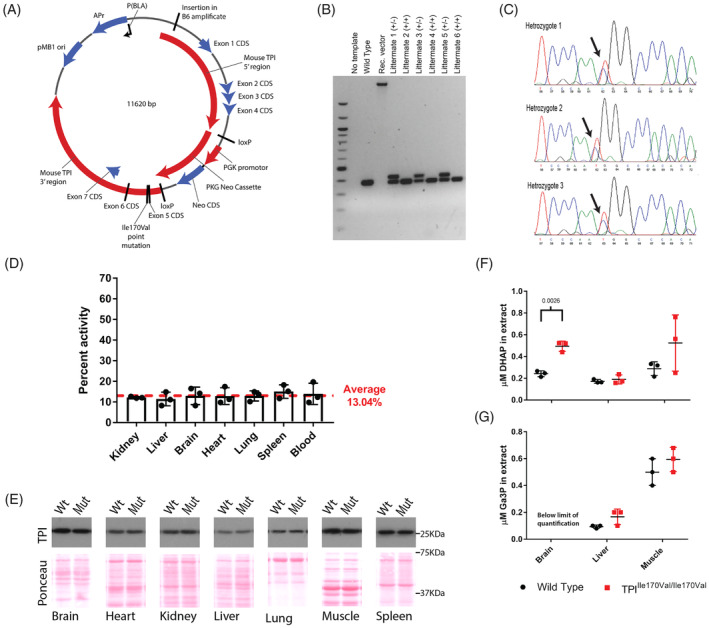
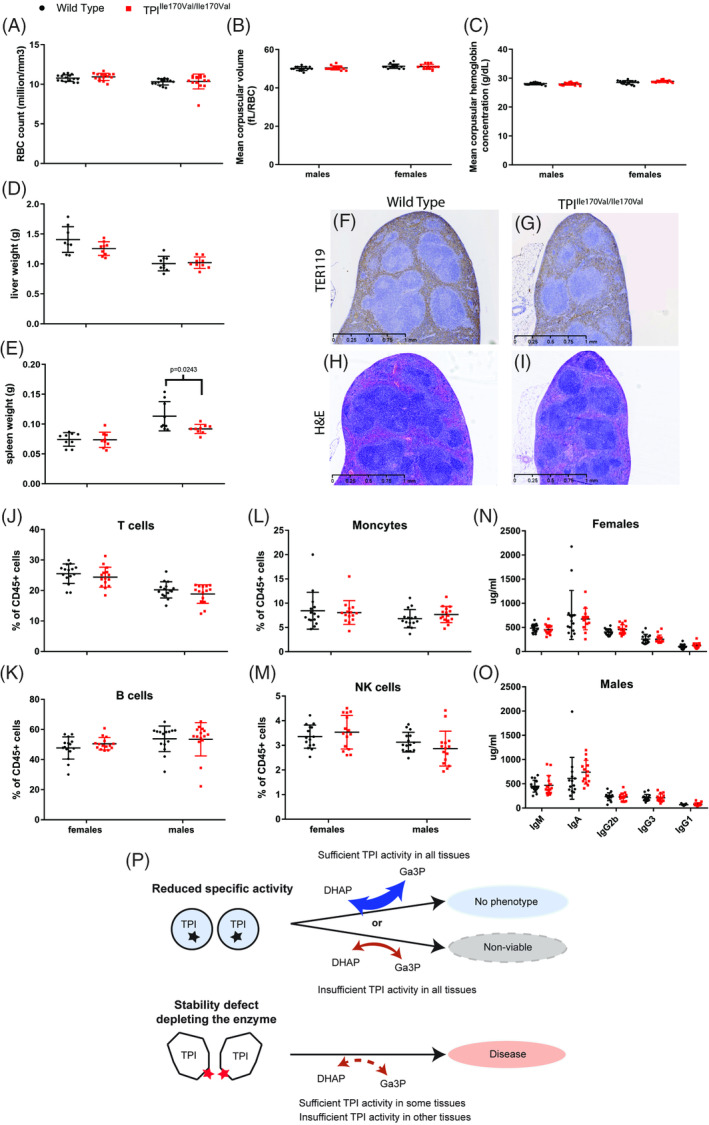
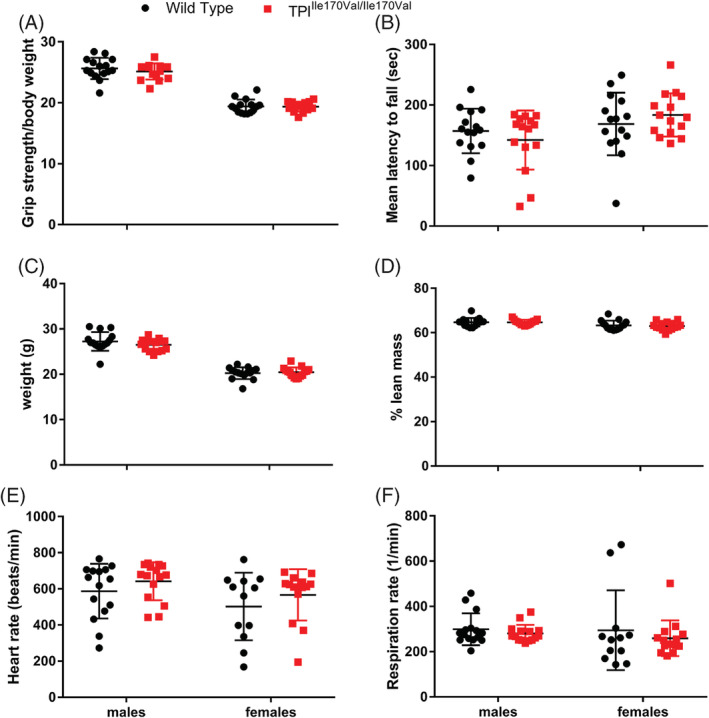
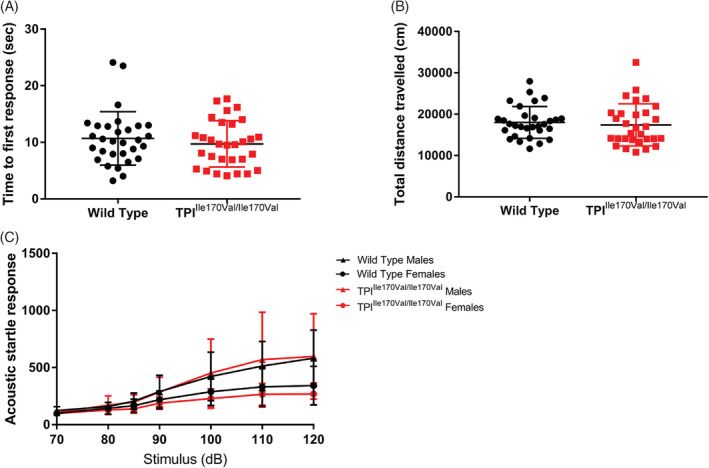
Triosephosphate isomerase (TPI) deficiency is a fatal genetic disorder characterized by hemolytic anemia and neurological dysfunction. Although the enzyme defect in TPI was discovered in the 1960s, the exact etiology of the disease is still debated. Some aspects indicate the disease could be caused by insufficient enzyme activity, whereas other observations indicate it could be a protein misfolding disease with tissue-specific differences in TPI activity. We generated a mouse model in which exchange of a conserved catalytic amino acid residue (isoleucine to valine, Ile170Val) reduces TPI specific activity without affecting the stability of the protein dimer. TPI mice exhibit an approximately 85% reduction in TPI activity consistently across all examined tissues, which is a stronger average, but more consistent, activity decline than observed in patients or symptomatic mouse models that carry structural defect mutant alleles. While monitoring protein expression levels revealed no evidence for protein instability, metabolite quantification indicated that glycolysis is affected by the active site mutation. TPI mice develop normally and show none of the disease symptoms associated with TPI deficiency. Therefore, without the stability defect that affects TPI activity in a tissue-specific manner, a strong decline in TPI catalytic activity is not sufficient to explain the pathological onset of TPI deficiency.
磷酸丙糖异构酶(TPI)缺乏症是一种致命的遗传性疾病,其特征为溶血性贫血和神经功能障碍。尽管 TPI 的酶缺陷在 20 世纪 60 年代就已被发现,但该病的确切病因仍存在争议。有些方面表明该病可能是由于酶活性不足引起的,而其他观察结果则表明,该病可能是一种蛋白错误折叠疾病,其 TPI 活性在组织中有特异性差异。我们构建了一种小鼠模型,该模型中保守催化氨基酸残基(异亮氨酸突变为缬氨酸,Ile170Val)的交换会降低 TPI 的特异性活性,但不会影响蛋白二聚体的稳定性。TPI 小鼠的 TPI 活性在所有检查的组织中均降低约 85%,这是一种更强的平均水平,但比在携带结构缺陷突变等位基因的患者或有症状的小鼠模型中观察到的更一致、更一致的活性下降。虽然监测蛋白表达水平并未发现蛋白不稳定的证据,但代谢物定量表明,糖酵解受到活性位点突变的影响。TPI 小鼠正常发育,没有出现与 TPI 缺乏相关的任何疾病症状。因此,如果没有以组织特异性方式影响 TPI 活性的稳定性缺陷,TPI 催化活性的强烈下降不足以解释 TPI 缺乏症的病理发生。