Sackler Faculty of Medicine, Tel Aviv University, Tel Aviv, Israel.
Child and Adolescent Mental Health Department, Ziv Medical Center, 13100, Zefat, Israel.
Isr J Health Policy Res. 2019 May 23;8(1):45. doi: 10.1186/s13584-019-0315-7.
The Galilee Study assessed mental health service needs among Israeli Muslim and Druze adolescents and their mothers. Studies show that mothers of adolescents belonging to the Arab minority have much lower help-seeking rates than Jewish mothers. This paper examines mothers' structural and cultural barriers to help-seeking.
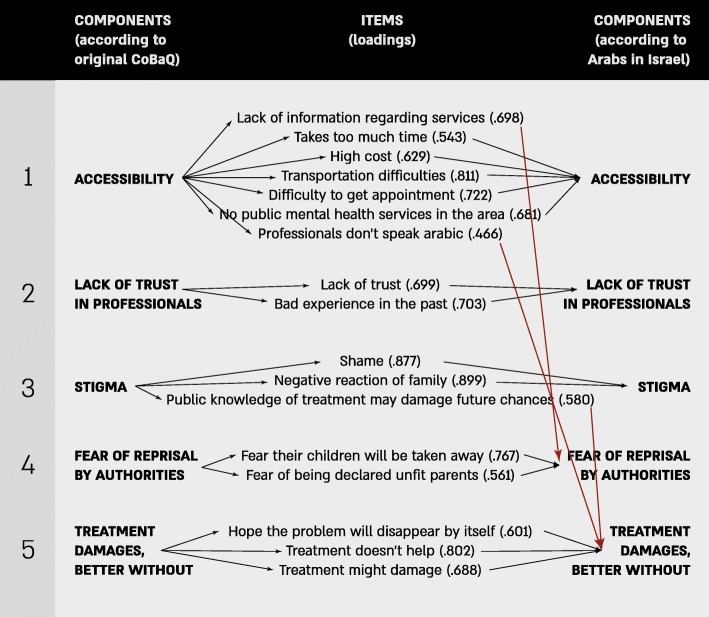
All 9th grade students living in 5 towns representative of Muslim and Druze localities in northern Israel, were eligible for the study and 1639 (69.3%) obtained parental agreement and participated. Emotional or behavioral problem were assessed in the classroom using the Strengths and Difficulties Questionnaire. A total of 704 adolescent-mother dyads participated in the follow-up, and were interviewed at home, using the Development and Well Being Assessment inventory, the Composite Barriers to Help-Seeking Questionnaire, the General Health Questionnaire - 12, the Subjective Feelings of Discrimination Index and socio-demographic questions. Pearson χ test and multivariate binary logistic regressions were performed to analyze mothers' consultation rates by risk factors. Exploratory factor analysis was performed to identify underlying factors and assess construct validity of the Composite Barriers to Help-Seeking Questionnaire, and also mean scores and standard deviations for the distinct scales were calculated.
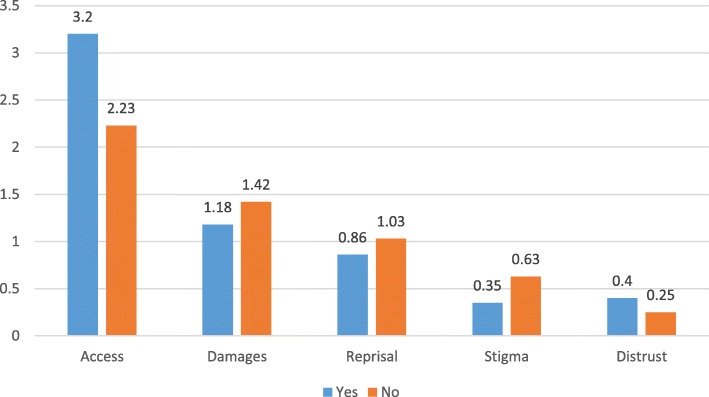
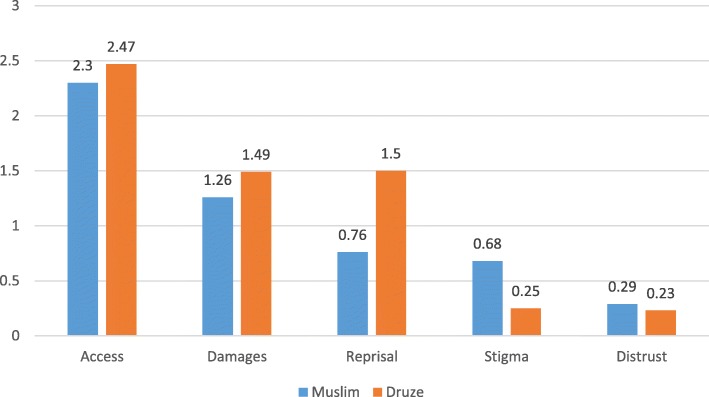
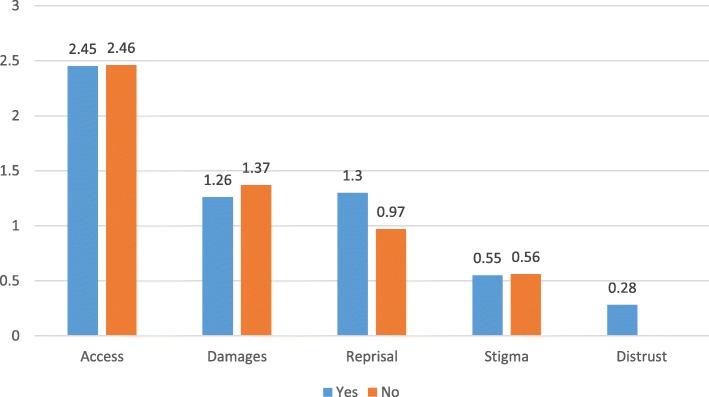
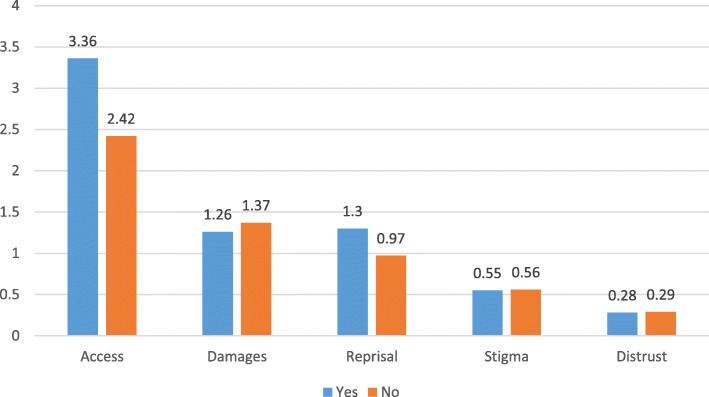
More mothers of adolescents with a mental disorder than those without a mental disorder consulted a professional or school source (39.7% vs. 20.5%; χ = 45.636; p = < 0.001). The most important barriers to help-seeking were those related to "Accessibility", followed by barriers related to the belief that "Treatment is detrimental" and to the possibility of "Reprisal by authorities". Barriers related to "Stigma" and "Distrust of professionals" had the lowest means scores. Differences by ethnicity/religion were found.
Structural barriers related to lack of access, were considered the main obstacle to help-seeking in this Israeli Arab minority population. Cultural barriers such as stigma were considered of secondary importance. Structural barriers could be reduced by increasing the number of accessible public mental health clinics in the minority localities, a responsibility of the Ministry of Health and the HMOs. Information campaigns and psychoeducation for parents would help reduce other barriers to mental health treatment.
加利利研究评估了以色列穆斯林和德鲁兹青少年及其母亲的心理健康服务需求。研究表明,属于阿拉伯少数群体的青少年的母亲寻求帮助的比率远低于犹太母亲。本文研究了母亲寻求帮助的结构性和文化障碍。
所有居住在以色列北部代表穆斯林和德鲁兹当地的 5 个城镇的 9 年级学生都有资格参加这项研究,共有 1639 名(69.3%)学生获得了家长同意并参与其中。在课堂上使用《长处与困难问卷》评估情绪或行为问题。共有 704 对青少年-母亲对参加了随访,并在家中使用《发展与福祉评估清单》、《综合求助障碍问卷》、《一般健康问卷-12》、《主观歧视感指数》和社会人口学问题进行了访谈。采用 Pearson χ 检验和多变量二项逻辑回归分析了风险因素对母亲咨询率的影响。采用探索性因子分析确定了《综合求助障碍问卷》的潜在因素和结构效度,并计算了各量表的均数和标准差。
与没有精神障碍的青少年相比,更多有精神障碍的青少年的母亲会咨询专业人士或学校来源(39.7%比 20.5%;χ ²=45.636;p <0.001)。寻求帮助的最大障碍是与“可及性”相关的障碍,其次是与“治疗有害”和“当局报复”相关的障碍。与“耻辱感”和“不信任专业人员”相关的障碍得分最低。发现了按种族/宗教划分的差异。
在这个以色列阿拉伯少数民族中,与缺乏可及性相关的结构性障碍被认为是寻求帮助的主要障碍。文化障碍,如耻辱感,被认为是次要障碍。可以通过增加少数民族地区可及的公共精神卫生诊所的数量来减少结构性障碍,这是卫生部和 HMO 的责任。针对父母的宣传活动和心理健康教育将有助于减少其他心理健康治疗障碍。