a Department of Genetics , Xuzhou Medical University , Xuzhou , Jiangsu , PR China.
b Jiangsu Key Laboratory of Brain Disease Bioinformation , Xuzhou Medical University , Xuzhou , Jiangsu , PR China.
Pharm Biol. 2019 Dec;57(1):263-268. doi: 10.1080/13880209.2018.1563620.
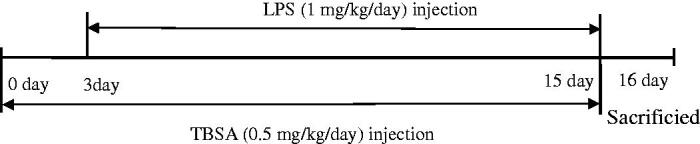
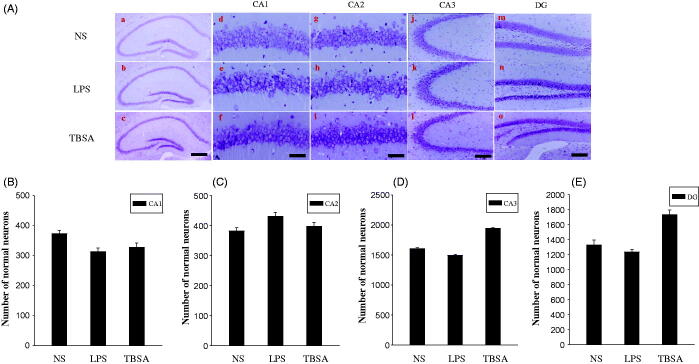
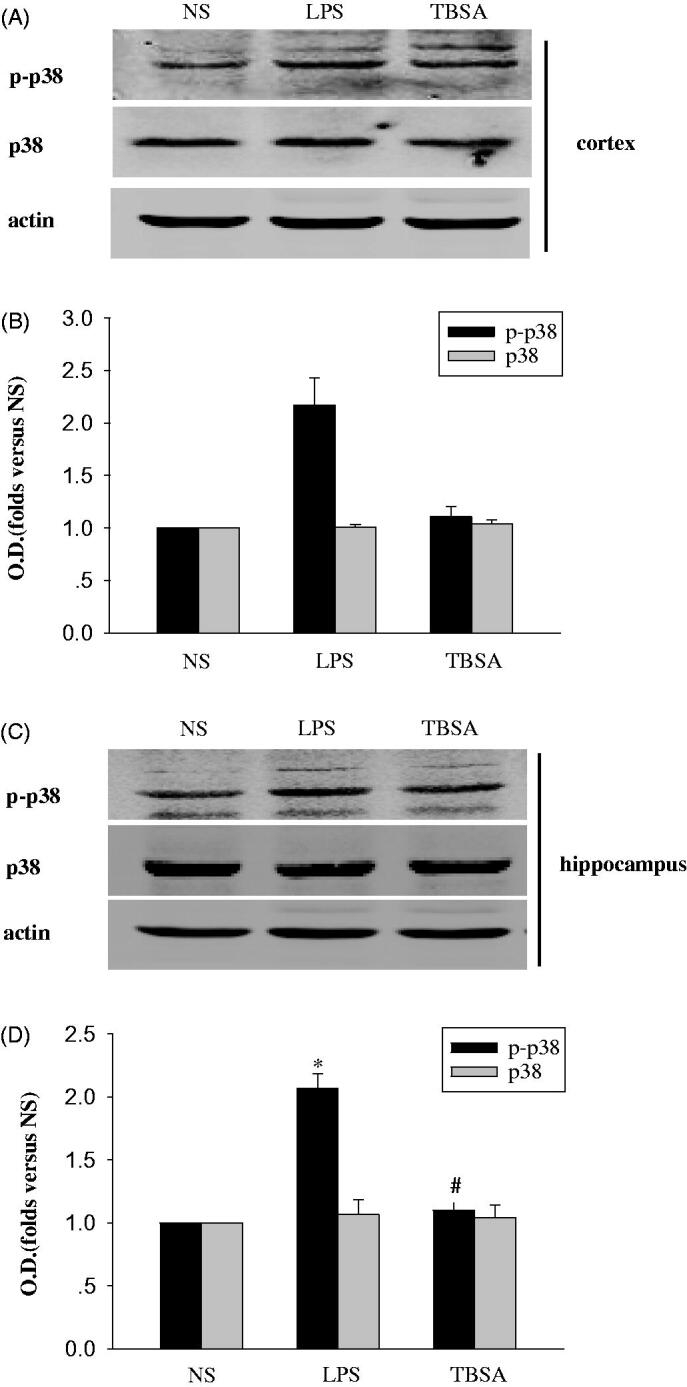
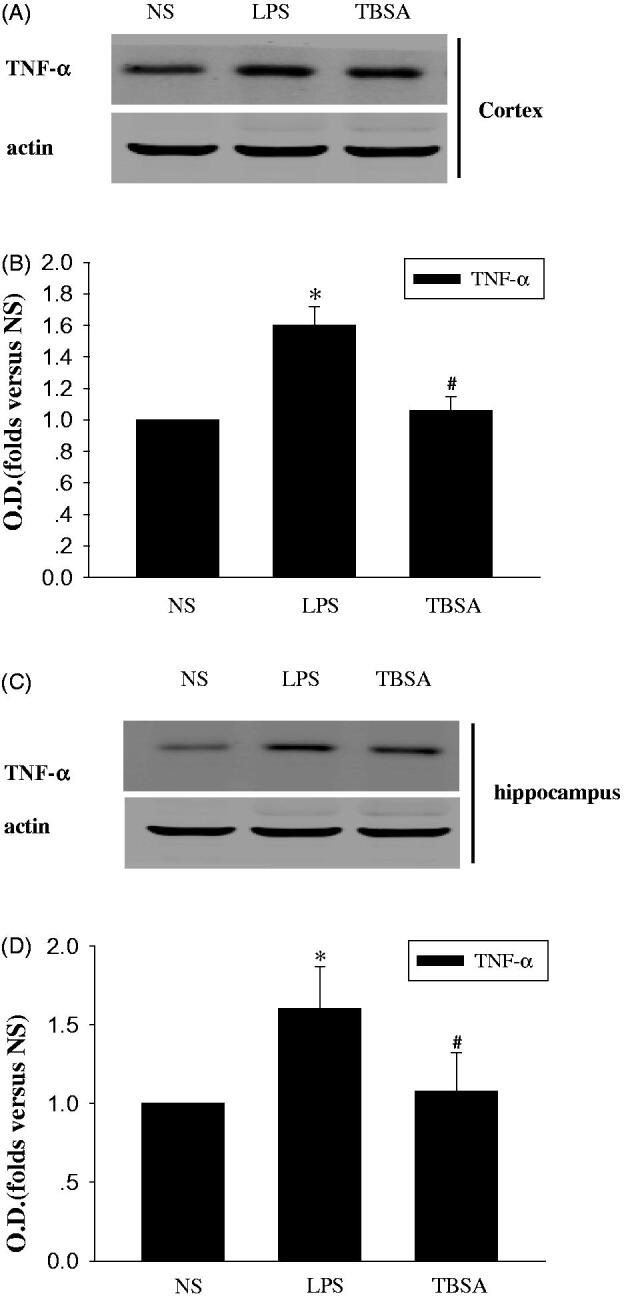
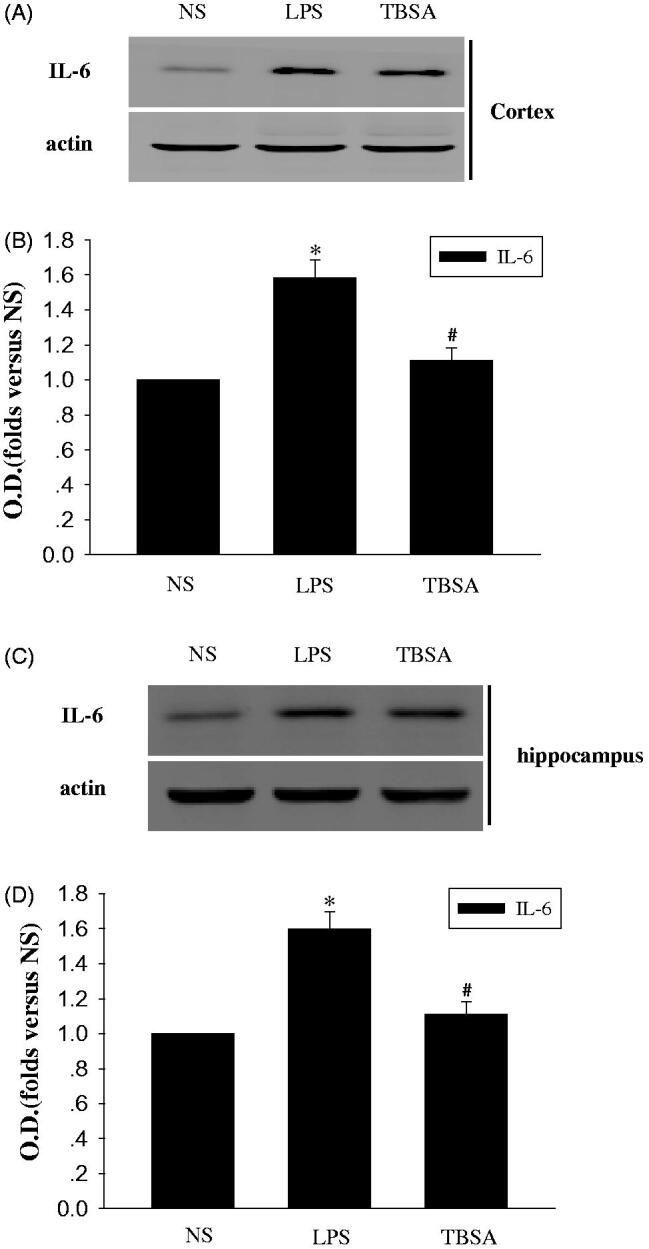
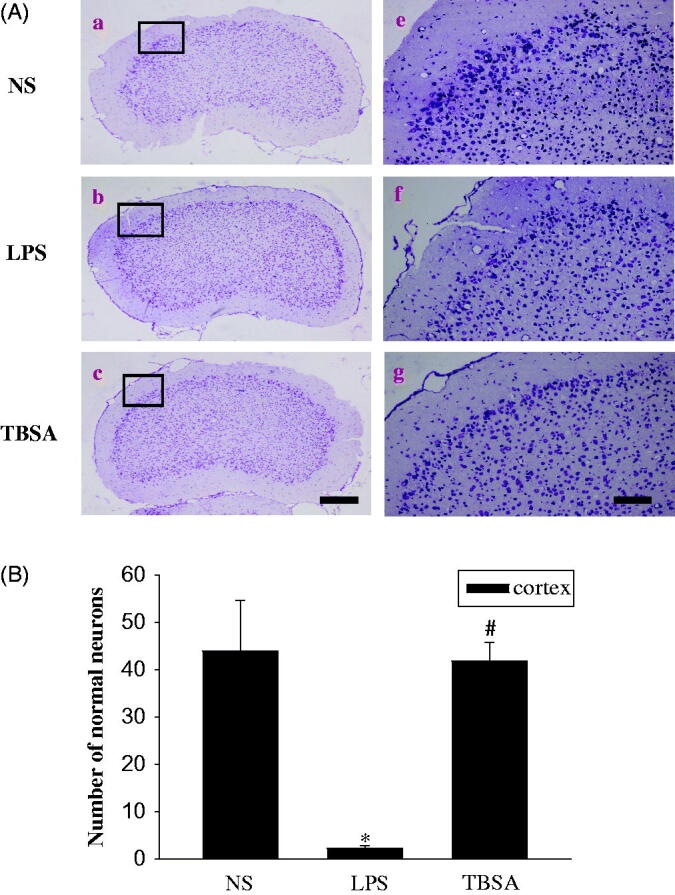
Researchers in a variety of fields have extensively focused on histone deacetylase 6 (HDAC6) due to its aggravation of inflammatory reaction. However, relevant studies examining whether HDAC6 could exacerbate lipopolysaccharide (LPS)-induced inflammation are still lacking. We assessed the role of HDAC6 in LPS-induced brain inflammation and used the HDAC6-selective inhibitor Tubastatin A (TBSA) to investigate the potential mechanisms further. Brain inflammation was induced in Kunming (KM) mice via intraperitoneal (I.P.), injection of Lipopolysaccharide (LPS) (1 mg/kg), the TBSA (0.5 mg/kg) was delivered via intraperitoneal. The phosphorylated p38 (p-p38) Mitogen-activated protein kinases (MAPK) and expression of typical inflammatory mediators, including tumor necrosis factor-α (TNF-α) and interleukin-6 (IL-6) in both the hippocampus and cortex, were examined by immunoblotting. Nissl staining was used to detect the neuronal damage in the hippocampus and the cortex. About 1 mg/kg LPS via daily intraperitoneal (I.P.) injections for 12 days significantly increased p38 MAPK phosphorylation, TNF-α and IL-6 expression, and neuronal loss. However, 0.5 mg/kg TBSA (three days before LPS treatment) by I.P. injections for 15 days could reverse the above results. This present study provided evidence that TBSA significantly suppressed LPS-induced neuroinflammation and the expression of p-p38. Results derived from our study might help reveal the effective targeting strategies of LPS-induced brain inflammation through inhibiting HDAC6.
由于组蛋白去乙酰化酶 6(HDAC6)加剧了炎症反应,因此各个领域的研究人员都对其进行了广泛的研究。然而,目前仍缺乏研究来检验 HDAC6 是否会加剧脂多糖(LPS)诱导的炎症。我们评估了 HDAC6 在 LPS 诱导的脑炎症中的作用,并使用 HDAC6 选择性抑制剂 Tubastatin A(TBSA)进一步研究其潜在机制。通过腹腔内(I.P.)注射 LPS(1mg/kg)诱导昆明(KM)小鼠脑炎症,腹腔内注射 TBSA(0.5mg/kg)。通过免疫印迹检测海马体和皮质中磷酸化 p38(p-p38)丝裂原活化蛋白激酶(MAPK)和典型炎症介质(包括肿瘤坏死因子-α(TNF-α)和白细胞介素-6(IL-6))的表达。通过尼氏染色检测海马体和皮质中的神经元损伤。每日腹腔内(I.P.)注射约 1mg/kg LPS 连续 12 天,显著增加了 p38 MAPK 磷酸化、TNF-α和 IL-6 的表达以及神经元的丢失。然而,腹腔内注射 0.5mg/kg TBSA(在 LPS 处理前三天)连续 15 天可逆转上述结果。本研究为 TBSA 显著抑制 LPS 诱导的神经炎症和 p-p38 的表达提供了证据。我们的研究结果可能有助于揭示通过抑制 HDAC6 来靶向治疗 LPS 诱导的脑炎症的有效策略。