Weisleitner Klemens, Perras Alexandra, Moissl-Eichinger Christine, Andersen Dale T, Sattler Birgit
Institute of Ecology, University of Innsbruck, Innsbruck, Austria.
Austrian Polar Research Institute, Vienna, Austria.
Front Microbiol. 2019 May 10;10:1019. doi: 10.3389/fmicb.2019.01019. eCollection 2019.
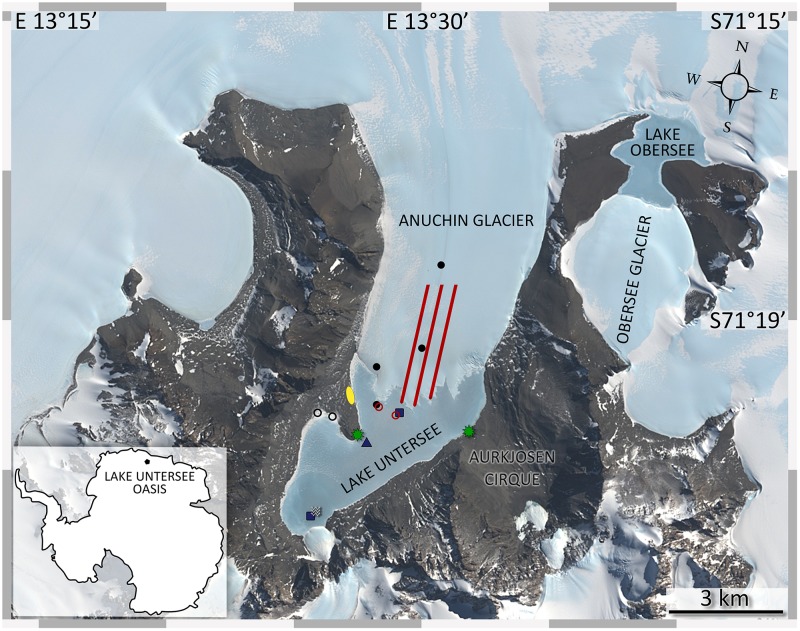
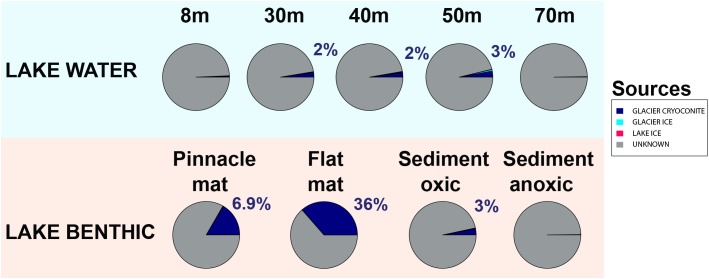
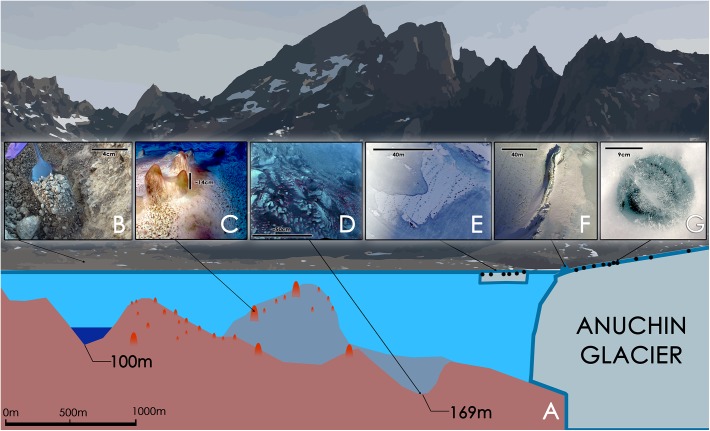
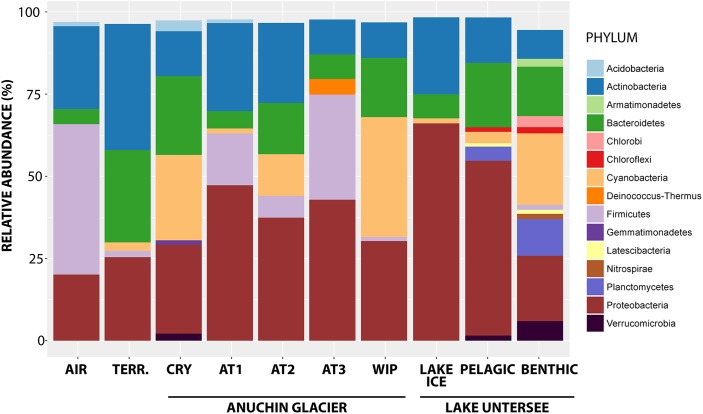
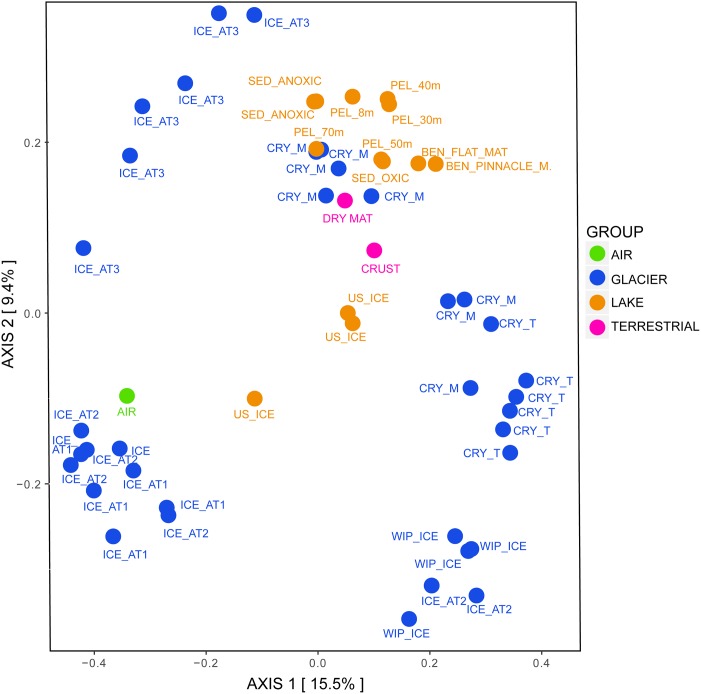
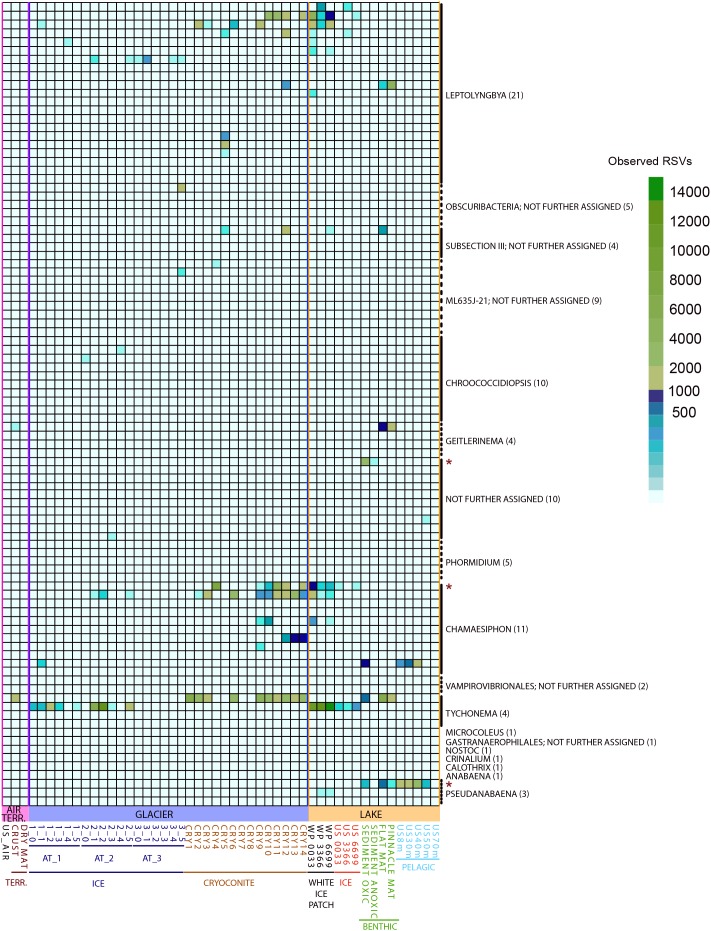
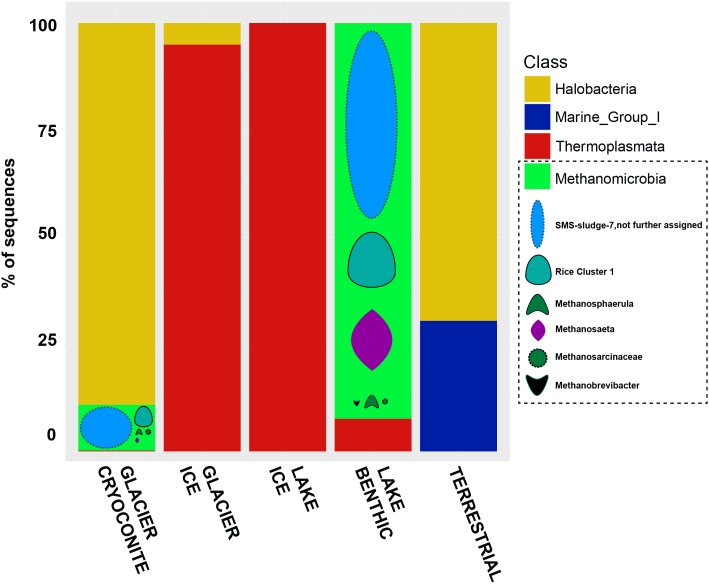
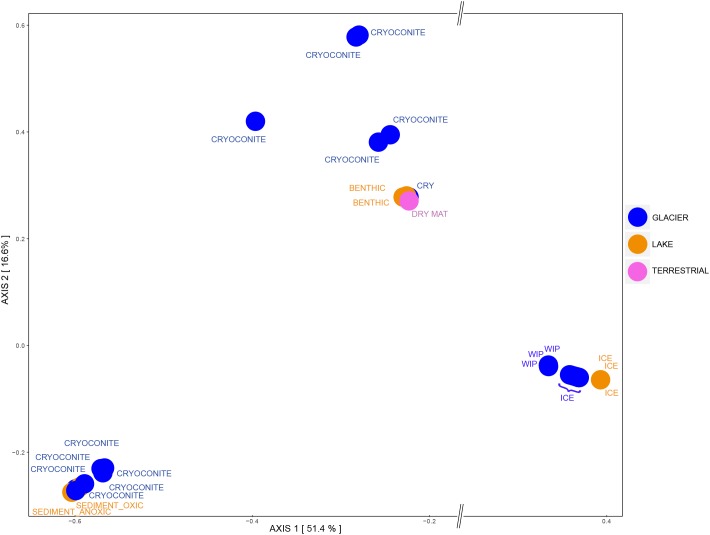
Ultra-oligotrophic Lake Untersee is among the largest and deepest surface lakes of Central Queen Maud Land in East Antarctica. It is dammed at its north end by the Anuchin Glacier and the ice-cover dynamics are controlled by sublimation - not melt - as the dominating ablation process and therefore surface melt during austral summer does not provide significant amounts of water for recharge compared to subsurface melt of the Anuchin Glacier. Several studies have already described the structure and function of the microbial communities within the water column and benthic environments of Lake Untersee, however, thus far there have been no studies that examine the linkages between the lake ecosystem with that of the surrounding soils or the Anuchin Glacier. The glacier may also play an important role as a major contributor of nutrients and biota into the lake ecosystem. Based on microbial 16S rRNA amplicon sequencing, we showed that the dominant bacterial signatures in Lake Untersee, the Anuchin Glacier and its surrounding soils were affiliated with , , , , and . Aerosol and local soil depositions on the glacier surface resulted in distinct microbial communities developing in glacier ice and cryoconite holes. Based on a source tracking algorithm, we found that cryoconite microbial assemblages were a potential source of organisms, explaining up to 36% of benthic microbial mat communities in the lake. However, the major biotic sources for the lake ecosystem are still unknown, illustrating the possible importance of englacial and subglacial zones. The Anuchin Glacier may be considered as a vector in a biological sense for the bacterial colonization of the perennially ice-covered Lake Untersee. However, despite a thick perennial ice cover, observed "lift-off" microbial mats escaping the lake make a bidirectional transfer of biota plausible. Hence, there is an exchange of biota between Lake Untersee and connective habitats possible despite the apparent sealing by a perennial ice cover and the absence of moat areas during austral summer.
超贫营养的翁特湖是东南极毛德皇后地中部最大且最深的地表湖泊之一。它的北端被阿努钦冰川拦住,冰盖动态受升华作用(而非融化)控制,升华是主要的消融过程,因此与阿努钦冰川的地下融化相比,南极夏季的地表融化并未为补给提供大量水源。已有多项研究描述了翁特湖水柱和底栖环境中微生物群落的结构与功能,然而,迄今为止尚无研究考察该湖泊生态系统与周边土壤或阿努钦冰川生态系统之间的联系。冰川作为湖泊生态系统营养物质和生物群的主要贡献者,可能也起着重要作用。基于微生物16S rRNA扩增子测序,我们发现翁特湖、阿努钦冰川及其周边土壤中的优势细菌特征与 、 、 、 及 相关。冰川表面的气溶胶和当地土壤沉积导致冰川冰和冰尘洞中形成了不同的微生物群落。基于一种源追踪算法,我们发现冰尘微生物群落是一种潜在的生物源,可解释该湖泊中高达36%的底栖微生物垫群落。然而,该湖泊生态系统的主要生物源仍然未知,这说明了冰内和冰下区域可能具有的重要性。从生物学意义上讲,阿努钦冰川可被视为常年被冰覆盖的翁特湖细菌定殖的一个载体。然而,尽管有厚厚的常年冰盖,但观察到的从湖中逸出的“升空”微生物垫使得生物群的双向转移成为可能。因此,尽管有常年冰盖的明显封闭以及南极夏季没有护城河区域,但翁特湖与连接栖息地之间仍有可能进行生物群的交换。