Klymiuk Ingeborg, Bambach Isabella, Patra Vijaykumar, Trajanoski Slave, Wolf Peter
Center for Medical Research, Medical University of Graz Graz, Austria.
Research Unit for Photodermatology, Department of Dermatology, Medical University of Graz Graz, Austria.
Front Microbiol. 2016 Dec 20;7:2012. doi: 10.3389/fmicb.2016.02012. eCollection 2016.
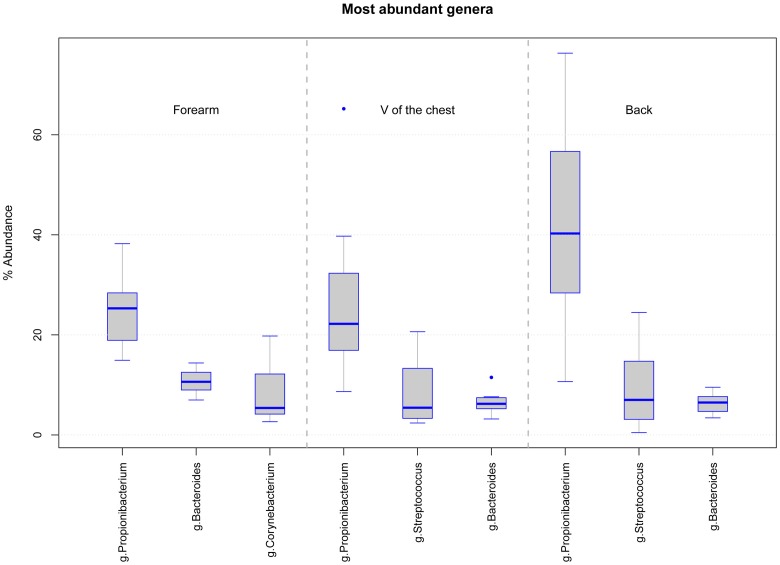
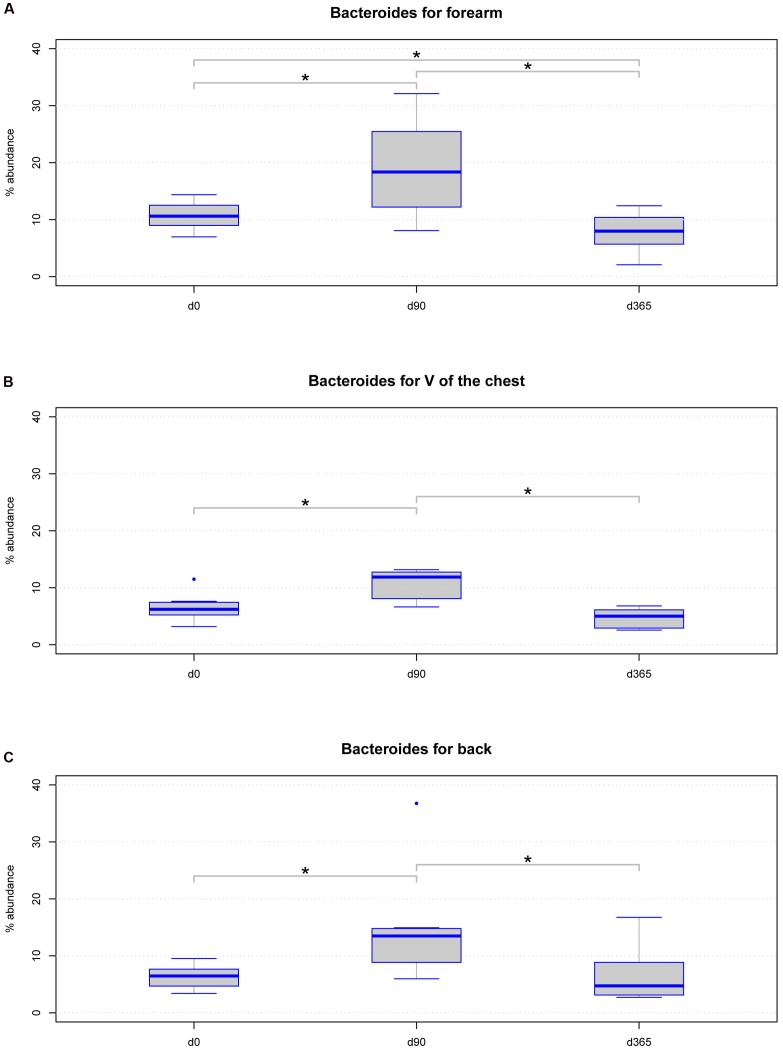
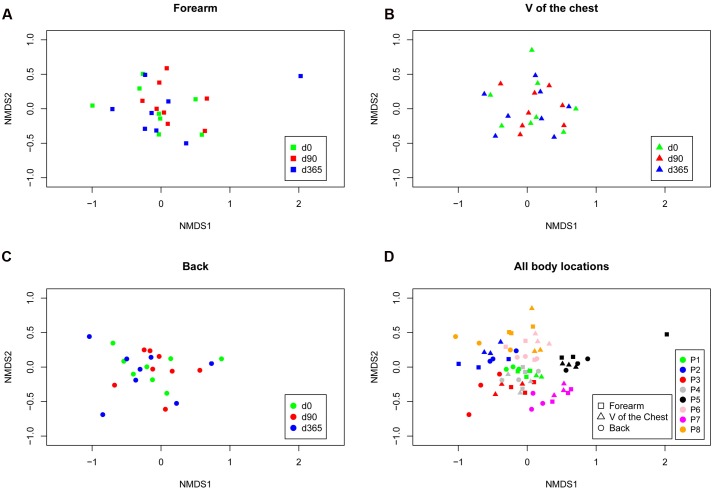
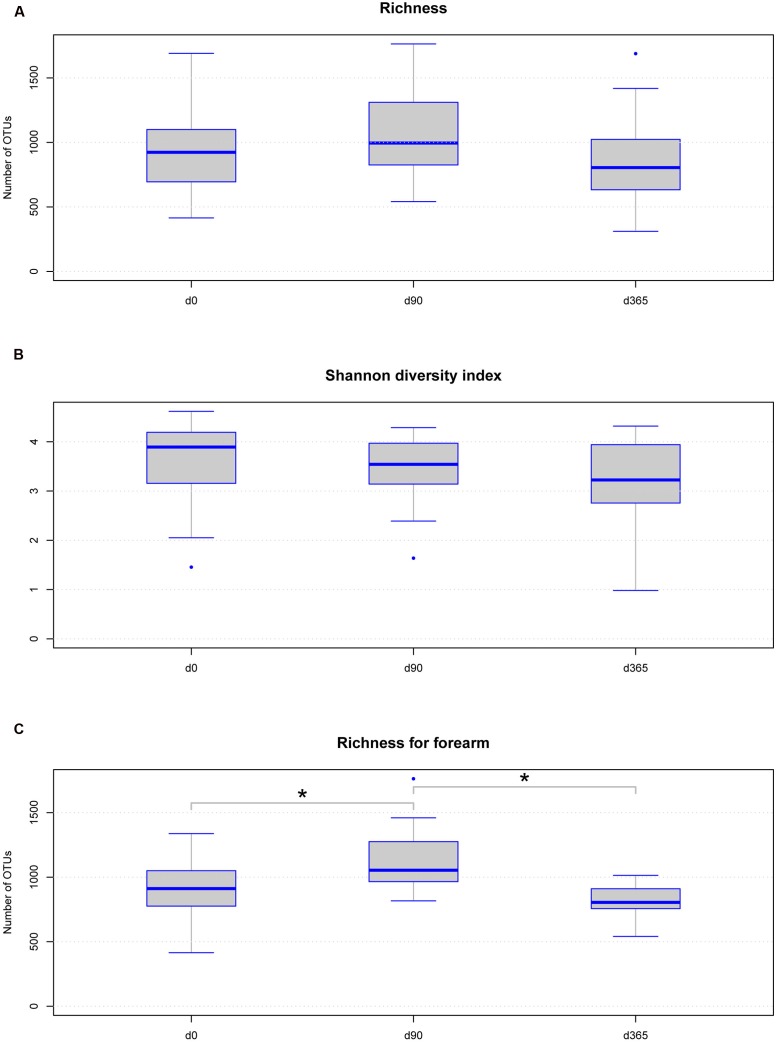
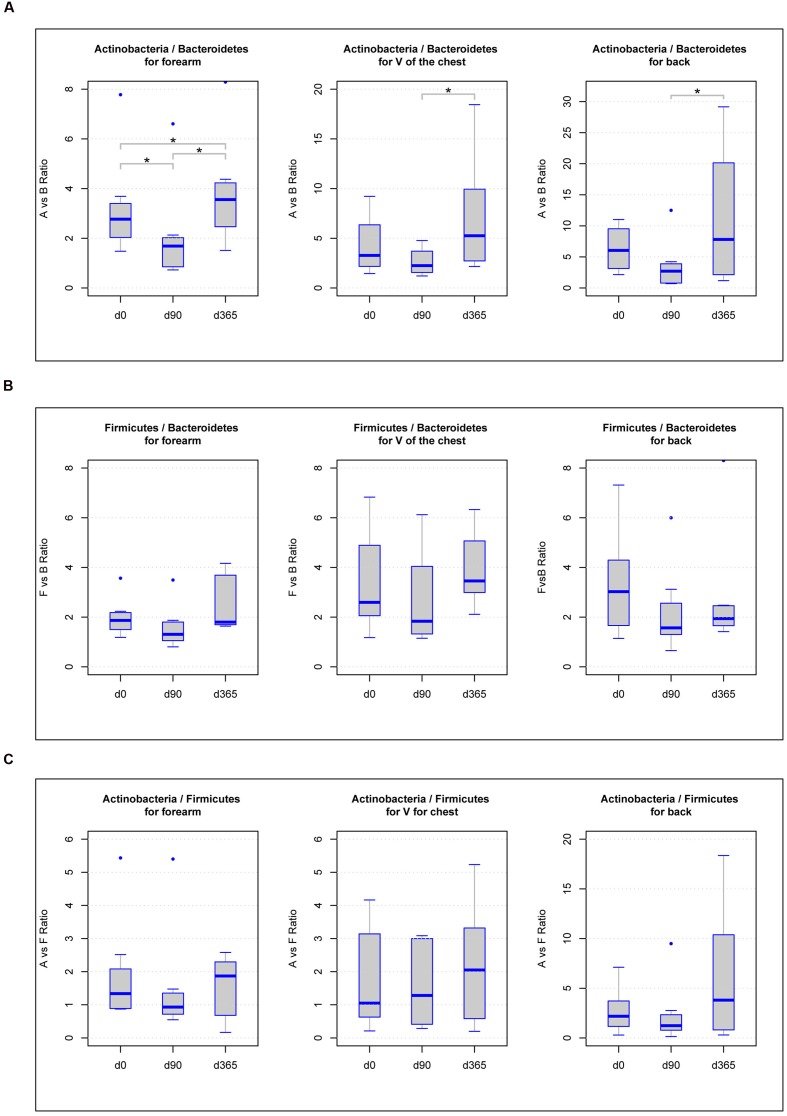
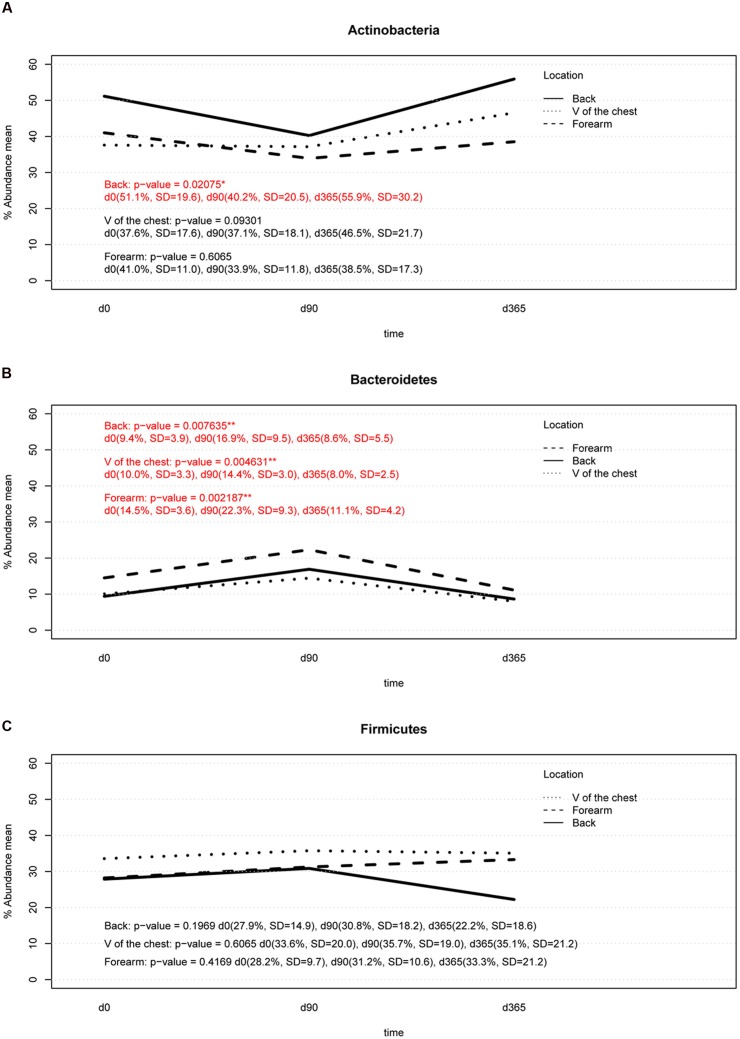
Microbiome research and improvements in high throughput sequencing technologies revolutionize our current scientific viewpoint. The human associated microbiome is a prominent focus of clinical research. Large cohort studies are often required to investigate the human microbiome composition and its changes in a multitude of human diseases. Reproducible analyses of large cohort samples require standardized protocols in study design, sampling, storage, processing, and data analysis. In particular, the effect of sample storage on actual results is critical for reproducibility. So far, the effect of storage conditions on the results of microbial analysis has been examined for only a few human biological materials (e.g., stool samples). There is a lack of data and information on appropriate storage conditions on other human derived samples, such as skin. Here, we analyzed skin swab samples collected from three different body locations (forearm, V of the chest and back) of eight healthy volunteers. The skin swabs were soaked in sterile buffer and total DNA was isolated after freezing at -80°C for 24 h, 90 or 365 days. Hypervariable regions V1-2 were amplified from total DNA and libraries were sequenced on an Illumina MiSeq desktop sequencer in paired end mode. Data were analyzed using Qiime 1.9.1. Summarizing all body locations per time point, we found no significant differences in alpha diversity and multivariate community analysis among the three time points. Considering body locations separately significant differences in the richness of forearm samples were found between d0 vs. d90 and d90 vs. d365. Significant differences in the relative abundance of major skin genera (, , , , and ) were detected in our samples in only among all time points in forearm samples and between d0 vs. d90 and d90 vs. d365 in V of the chest and back samples. Accordingly, significant differences were detected in the ratios of the main phyla , , and : vs. at d0 vs. d90 (-value = 0.0234), at d0 vs. d365 (-value = 0.0234) and d90 vs. d365 (-value = 0.0234) in forearm samples and at d90 vs. d365 in V of the chest (-value = 0.0234) and back samples (-value = 0.0234). The ratios of vs. showed no significant changes in any of the body locations as well as the ratios of vs. at any time point. Studies with larger sample sizes are required to verify our results and determine long term storage effects with regard to specific biological questions.
微生物组研究以及高通量测序技术的改进彻底改变了我们当前的科学观点。人类相关微生物组是临床研究的一个突出重点。通常需要进行大型队列研究来调查人类微生物组的组成及其在多种人类疾病中的变化。对大型队列样本进行可重复分析需要在研究设计、采样、存储、处理和数据分析方面采用标准化方案。特别是,样本存储对实际结果的影响对于可重复性至关重要。到目前为止,仅对少数人类生物材料(如粪便样本)研究了存储条件对微生物分析结果的影响。对于其他人类衍生样本(如皮肤),缺乏关于适当存储条件的数据和信息。在这里,我们分析了从八名健康志愿者的三个不同身体部位(前臂、胸部V区和背部)采集的皮肤拭子样本。将皮肤拭子浸泡在无菌缓冲液中,在-80°C下冷冻24小时、90天或365天后分离总DNA。从总DNA中扩增高变区V1-2,并在Illumina MiSeq台式测序仪上以双端模式对文库进行测序。使用Qiime 1.9.1分析数据。汇总每个时间点的所有身体部位,我们发现在三个时间点之间,α多样性和多变量群落分析没有显著差异。单独考虑身体部位,在前臂样本中,d0与d90以及d90与d365之间发现了丰富度的显著差异。在我们的样本中,仅在前臂样本的所有时间点之间以及胸部V区和背部样本的d0与d90以及d90与d365之间检测到主要皮肤属(、、、、和)相对丰度的显著差异。因此,在前臂样本中,d0与d90(-值 = 0.0234)、d0与d365(-值 = 0.0234)以及d90与d365(-值 = 0.0234)时,主要门、和的比例存在显著差异;在胸部V区样本的d90与d365(-值 = 0.0234)以及背部样本的d90与d365(-值 = 0.0234)时也存在显著差异。与的比例在任何身体部位均未显示出显著变化,与的比例在任何时间点也未显示出显著变化。需要进行更大样本量的研究来验证我们的结果,并确定关于特定生物学问题的长期存储影响。