Servei de Microbiologia, Hospital Universitari Germans Trias i Pujol, Institut d'Investigació Germans Trias i Pujol, Universitat Autònoma de Barcelona, CIBER Enfermedades Respiratorias, Barcelona, Spain.
Servei de Reumatologia, Hospital Universitari Germans Trias i Pujol, Institut d'Investigació Germans Trias i Pujol, Universitat Autònoma de Barcelona, Barcelona, Spain.
Front Immunol. 2019 May 7;10:1013. doi: 10.3389/fimmu.2019.01013. eCollection 2019.
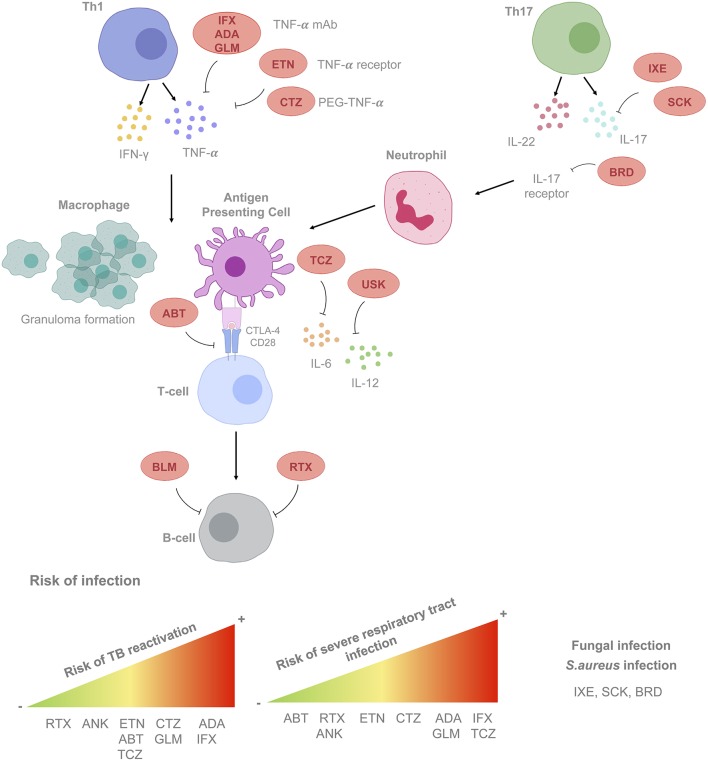
Host susceptibility to respiratory tract infections (RTI) is dependent on both genetic and acquired risk factors. Repeated bacterial and viral RTI, such as pneumonia from encapsulated microorganisms, respiratory tract infections related to respiratory syncytial virus or influenza, and even the development of bronchiectasis and asthma, are often reported as the first symptom of primary immunodeficiencies. In the same way, neutropenia is a well-known risk factor for invasive aspergillosis, as well as lymphopenia for , and mycobacterial infections. However, in the last decades a better knowledge of immune signaling networks and the introduction of next generation sequencing have increased the number and diversity of known inborn errors of immunity. On the other hand, the use of monoclonal antibodies targeting cytokines, such as tumor necrosis factor alpha has revealed new risk groups for infections, such as tuberculosis. The use of biological response modifiers has spread to almost all medical specialties, including inflammatory diseases and neoplasia, and are being used to target different signaling networks that may mirror some of the known immune deficiencies. From a clinical perspective, the individual contribution of genetics, and/or targeted treatments, to immune dysregulation is difficult to assess. The aim of this article is to review the known and newly described mechanisms of impaired immune signaling that predispose to RTI, including new insights into host genetics and the impact of biological response modifiers, and to summarize clinical recommendations regarding vaccines and prophylactic treatments in order to prevent infections.
宿主易患呼吸道感染(RTI)取决于遗传和获得性风险因素。反复发生的细菌和病毒 RTI,如由囊胞微生物引起的肺炎、与呼吸道合胞病毒或流感相关的呼吸道感染,甚至支气管扩张和哮喘的发展,常被报道为原发性免疫缺陷的首发症状。同样,中性粒细胞减少症是侵袭性曲霉菌病的一个众所周知的危险因素,而淋巴细胞减少症则是卡氏肺孢子虫病和分枝杆菌感染的危险因素。然而,在过去几十年中,对免疫信号网络的更好了解和下一代测序的引入增加了已知的先天性免疫缺陷的数量和多样性。另一方面,针对细胞因子(如肿瘤坏死因子-α)的单克隆抗体的使用揭示了新的感染风险群体,如结核病。生物反应调节剂的使用已扩展到几乎所有医学专业,包括炎症性疾病和肿瘤,并且正在被用于靶向可能反映某些已知免疫缺陷的不同信号转导网络。从临床角度来看,个体对遗传因素和/或靶向治疗对免疫失调的贡献是难以评估的。本文的目的是回顾已知和新描述的免疫信号转导受损导致 RTI 的机制,包括宿主遗传学的新见解和生物反应调节剂的影响,并总结关于疫苗和预防治疗以预防感染的临床建议。