Bastos Helder Novais, Osório Nuno S, Gagneux Sebastien, Comas Iñaki, Saraiva Margarida
Department of Pneumology, Centro Hospitalar do São João, Porto, Portugal.
Life and Health Sciences Research Institute (ICVS), School of Medicine, University of Minho, Braga, Portugal.
Front Immunol. 2018 Jan 9;8:1948. doi: 10.3389/fimmu.2017.01948. eCollection 2017.
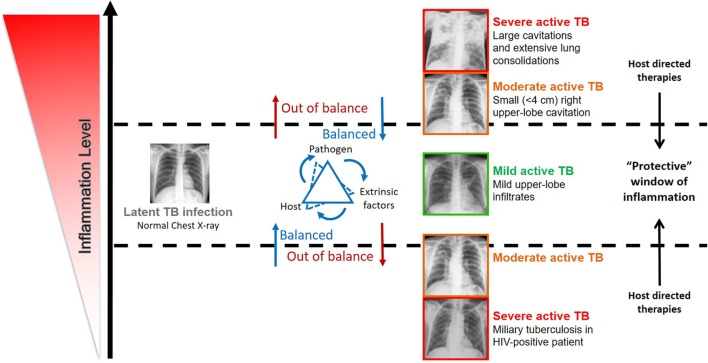
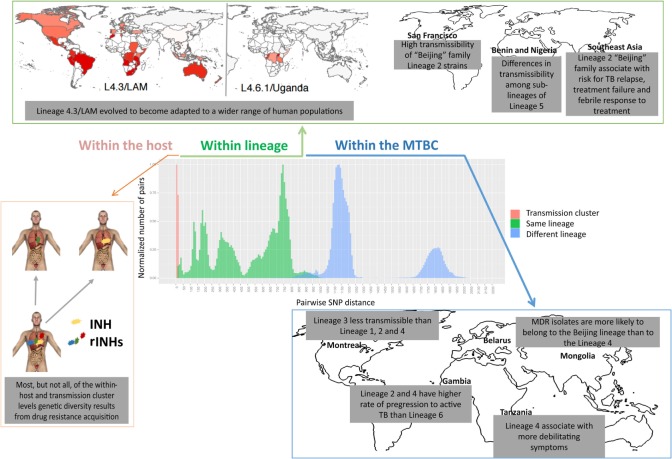
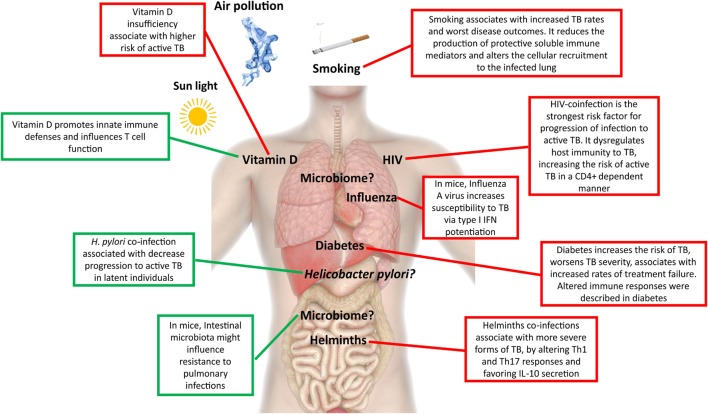
The already enormous burden caused by tuberculosis (TB) will be further aggravated by the association of this disease with modern epidemics, as human immunodeficiency virus and diabetes. Furthermore, the increasingly aging population and the wider use of suppressive immune therapies hold the potential to enhance the incidence of TB. New preventive and therapeutic strategies based on recent advances on our understanding of TB are thus needed. In particular, understanding the intricate network of events modulating inflammation in TB will help to build more effective vaccines and host-directed therapies to stop TB. This review integrates the impact of host, pathogen, and extrinsic factors on inflammation and the almost scientifically unexplored complexity emerging from the interactions between these three factors. We highlight the exciting data showing a contribution of this for the clinical outcome of TB and the need of incorporating it when developing novel strategies to rewire the immune response in TB.
结核病(TB)所造成的已然巨大的负担,将因该疾病与现代流行病(如人类免疫缺陷病毒和糖尿病)的关联而进一步加重。此外,人口老龄化加剧以及免疫抑制疗法的广泛应用有可能增加结核病的发病率。因此,需要基于我们对结核病最新认识进展的新预防和治疗策略。特别是,了解调节结核病炎症的复杂事件网络将有助于研发更有效的疫苗和宿主导向疗法来遏制结核病。本综述整合了宿主、病原体和外在因素对炎症的影响,以及这三个因素之间相互作用所产生的几乎尚未被科学探索的复杂性。我们强调了令人振奋的数据,这些数据显示了这一点对结核病临床结局的影响,以及在制定重新调整结核病免疫反应的新策略时纳入这一点的必要性。