Department of Respiratory Medicine, Toho University Graduate School of Medicine, 143-8541 Ota-ku, Omori Nishi 6-11-1, Tokyo, Japan.
Medicina (Kaunas). 2019 May 20;55(5):172. doi: 10.3390/medicina55050172.
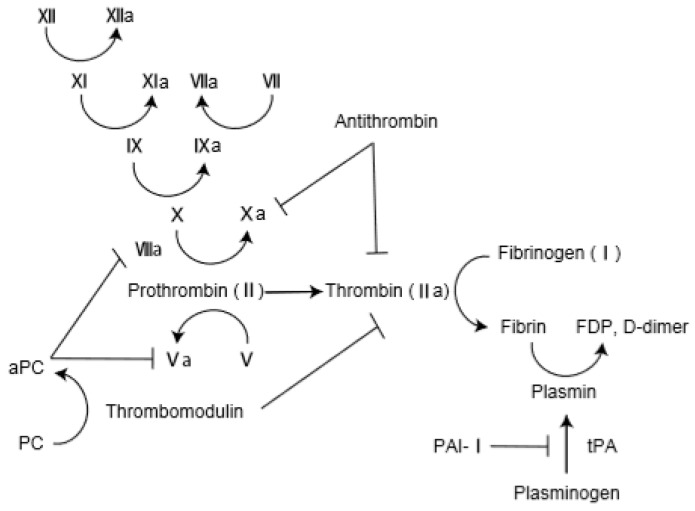
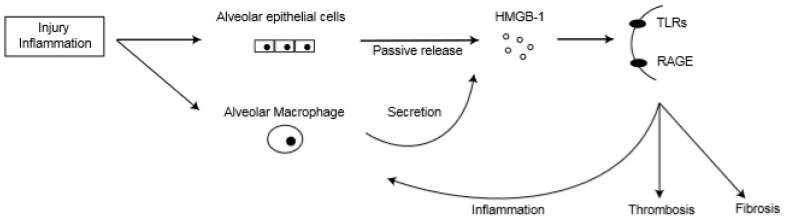
Acute exacerbation of idiopathic pulmonary fibrosis (AE-IPF) is an acute respiratory worsening of unidentifiable cause that sometimes develops during the clinical course of IPF. Although the incidence of AE-IPF is not high, prognosis is poor. The pathogenesis of AE-IPF is not well understood; however, evidence suggests that coagulation abnormalities and inflammation are involved. Thrombomodulin is a transmembranous glycoprotein found on the cell surface of vascular endothelial cells. Thrombomodulin combines with thrombin, regulates coagulation/fibrinolysis balance, and has a pivotal role in suppressing excess inflammation through its inhibition of high-mobility group box 1 protein and the complement system. Thus, thrombomodulin might be effective in the treatment of AE-IPF, and we and other groups found that recombinant human soluble thrombomodulin improved survival in patients with AE-IPF. This review summarizes the existing evidence and considers the therapeutic role of thrombomodulin in AE-IPF.
特发性肺纤维化(IPF)急性加重(AE-IPF)是一种不明原因的急性呼吸恶化,有时在 IPF 的临床病程中发生。尽管 AE-IPF 的发病率不高,但预后很差。AE-IPF 的发病机制尚不清楚;然而,有证据表明凝血异常和炎症参与其中。血栓调节蛋白是一种存在于血管内皮细胞表面的跨膜糖蛋白。血栓调节蛋白与凝血酶结合,调节凝血/纤溶平衡,并通过抑制高迁移率族蛋白 1 蛋白和补体系统来抑制过度炎症,发挥关键作用。因此,血栓调节蛋白可能对 AE-IPF 的治疗有效,我们和其他小组发现重组人可溶性血栓调节蛋白改善了 AE-IPF 患者的生存率。本综述总结了现有证据,并考虑了血栓调节蛋白在 AE-IPF 中的治疗作用。