Young Julie K, Golla Julie, Draper John P, Broman Derek, Blankenship Terry, Heilbrun Richard
USDA National Wildlife Research Center, Millville Predator Research Facility, Logan, UT 84321, USA.
Department of Wildland Resources, Utah State University, Logan, UT 84322, USA.
Animals (Basel). 2019 May 24;9(5):275. doi: 10.3390/ani9050275.
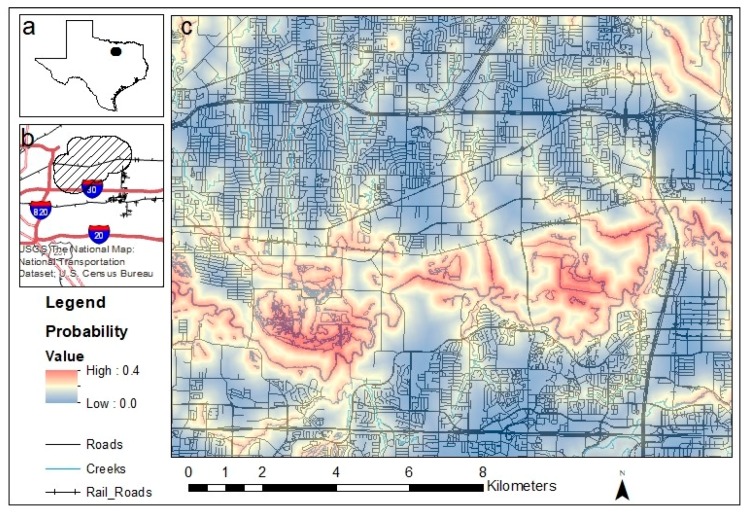
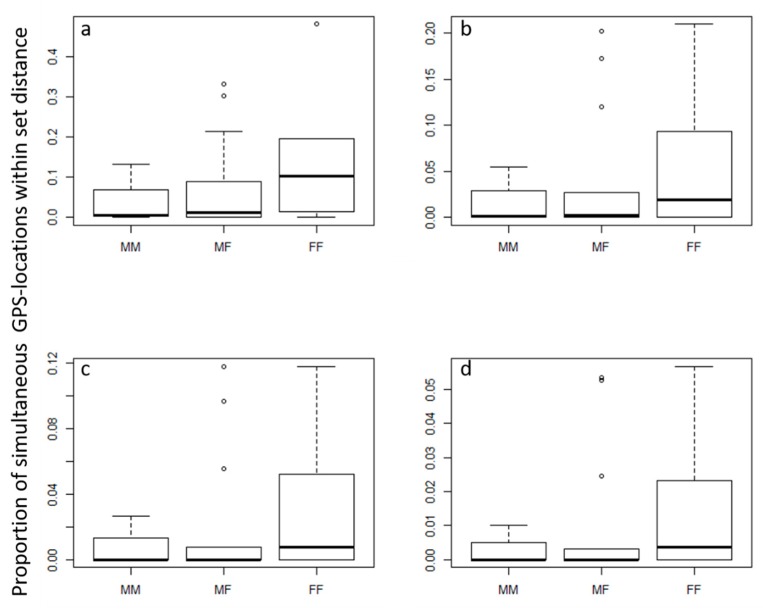
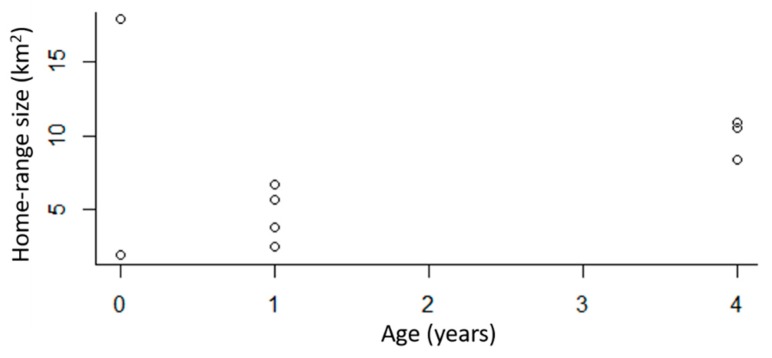
Global urbanization is rapidly changing the landscape for wildlife species that must learn to persist in declining wild spacing, adapt, or risk extinction. Many mesopredators have successfully exploited urban niches, and research on these species in an urban setting offers insights into the traits that facilitate their success. In this study, we examined space use and activity patterns from GPS-collared bobcats () in the Dallas-Fort Worth metroplex, Texas, USA. We found that bobcats select for natural/agricultural features, creeks, and water ways and there is greater home-range overlap in these habitats. They avoid roads and are less likely to have home-range overlap in habitats with more roads. Home-range size is relatively small and overlap relatively high, with older animals showing both greater home-range size and overlap. Simultaneous locations suggest bobcats are neither avoiding nor attracted to one another, despite the high overlap across home ranges. Finally, bobcats are active at all times of day and night. These results suggest that access to natural features and behavioral plasticity may enable bobcats to live in highly developed landscapes.
全球城市化正在迅速改变野生动物的生存环境,这些物种必须学会在不断减少的野生空间中生存、适应,否则将面临灭绝风险。许多中型食肉动物已成功利用城市生态位,对这些物种在城市环境中的研究有助于深入了解促成它们成功的特性。在本研究中,我们调查了美国得克萨斯州达拉斯 - 沃思堡都会区佩戴GPS项圈的短尾猫的空间利用和活动模式。我们发现,短尾猫会选择自然/农业特征区域、小溪和水道,并且在这些栖息地的家域重叠度更高。它们会避开道路,在道路较多的栖息地家域重叠的可能性较小。家域面积相对较小,重叠度相对较高,年龄较大的动物家域面积和重叠度都更大。同时定位显示,尽管家域高度重叠,但短尾猫既不相互回避也不相互吸引。最后,短尾猫在白天和夜晚的所有时段都很活跃。这些结果表明,接触自然特征和行为可塑性可能使短尾猫能够在高度发达的景观中生存。