Department of Molecular Medicine, University of Padova, Via Gabelli 63, 35100, Padova, Italy.
Infectious Diseases Unit, Padova Hospital, Via Giustiniani, 2 -, 35128, Padova, Italy.
BMC Public Health. 2019 May 28;19(1):645. doi: 10.1186/s12889-019-7004-x.
Few studies focused on longitudinal modifications over time of high-risk HPV (HR-HPV) at anal and oral sites in HIV+ men who have sex with men (MSM).
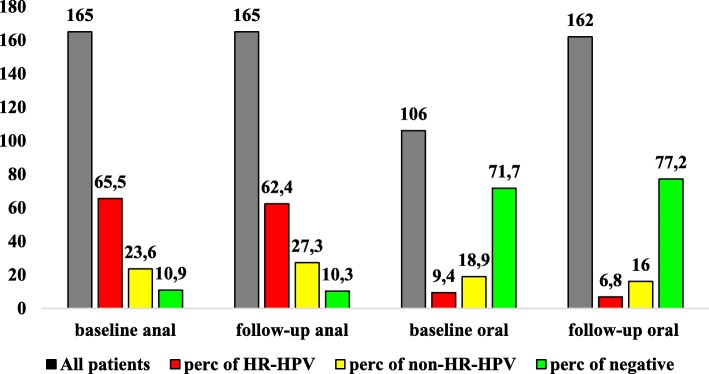
We described patterns and longitudinal changes of HR-HPV detection and the prevalence of HR-HPV covered by the nonavalent HPV vaccine (vax-HPV) at oral and anal sites in 165 HIV+ MSM followed in an Italian hospital. The samples were collected at baseline and after 24 months (follow-up). The presence of HPV was investigated with Inno-LiPA HPV Genotyping Extra II.
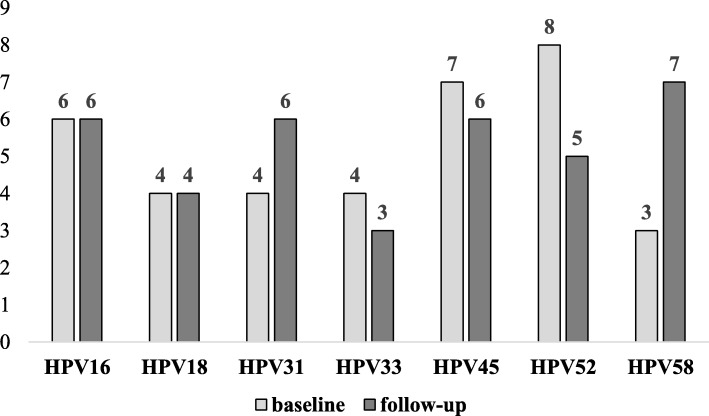
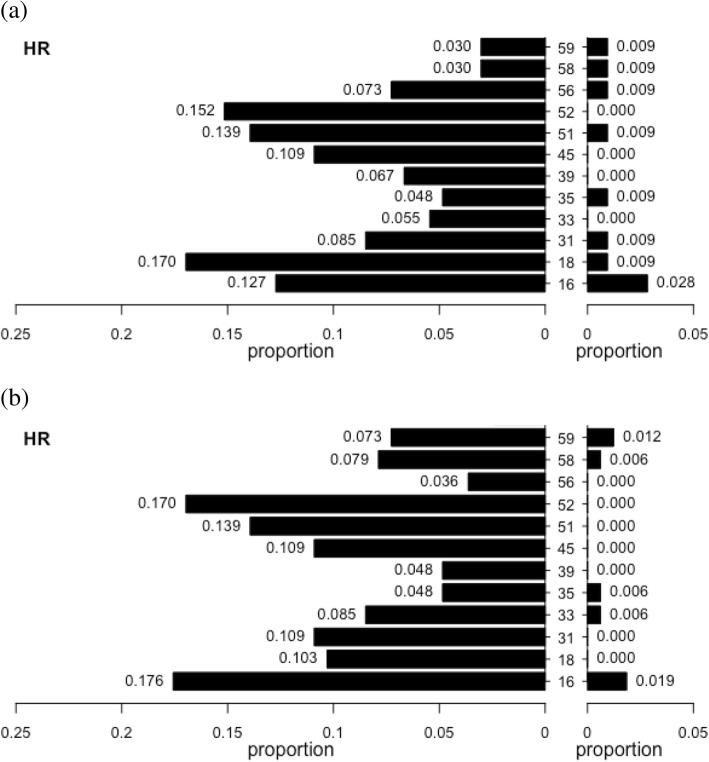
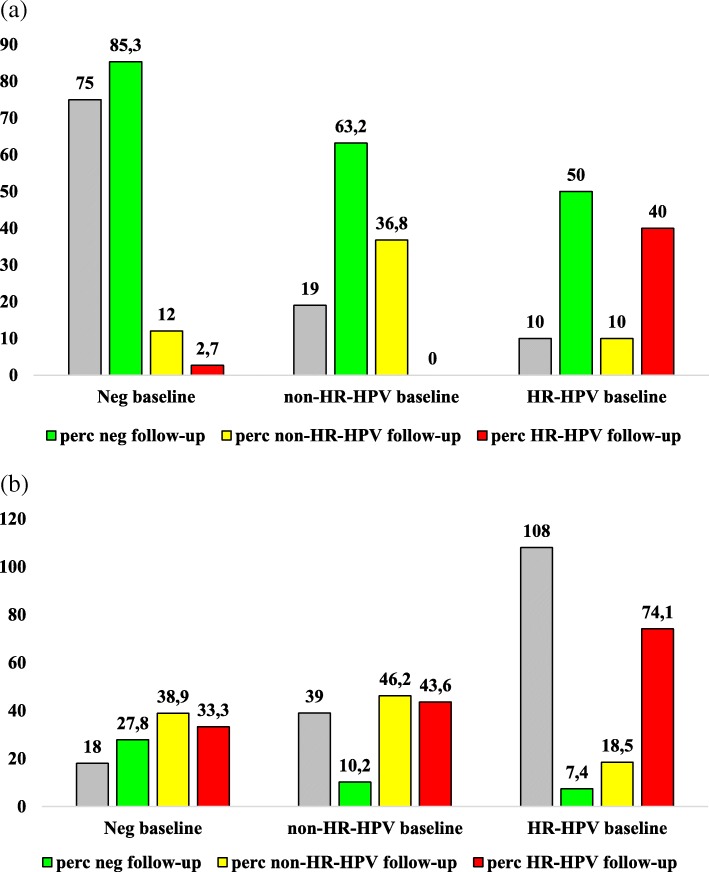
Median age was 44 years (IQR 36-53), median CD4+ cell count at nadir was 312 cells/mm (IQR 187-450). A total of 120 subjects (72.7%) were receiving successful antiretroviral therapy (ART). At baseline and follow-up, the frequency of HR-HPV was significantly higher in the anal site (65.4% vs 9.4 and 62.4% vs 6.8%, respectively). Only 2.9% of subjects were persistently HR-HPV negative at both sites. All oral HR-HPV were single at baseline vs 54.6% at baseline at the anal site (p = 0.005), and all oral HR-HPV were single at follow-up vs 54.4% at anal site at follow-up (p = 0.002). The lowest rate of concordance between the oral and anal results was found for HR-HPV detection; almost all HR-HPV positive results at both anal and oral sites had different HR-HPV.The most frequent HR-HPV in anal swabs at baseline and follow-up were HPV-16 and HPV-52.At follow-up at anal site, 37.5% of patients had different HR-HPV genotypes respect to baseline, 28.8% of subjects with 1 HR-HPV at baseline had an increased number of HR-HPV, and patients on ART showed a lower frequency of confirmed anal HR-HPV detection than untreated patients (p = 0.03) over time. Additionally,54.6 and 50.5% of patients had only HR-vax-HPV at anal site at baseline and follow-up, respectively; 15.2% had only HR-vax-HPV at baseline and follow-up.
We believe that it is important testing multiple sites over time in HIV-positive MSM. ART seems to protect men from anal HR-HPV confirmed detection. Vaccination programmes could reduce the number of HR-HPV genotypes at anal site and the risk of the first HR-HPV acquisition at the oral site.
很少有研究关注艾滋病毒阳性男男性行为者(MSM)的肛门和口腔部位高危型 HPV(HR-HPV)随时间的纵向变化。
我们描述了在意大利一家医院接受治疗的 165 名艾滋病毒阳性 MSM 中,口腔和肛门部位 HR-HPV 检测的模式和纵向变化,以及九价 HPV 疫苗(vax-HPV)所涵盖的 HR-HPV 流行情况。在基线和 24 个月(随访)时采集样本。使用 Inno-LiPA HPV Genotyping Extra II 检测 HPV 的存在。
中位年龄为 44 岁(IQR 36-53),中位 CD4+细胞计数在最低点为 312 个细胞/mm(IQR 187-450)。共有 120 名(72.7%)受试者正在接受成功的抗逆转录病毒治疗(ART)。在基线和随访时,肛门部位 HR-HPV 的频率明显更高(65.4%比 9.4%和 62.4%比 6.8%)。只有 2.9%的受试者在两个部位均持续 HR-HPV 阴性。所有口腔 HR-HPV 在基线时均为单一型,而在肛门部位则有 54.6%(p=0.005),所有口腔 HR-HPV 在随访时均为单一型,而在肛门部位则有 54.4%(p=0.002)。口腔和肛门结果之间一致性最低的是 HR-HPV 检测;几乎所有在肛门和口腔部位均为 HR-HPV 阳性的结果,其 HR-HPV 均不同。在基线和随访时,肛门拭子中最常见的 HR-HPV 是 HPV-16 和 HPV-52。在肛门部位随访时,37.5%的患者与基线时相比有不同的 HR-HPV 基因型,28.8%的基线时存在 1 种 HR-HPV 的患者 HR-HPV 数量增加,接受 ART 的患者与未接受 ART 的患者相比,在肛门部位确认 HR-HPV 检测的频率随时间下降(p=0.03)。此外,分别有 54.6%和 50.5%的患者在基线和随访时仅在肛门部位存在 HR-vax-HPV,分别有 15.2%的患者在基线和随访时仅存在 HR-vax-HPV。
我们认为在 HIV 阳性 MSM 中随时间多次检测多个部位非常重要。ART 似乎可保护男性免受肛门 HR-HPV 的确认检测。疫苗接种方案可降低肛门部位 HR-HPV 基因型的数量,并降低口腔部位首次 HR-HPV 感染的风险。