Irving Cancer Research Center, Columbia University Medical Center, Columbia University, New York, NY 10032;
Humanized Mouse Core, Columbia Center for Translational Immunology, Columbia University Medical Center, Columbia University, New York, NY 10032.
Proc Natl Acad Sci U S A. 2019 Jun 11;116(24):11978-11987. doi: 10.1073/pnas.1819992116. Epub 2019 May 28.
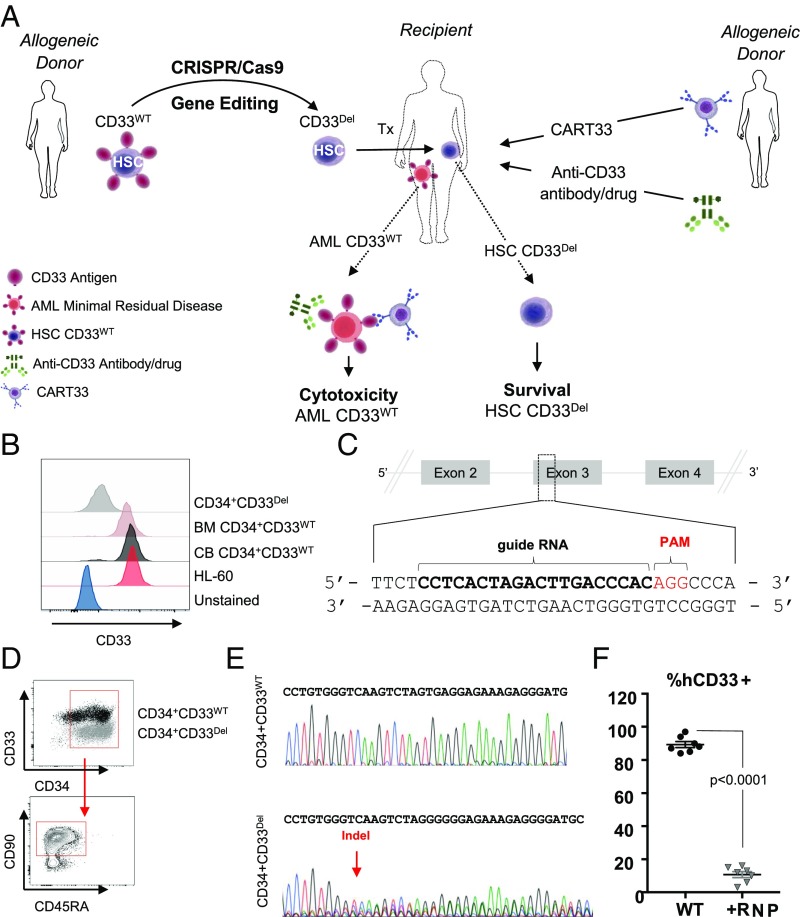
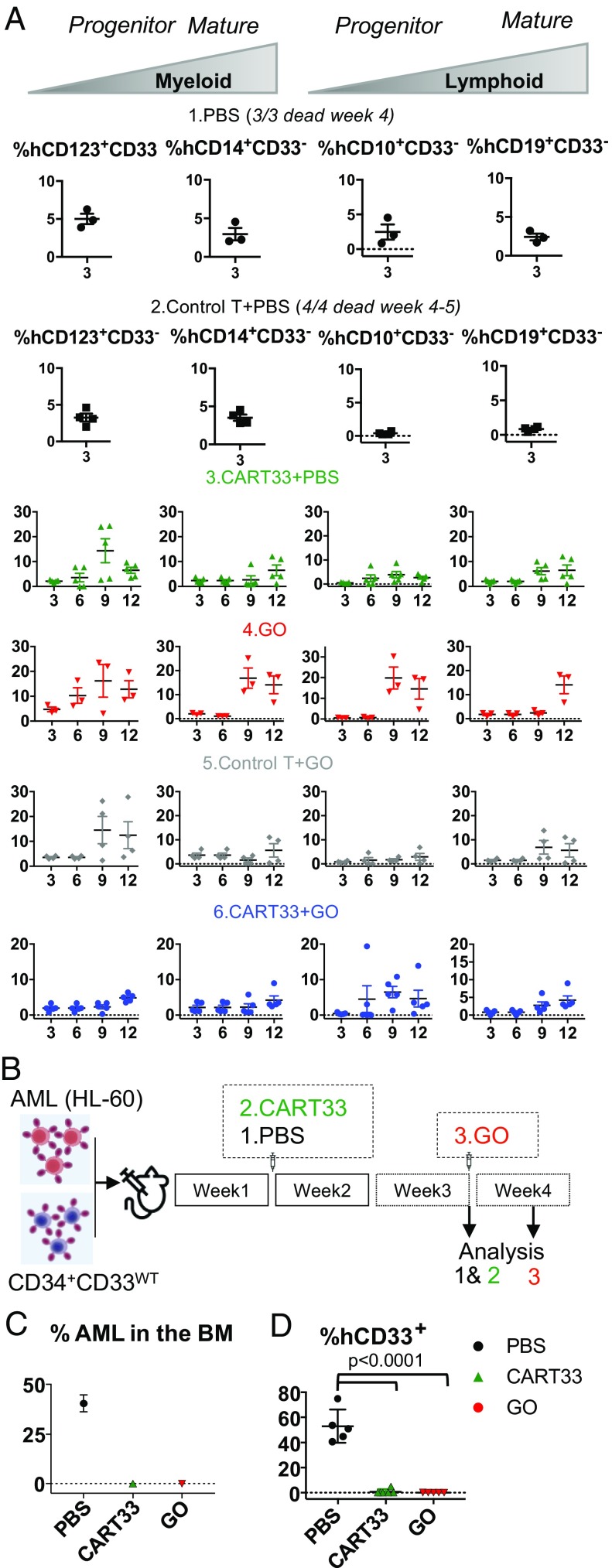
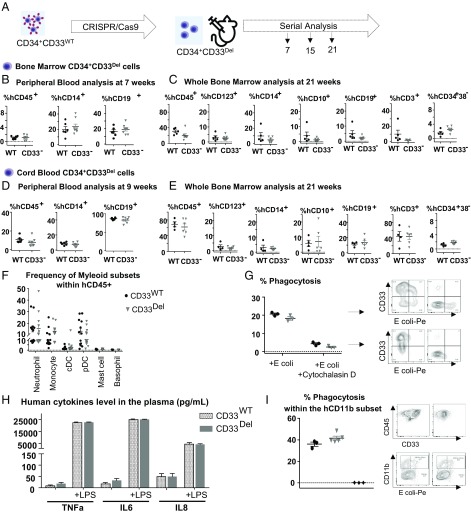
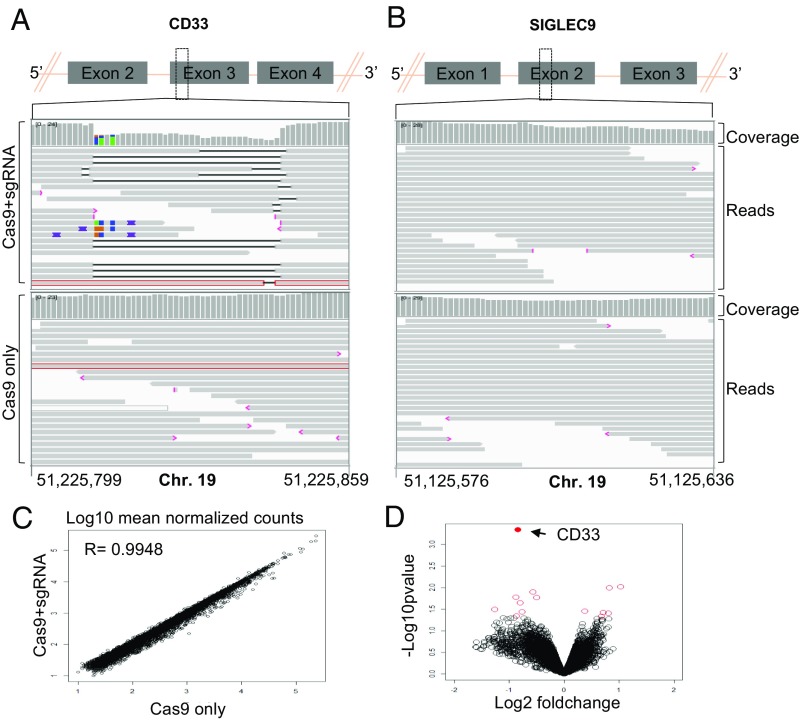
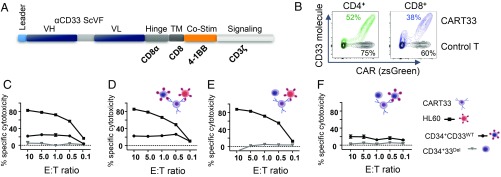
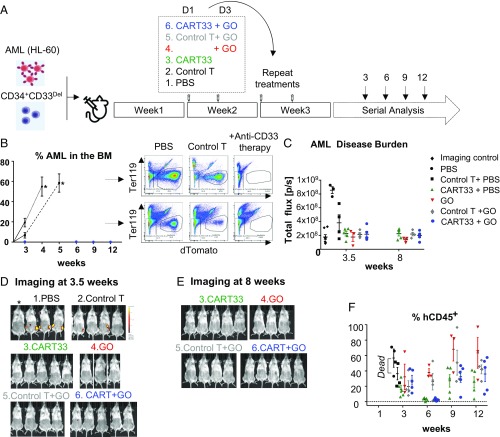
Antigen-directed immunotherapies for acute myeloid leukemia (AML), such as chimeric antigen receptor T cells (CAR-Ts) or antibody-drug conjugates (ADCs), are associated with severe toxicities due to the lack of unique targetable antigens that can distinguish leukemic cells from normal myeloid cells or myeloid progenitors. Here, we present an approach to treat AML by targeting the lineage-specific myeloid antigen CD33. Our approach combines CD33-targeted CAR-T cells, or the ADC Gemtuzumab Ozogamicin with the transplantation of hematopoietic stem cells that have been engineered to ablate CD33 expression using genomic engineering methods. We show highly efficient genetic ablation of CD33 antigen using CRISPR/Cas9 technology in human stem/progenitor cells (HSPC) and provide evidence that the deletion of CD33 in HSPC doesn't impair their ability to engraft and to repopulate a functional multilineage hematopoietic system in vivo. Whole-genome sequencing and RNA sequencing analysis revealed no detectable off-target mutagenesis and no loss of functional p53 pathways. Using a human AML cell line (HL-60), we modeled a postremission marrow with minimal residual disease and showed that the transplantation of CD33-ablated HSPCs with CD33-targeted immunotherapy leads to leukemia clearance, without myelosuppression, as demonstrated by the engraftment and recovery of multilineage descendants of CD33-ablated HSPCs. Our study thus contributes to the advancement of targeted immunotherapy and could be replicated in other malignancies.
针对急性髓系白血病 (AML) 的抗原导向免疫疗法,例如嵌合抗原受体 T 细胞 (CAR-Ts) 或抗体药物偶联物 (ADCs),由于缺乏能够区分白血病细胞与正常髓系细胞或髓系祖细胞的独特靶向抗原,因此与严重的毒性相关。在这里,我们提出了一种通过靶向谱系特异性髓系抗原 CD33 来治疗 AML 的方法。我们的方法结合了靶向 CD33 的 CAR-T 细胞或 ADC 吉妥珠单抗与造血干细胞移植相结合,这些造血干细胞已通过基因组工程方法进行工程改造以消除 CD33 表达。我们使用 CRISPR/Cas9 技术在人干细胞/祖细胞 (HSPC) 中显示出高效的 CD33 抗原基因敲除,并提供证据表明 CD33 在 HSPC 中的缺失不会损害它们植入和在体内重新生成功能性多谱系造血系统的能力。全基因组测序和 RNA 测序分析显示没有可检测的脱靶突变和功能性 p53 途径的丧失。使用人 AML 细胞系 (HL-60),我们模拟了具有最小残留疾病的缓解后骨髓,并表明用 CD33 靶向免疫疗法移植 CD33 敲除的 HSPC 可导致白血病清除,而不会产生骨髓抑制,这可通过 CD33 敲除的 HSPC 的多谱系后代的植入和恢复来证明。我们的研究因此为靶向免疫疗法的进展做出了贡献,并可在其他恶性肿瘤中复制。