Petty Nicholas E, Radtke Stefan, Fields Emily, Humbert Olivier, Llewellyn Mallory J, Laszlo George S, Zhu Haiying, Jerome Keith R, Walter Roland B, Kiem Hans-Peter
Translational Science and Therapeutics Division, Fred Hutchinson Cancer Center, Seattle, WA 98109, USA.
Medical Scientist Training Program, University of Washington School of Medicine, Seattle, WA 98195, USA.
Mol Ther Methods Clin Dev. 2023 Sep 26;31:101121. doi: 10.1016/j.omtm.2023.101121. eCollection 2023 Dec 14.
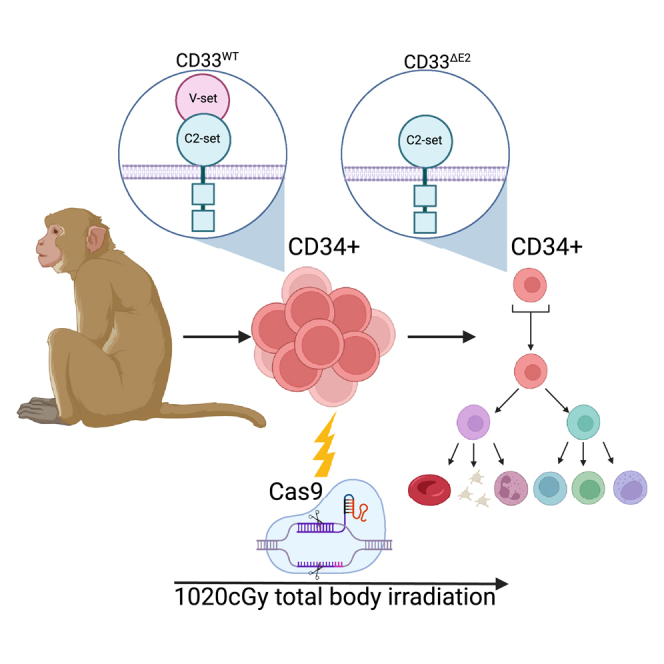
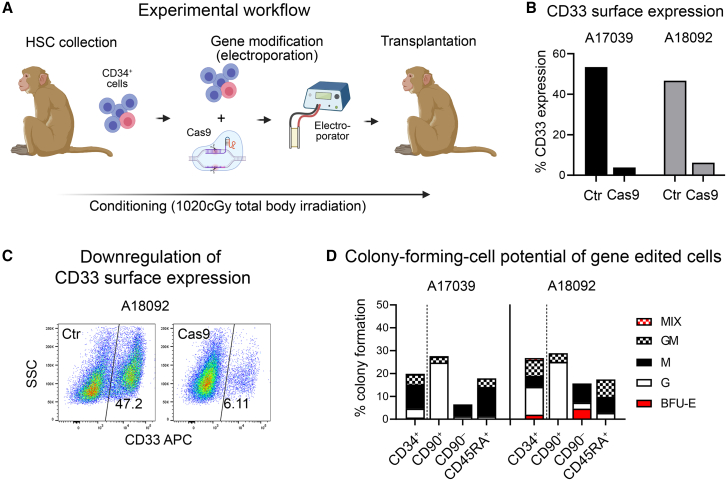
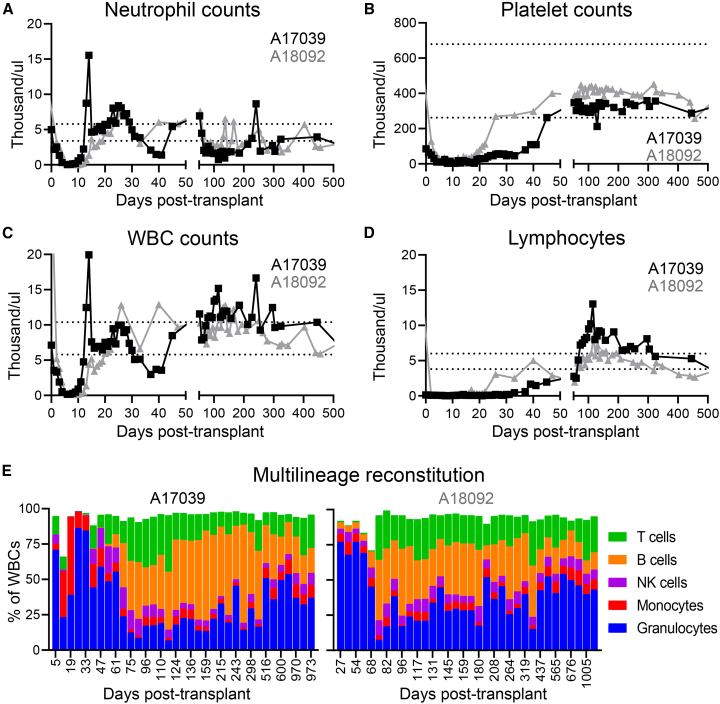
Current immunotherapeutic targets are often shared between neoplastic and normal hematopoietic stem and progenitor cells (HSPCs), leading to unwanted on-target, off-tumor toxicities. Deletion or modification of such targets to protect normal HSPCs is, therefore, of great interest. Although HSPC modifications commonly aim to mimic naturally occurring phenotypes, the long-term persistence and safety of gene-edited cells need to be evaluated. Here, we deleted the V-set domain of CD33, the immune-dominant domain targeted by most anti-CD33 antibodies used to treat CD33-positive malignancies, including acute myeloid leukemia, in the HSPCs of two rhesus macaques, performed autologous transplantation after myeloablative conditioning, and followed the animals for up to 3 years. CD33-edited HSPCs engrafted without any delay in recovery of neutrophils, the primary cell type expressing CD33. No impact on the blood composition, reconstitution of the bone marrow stem cell compartment, or myeloid differentiation potential was observed. Up to 20% long-term gene editing in HSPCs and blood cell lineages was seen with robust loss of CD33 detection on myeloid lineages. In conclusion, deletion of the V-set domain of CD33 on HSPCs, progenitors, and myeloid lineages did not show any adverse effects on their homing and engraftment potential or the differentiation and functionality of myeloid progenitors and lineages.
当前的免疫治疗靶点通常在肿瘤性和正常造血干细胞及祖细胞(HSPCs)之间共享,从而导致不必要的靶向非肿瘤毒性。因此,删除或修饰此类靶点以保护正常HSPCs备受关注。尽管HSPC修饰通常旨在模拟自然发生的表型,但基因编辑细胞的长期持久性和安全性仍需评估。在此,我们在两只恒河猴的HSPCs中删除了CD33的V-set结构域,CD33是大多数用于治疗CD33阳性恶性肿瘤(包括急性髓系白血病)的抗CD33抗体所靶向的免疫显性结构域,在清髓性预处理后进行了自体移植,并对动物进行了长达3年的跟踪。经CD33编辑的HSPCs植入后,表达CD33的主要细胞类型中性粒细胞的恢复没有任何延迟。未观察到对血液成分、骨髓干细胞区室的重建或髓系分化潜能有任何影响。在HSPCs和血细胞谱系中观察到高达20%的长期基因编辑,同时在髓系谱系上CD33检测显著缺失。总之,在HSPCs、祖细胞和髓系谱系上删除CD33的V-set结构域对其归巢和植入潜能或髓系祖细胞及谱系的分化和功能没有显示出任何不利影响。