SE NAP B Research Group of Experimental Neuroanatomy and Developmental Biology, Semmelweis University, Budapest, Hungary.
Department of Anatomy, Semmelweis University, Budapest, Hungary.
Brain Struct Funct. 2019 Jul;224(6):2061-2078. doi: 10.1007/s00429-019-01886-w. Epub 2019 May 29.
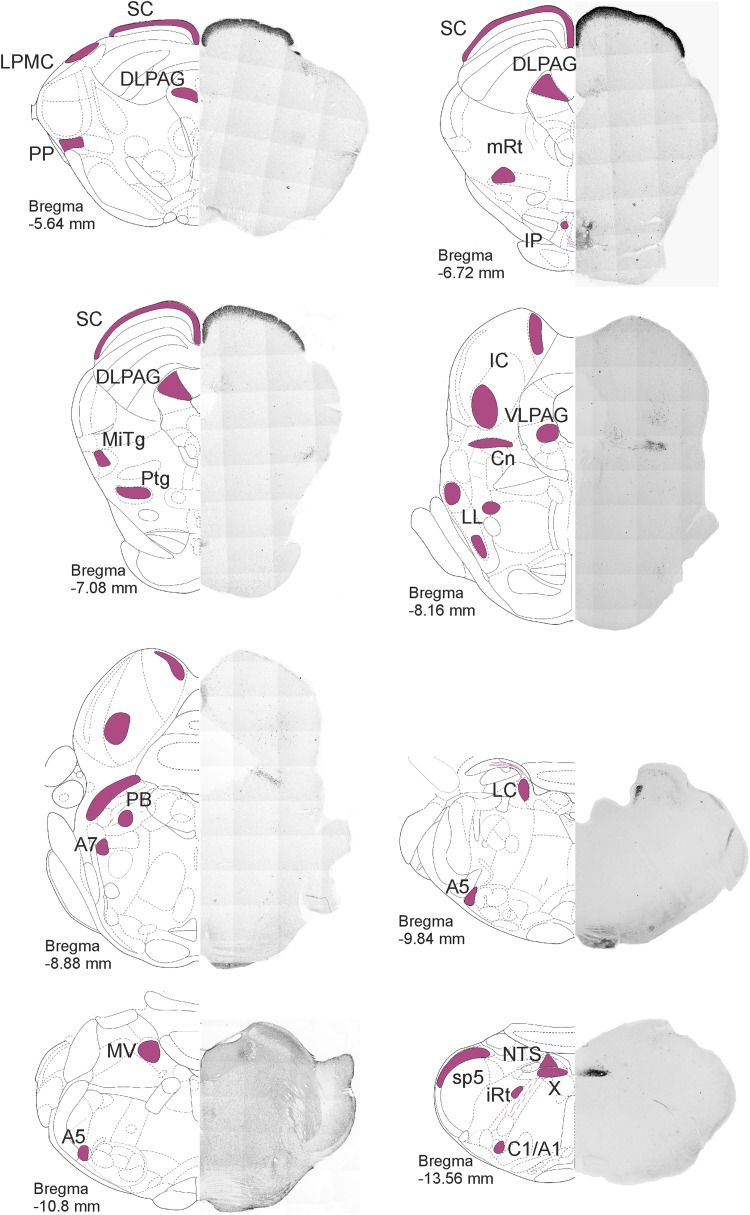
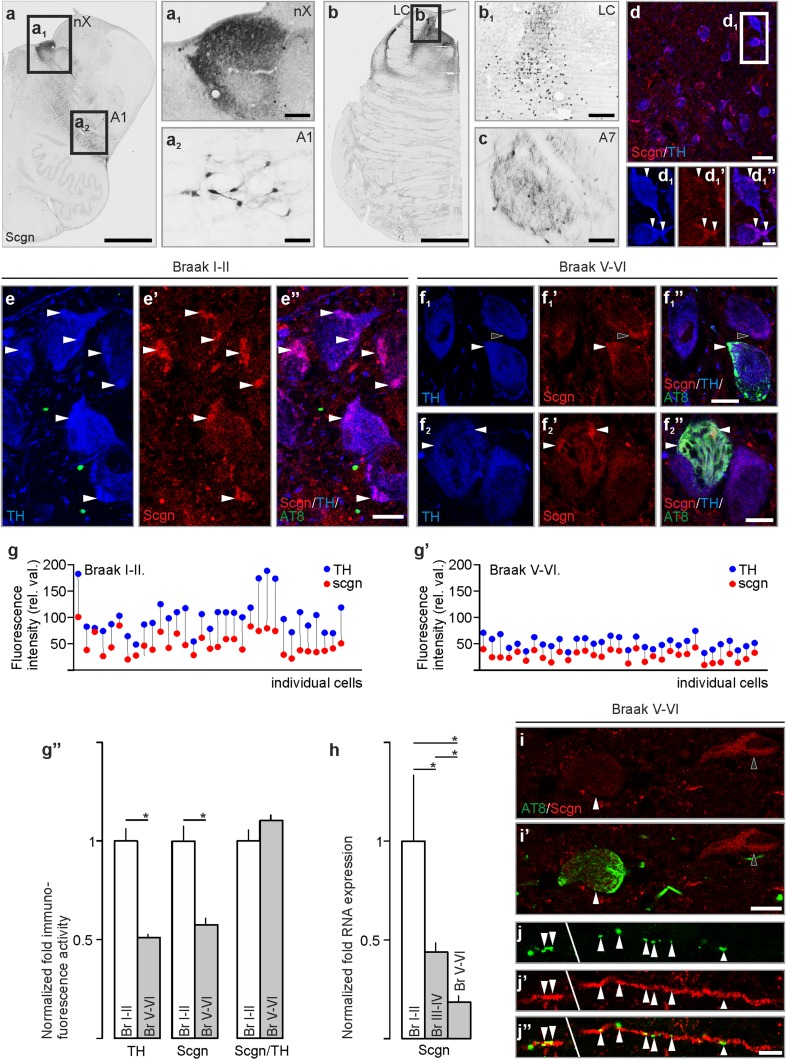
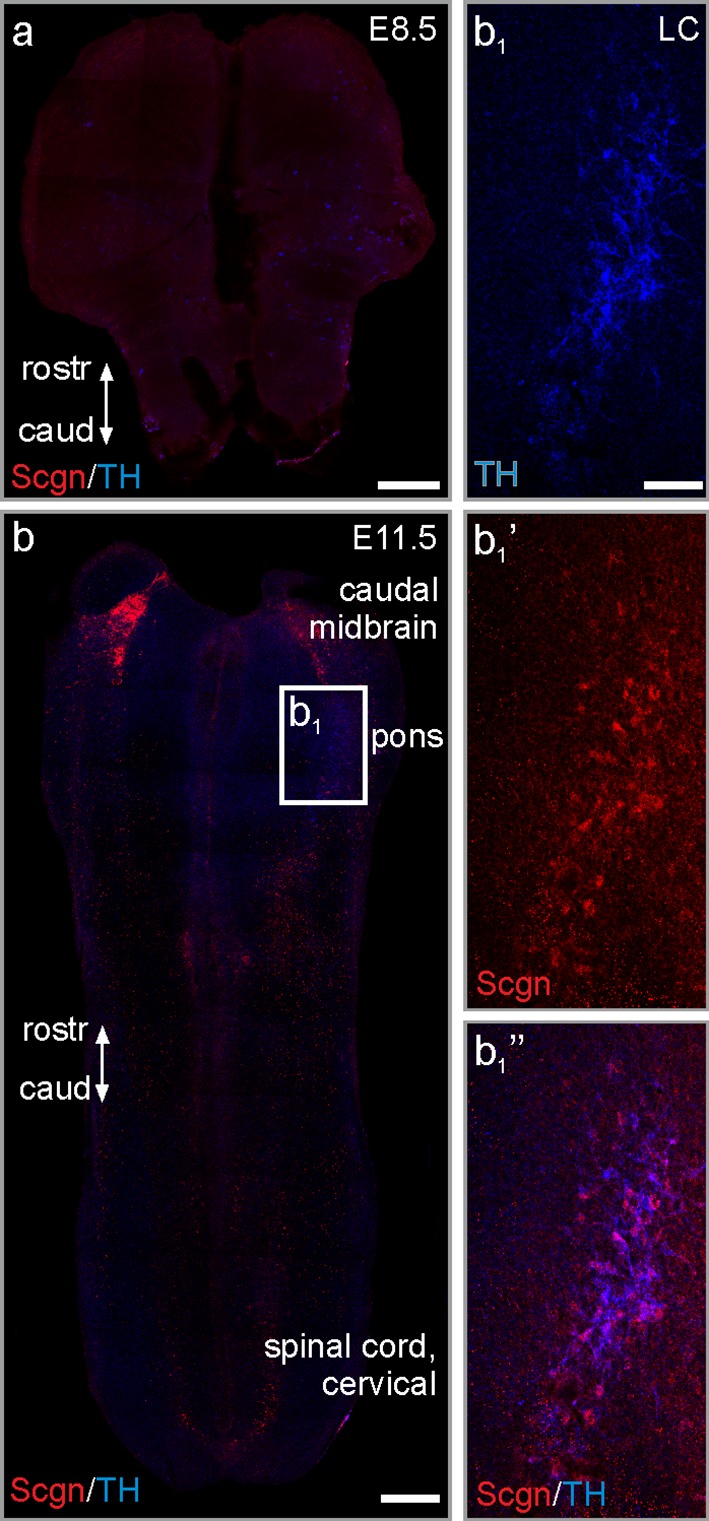
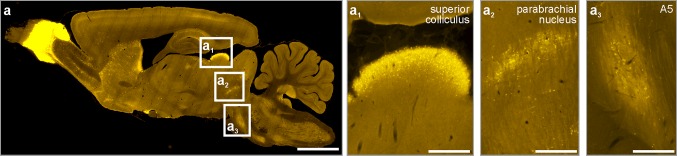
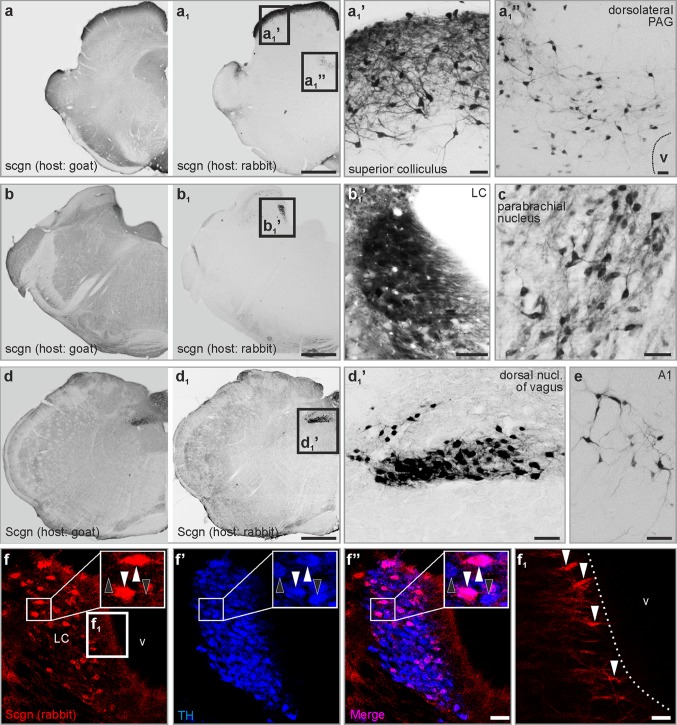
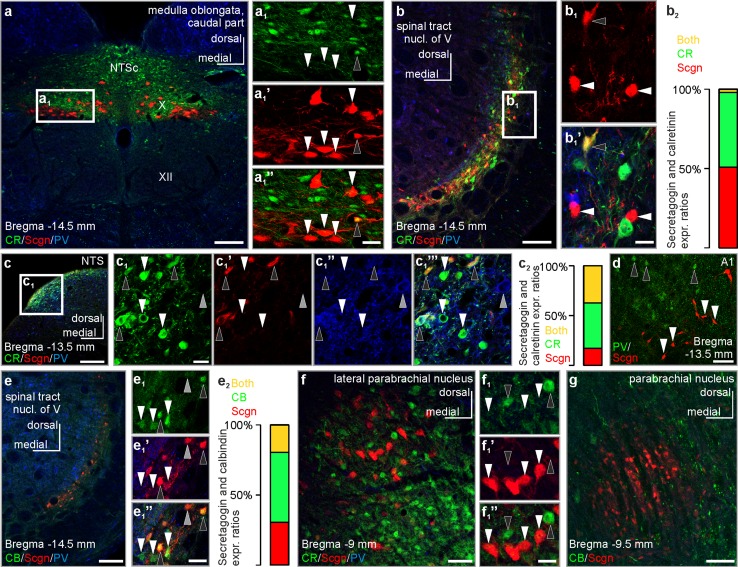
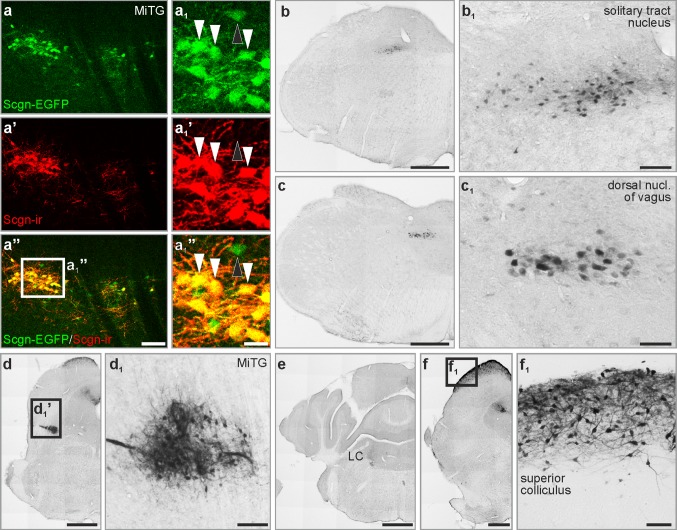
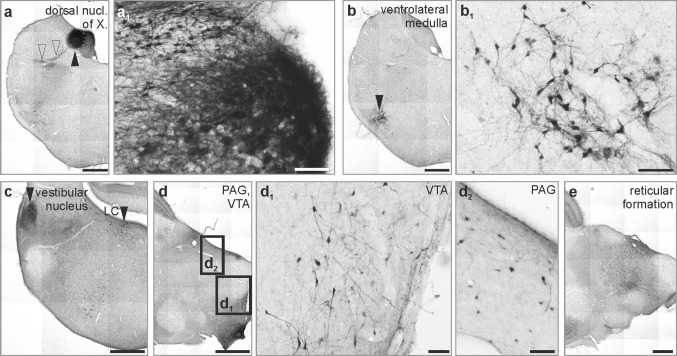
Calcium-binding proteins are widely used to distinguish neuronal subsets in the brain. This study focuses on secretagogin, an EF-hand calcium sensor, to identify distinct neuronal populations in the brainstem of several vertebrate species. By using neural tube whole mounts of mouse embryos, we show that secretagogin is already expressed during the early ontogeny of brainstem noradrenaline cells. In adults, secretagogin-expressing neurons typically populate relay centres of special senses and vegetative regulatory centres of the medulla oblongata, pons and midbrain. Notably, secretagogin expression overlapped with the brainstem column of noradrenergic cell bodies, including the locus coeruleus (A6) and the A1, A5 and A7 fields. Secretagogin expression in avian, mouse, rat and human samples showed quasi-equivalent patterns, suggesting conservation throughout vertebrate phylogeny. We found reduced secretagogin expression in locus coeruleus from subjects with Alzheimer's disease, and this reduction paralleled the loss of tyrosine hydroxylase, the enzyme rate limiting noradrenaline synthesis. Residual secretagogin immunoreactivity was confined to small submembrane domains associated with initial aberrant tau phosphorylation. In conclusion, we provide evidence that secretagogin is a useful marker to distinguish neuronal subsets in the brainstem, conserved throughout several species, and its altered expression may reflect cellular dysfunction of locus coeruleus neurons in Alzheimer's disease.
钙结合蛋白被广泛用于区分大脑中的神经元亚群。本研究聚焦于分泌颗粒蛋白,一种 EF 手钙传感器,以鉴定几种脊椎动物脑干中的不同神经元群体。通过使用小鼠胚胎神经管全装片,我们表明分泌颗粒蛋白在脑干去甲肾上腺素细胞的早期发生过程中就已经表达。在成年动物中,表达分泌颗粒蛋白的神经元通常存在于特殊感觉的中继中心和延髓、脑桥和中脑的植物性调节中心。值得注意的是,分泌颗粒蛋白的表达与包含蓝斑核(A6)和 A1、A5 和 A7 区的脑干肾上腺素能细胞体柱重叠。在鸟类、小鼠、大鼠和人类样本中的分泌颗粒蛋白表达显示出几乎相同的模式,表明其在整个脊椎动物进化过程中是保守的。我们发现阿尔茨海默病患者的蓝斑核中分泌颗粒蛋白的表达减少,这种减少与酪氨酸羟化酶(限速酶)的缺失一致,而酪氨酸羟化酶是去甲肾上腺素合成的限速酶。残留的分泌颗粒蛋白免疫反应性局限于与初始异常 tau 磷酸化相关的小亚膜域。总之,我们提供的证据表明,分泌颗粒蛋白是一种有用的标志物,可用于区分几种物种的脑干中的神经元亚群,其表达的改变可能反映了阿尔茨海默病中蓝斑核神经元的细胞功能障碍。