Department of Biodiversity and Molecular Ecology, Research and Innovation Centre, Fondazione Edmund Mach, San Michele all'Adige (TN) , Italy.
Dipartimento di Scienze Chimiche, della Vita e della Sostenibilità Ambientale, Università degli studi di Parma, Parco Area delle Scienze, Parma, Italy.
J Exp Bot. 2019 Oct 15;70(19):5391-5405. doi: 10.1093/jxb/erz266.
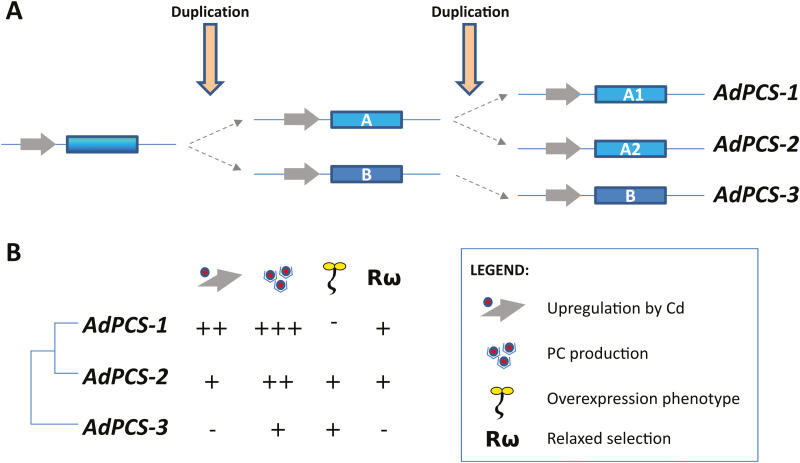
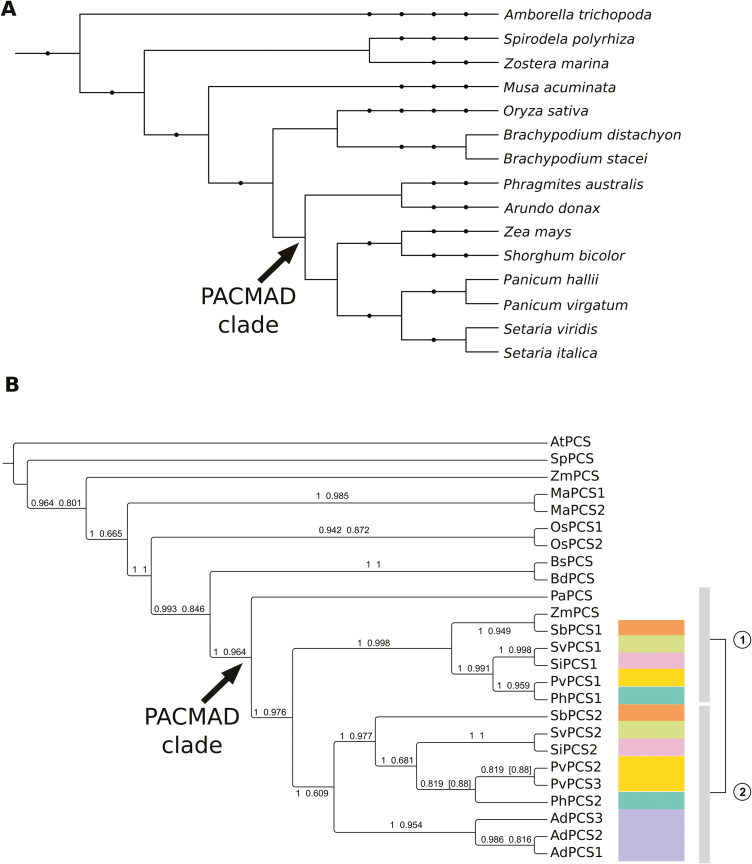
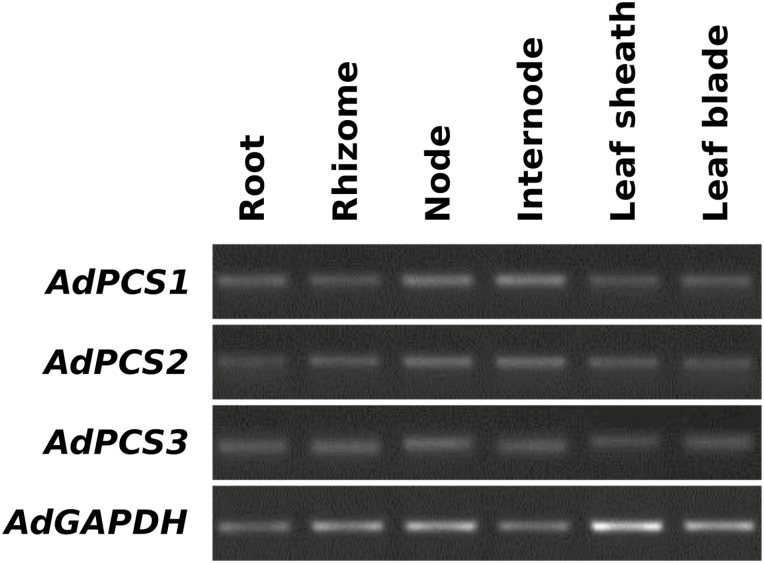
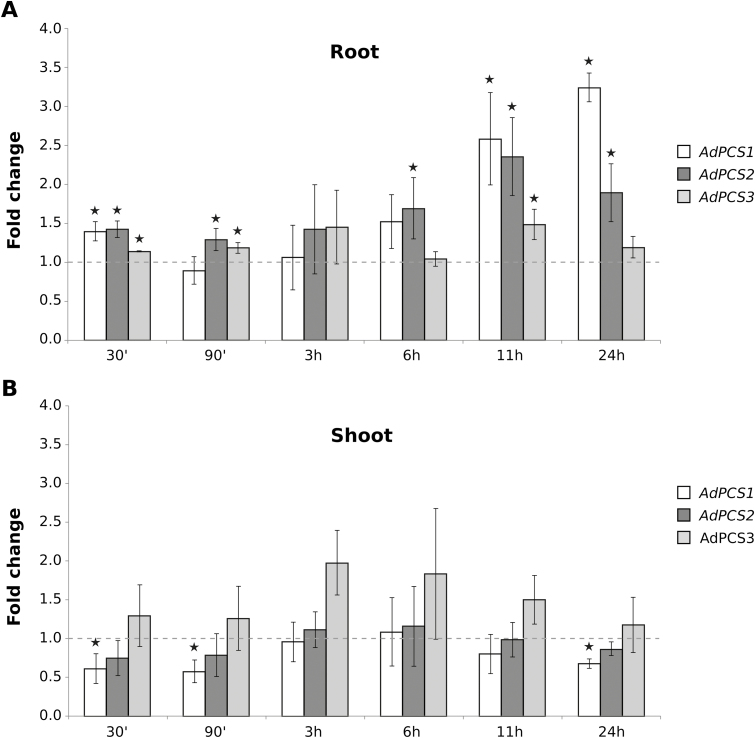
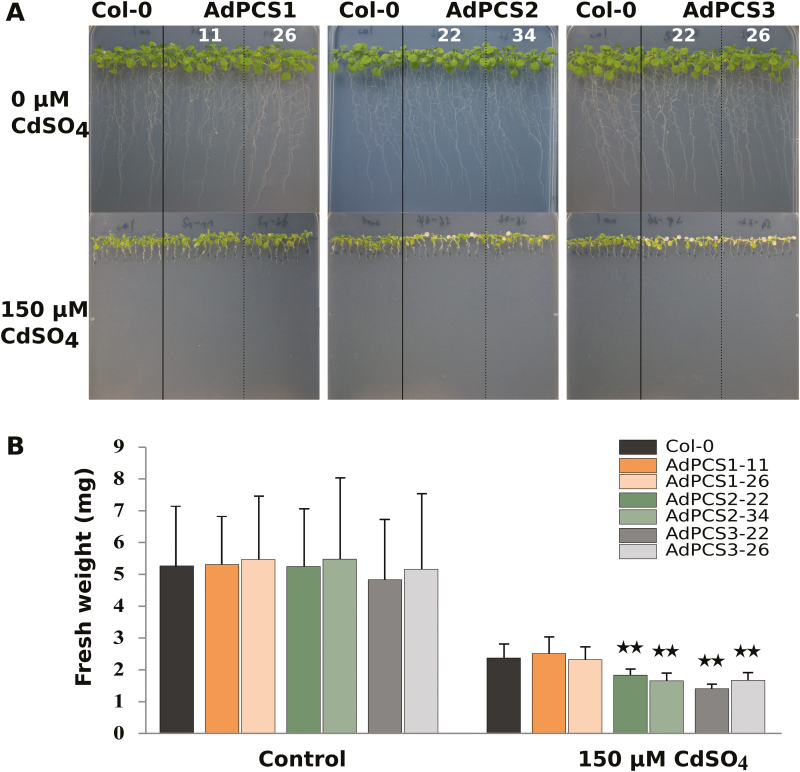
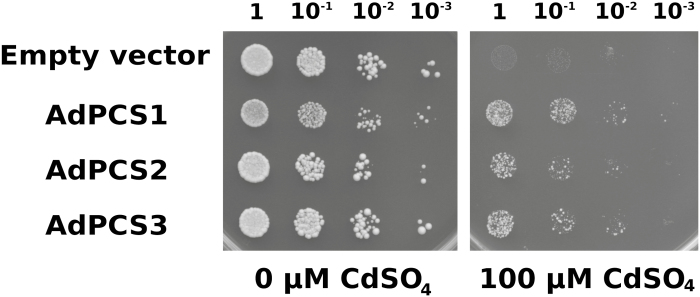
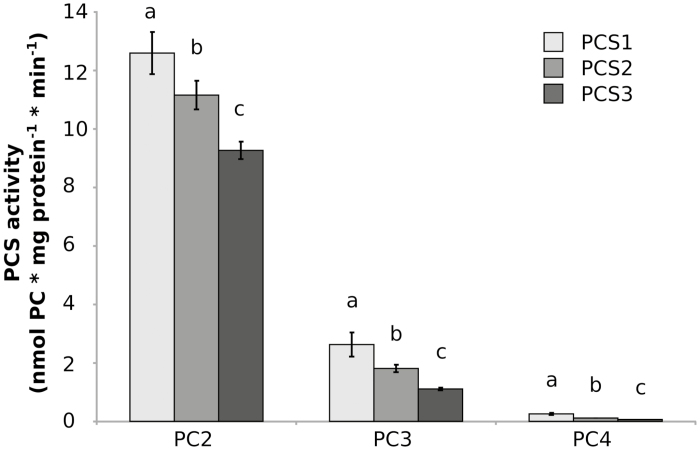
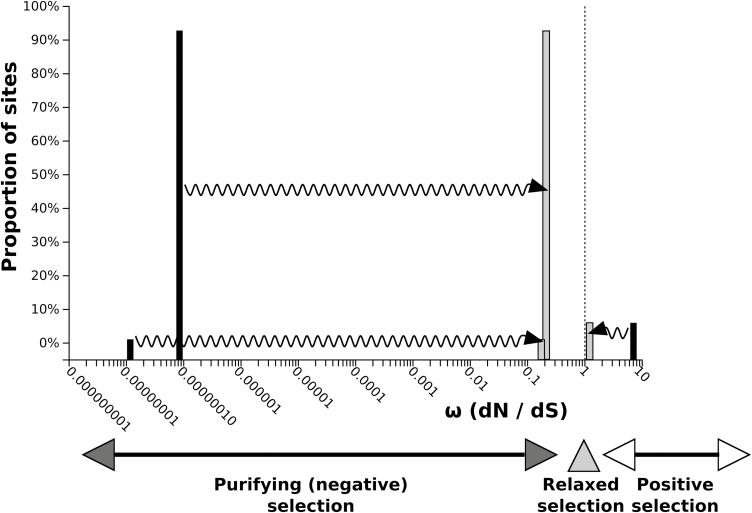
Phytochelatin synthases (PCSs) play pivotal roles in the detoxification of heavy metals and metalloids in plants; however, little information on the evolution of recently duplicated PCS genes in plant species is available. Here we characterize the evolution and functional differentiation of three PCS genes from the giant reed (Arundo donax L.), a biomass/bioenergy crop with remarkable resistance to cadmium and other heavy metals. Phylogenetic reconstruction with PCS genes from fully sequenced monocotyledonous genomes indicated that the three A. donax PCSs, namely AdPCS1-3, form a monophyletic clade. The AdPCS1-3 genes were expressed at low levels in many A. donax organs and displayed different levels of cadmium-responsive expression in roots. Overexpression of AdPCS1-3 in Arabidopsis thaliana and yeast reproduced the phenotype of functional PCS genes. Mass spectrometry analyses confirmed that AdPCS1-3 are all functional enzymes, but with significant differences in the amount of the phytochelatins synthesized. Moreover, heterogeneous evolutionary rates characterized the AdPCS1-3 genes, indicative of relaxed natural selection. These results highlight the elevated functional differentiation of A. donax PCS genes from both a transcriptional and an enzymatic point of view, providing evidence of the high evolvability of PCS genes and of plant responsiveness to heavy metal stress.
植物螯合肽合成酶(PCSs)在植物中重金属和类金属解毒中起着关键作用;然而,关于植物物种中最近复制的 PCS 基因的进化信息知之甚少。在这里,我们描述了来自巨型芦苇(Arundo donax L.)的三个 PCS 基因的进化和功能分化,巨型芦苇是一种具有显著抗镉和其他重金属能力的生物质/生物能源作物。用完全测序的单子叶植物基因组中的 PCS 基因进行系统发育重建表明,三种 A. donax PCS,即 AdPCS1-3,形成一个单系分支。AdPCS1-3 基因在许多 A. donax 器官中低水平表达,并在根部表现出不同程度的镉响应表达。AdPCS1-3 在拟南芥和酵母中的过表达再现了功能性 PCS 基因的表型。质谱分析证实 AdPCS1-3 都是功能性酶,但合成的植物螯合肽的量有很大差异。此外,AdPCS1-3 基因的异速进化率特征表明自然选择放松。这些结果突出了 A. donax PCS 基因在转录和酶学水平上的功能分化程度提高,为 PCS 基因的高可进化性和植物对重金属胁迫的响应提供了证据。