Liu Chao, Jiang Sining, Zhao Shuo, Guo Zhongwen
Department of Information Science and Engineering, Ocean University of China, Qingdao 266100, China.
Sensors (Basel). 2019 May 29;19(11):2458. doi: 10.3390/s19112458.
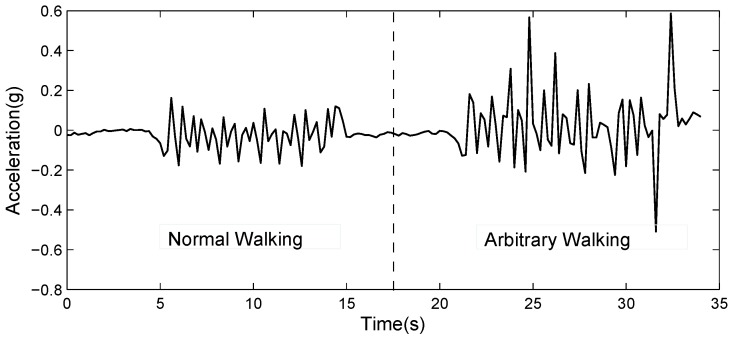
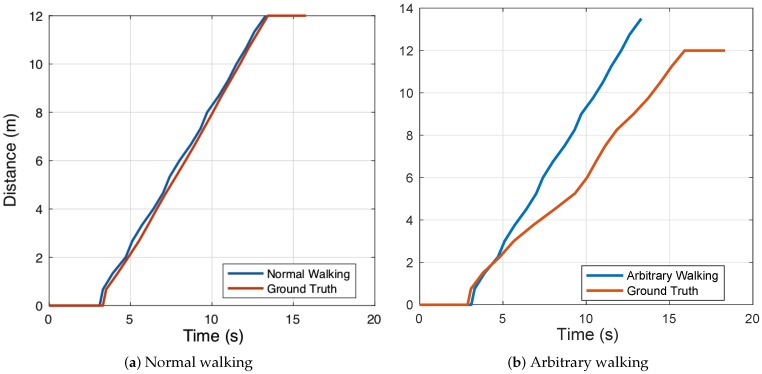
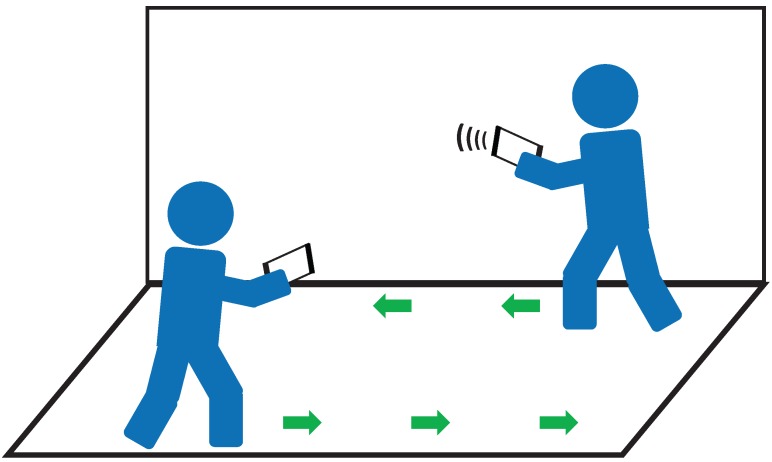
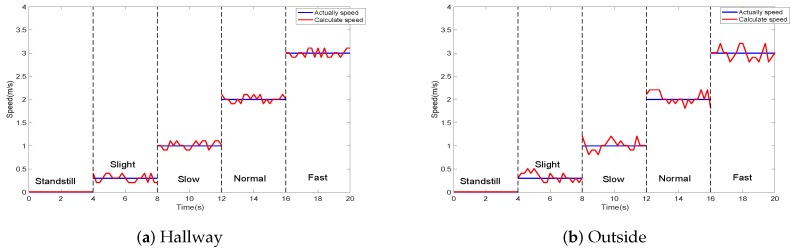
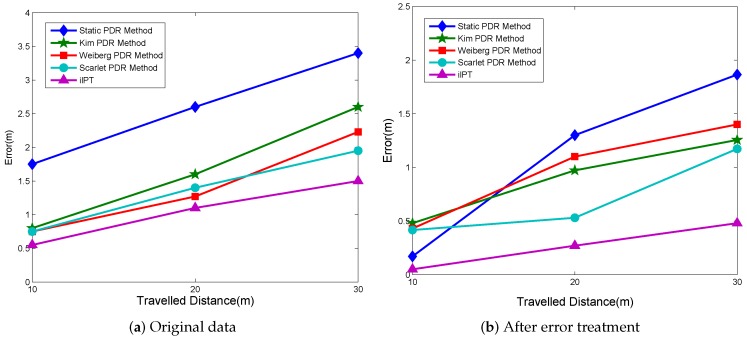
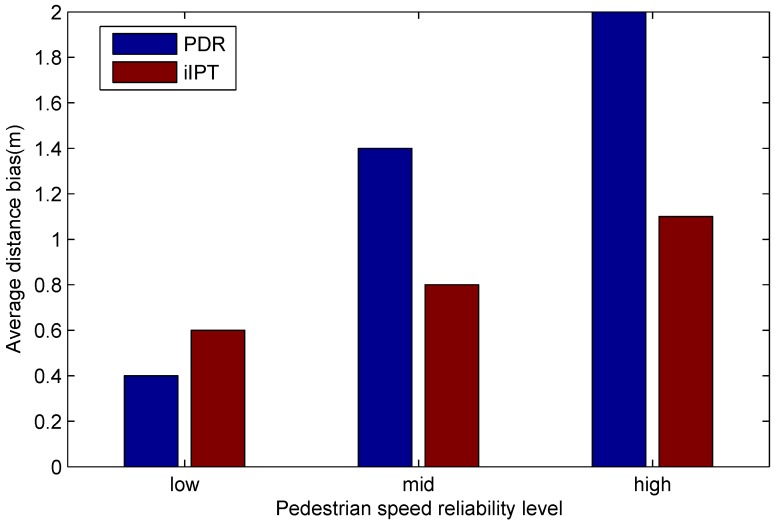
Indoor pedestrian tracking has been identified as a key technology for indoor location-based services such as emergency locating, advertising, and gaming. However, existing smartphone-based approaches to pedestrian tracking in indoor environments have various limitations including a high cost of infrastructure constructing, labor-intensive fingerprint collection, and a vulnerability to moving obstacles. Moreover, our empirical study reveals that the accuracy of indoor locations estimated by a smartphone Inertial Measurement Unit (IMU) decreases severely when the pedestrian is arbitrarily wandering with an unstable speed. To improve the indoor tracking performance by enhancing the location estimation accuracy, we exploit smartphone-based acoustic techniques and propose an infrastructure-free indoor pedestrian tracking approach, called iIPT. The novelty of iIPT lies in the pedestrian speed reliability metric, which characterizes the reliability of the pedestrian speed provided by the smartphone IMU, and in a speed enhancing method, where we adjust a relatively less reliable pedestrian speed to the more reliable speed of a passing by "enhancer" based on the acoustic Doppler effect. iIPT thus changes the encountered pedestrians from an"obstacle" into an "enhancer." Extensive real-world experiments in indoor scenarios have been conducted to verify the feasibility of realizing the acoustic Doppler effect between smartphones and to identify the applicable acoustic frequency range and transmission distance while reducing battery consumption. The experiment results demonstrate that iIPT can largely improve the tracking accuracy and decrease the average error compared with a conventional IMU-based method.
室内行人跟踪已被视为实现诸如紧急定位、广告和游戏等室内定位服务的关键技术。然而,现有的基于智能手机的室内行人跟踪方法存在各种局限性,包括基础设施建设成本高、指纹采集劳动强度大以及易受移动障碍物影响。此外,我们的实证研究表明,当行人以不稳定的速度随意走动时,智能手机惯性测量单元(IMU)估计的室内位置准确性会严重下降。为了通过提高位置估计准确性来提升室内跟踪性能,我们利用基于智能手机的声学技术,提出了一种名为iIPT的无基础设施室内行人跟踪方法。iIPT的新颖之处在于行人速度可靠性度量,它表征了智能手机IMU提供的行人速度的可靠性,还在于一种速度增强方法,即我们基于声学多普勒效应将相对不可靠的行人速度调整为路过的“增强器”更可靠的速度。因此,iIPT将遇到的行人从“障碍物”转变为“增强器”。我们在室内场景中进行了广泛的实际实验,以验证在智能手机之间实现声学多普勒效应的可行性,并确定适用的声学频率范围和传输距离,同时降低电池消耗。实验结果表明,与传统的基于IMU的方法相比,iIPT可以大幅提高跟踪准确性并减少平均误差。