CAB International, Africa Regional Centre, Nairobi, Kenya.
CAB International, Egham, UK.
Pest Manag Sci. 2019 Oct;75(10):2840-2850. doi: 10.1002/ps.5504. Epub 2019 Jul 8.
This paper documents farmer perceptions and management practices for fall armyworm (Spodoptera frugiderda J.E. Smith), providing a baseline for the development of sustainable pest management strategies.
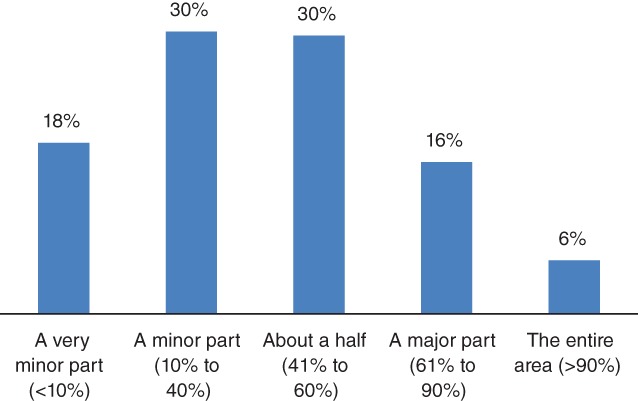
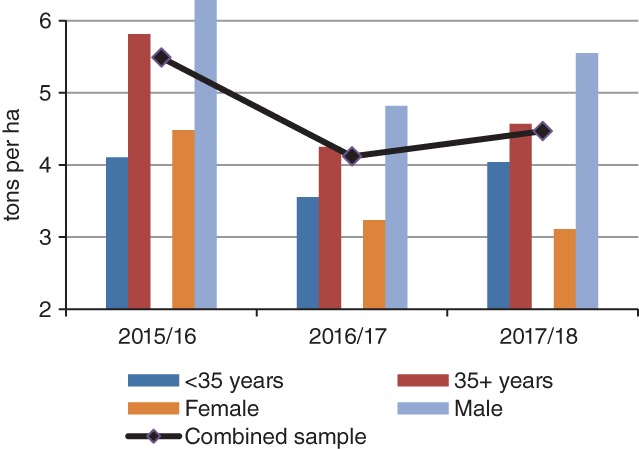
91% of farmers correctly identified fall armyworm, and reported it as the most important maize pest during 2016/2017 cropping season, affecting nearly half of cultivated area. Estimated maize yield loss during the season, attributed to fall armyworm was 28%. A majority of farmers (60%) used pesticides for fall armyworm control, along with other cultural/physical practices - hand picking and crushing egg masses/caterpillars (36%), and application of ash/sand in the funnel (19%). Farmers used various pesticide active ingredients, and protective measures were inadequate; >50% of farmers did not use any protective measures while spraying. Significantly more male than female farmers used pesticides (P = 0.05), and the reverse was true for cultural practices. Significant maize yield differences (P = 0.001) were observed by gender, attributed to differences in utilization of production inputs/practices. At least 77% of farmers received and shared agricultural advice, which can be optimized to spread information on fall armyworm management options.
Increased use of pesticides to manage fall armyworm poses health and environmental risks, besides the high cost for farmers and governments. Research into cultural and indigenous practices used by farmers will offer opportunities for alternative and sustainable management practices. Research efforts should pay attention to gender differences in access to resources and inputs. Tackling fall armyworm at the farm level, and averting yield losses will require integrated messaging addressing other production risks. © 2019 The Authors. Pest Management Science published by John Wiley & Sons Ltd on behalf of Society of Chemical Industry.
本文记录了农民对草地贪夜蛾(Spodoptera frugiperda J.E. Smith)的认知和管理做法,为制定可持续的害虫管理策略提供了基础。
91%的农民正确识别出草地贪夜蛾,并在 2016/2017 种植季将其报告为最重要的玉米害虫,影响了近一半的种植面积。该季因草地贪夜蛾导致的玉米估产损失为 28%。大多数农民(60%)使用杀虫剂来防治草地贪夜蛾,同时还采取了其他文化/物理防治措施——人工摘除卵块/幼虫(36%),以及在漏斗中撒灰/沙(19%)。农民使用了各种农药活性成分,且防护措施不足;超过 50%的农民在施药时未采取任何防护措施。使用杀虫剂的男性农民明显多于女性农民(P=0.05),而采用文化防治措施的则相反。按性别观察到显著的玉米产量差异(P=0.001),这归因于生产投入/措施利用的差异。至少有 77%的农民接受并分享了农业建议,这可以优化传播草地贪夜蛾管理方案的信息。
大量使用杀虫剂来防治草地贪夜蛾,除了给农民和政府带来高昂的成本外,还会对健康和环境造成风险。研究农民使用的文化和本土做法将为替代和可持续的管理做法提供机会。研究工作应关注获取资源和投入方面的性别差异。在农场层面应对草地贪夜蛾并避免减产,需要综合信息来解决其他生产风险。© 2019 作者。害虫管理科学由 John Wiley & Sons Ltd 代表化学工业协会出版。