Chen Joseph, Patnaik Sourav S, Prabhu R K, Priddy Lauren B, Bouvard Jean-Luc, Marin Esteban, Horstemeyer Mark F, Liao Jun, Williams Lakiesha N
Department of Biological Engineering and Center for Advanced Vehicular Systems, Mississippi State University, Mississippi State, MS 39762, USA.
Department of Bioengineering, University of Texas at Arlington, Arlington, TX 76010, USA.
Bioengineering (Basel). 2019 May 30;6(2):49. doi: 10.3390/bioengineering6020049.
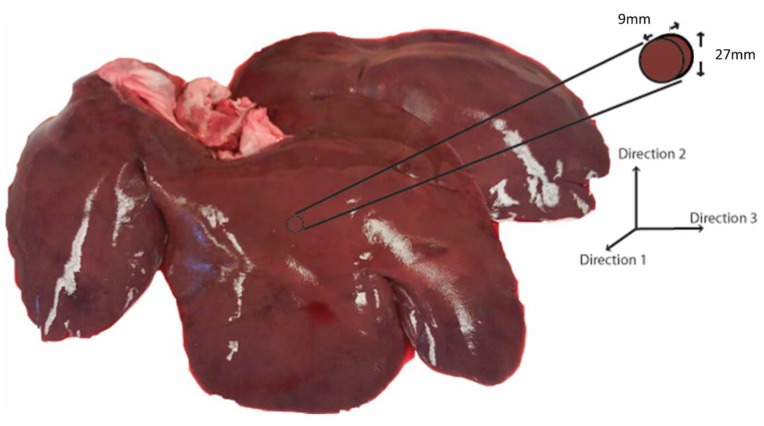
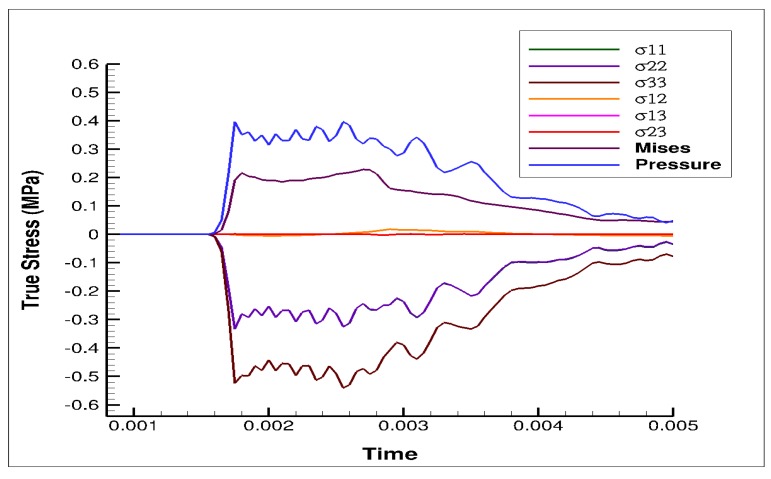
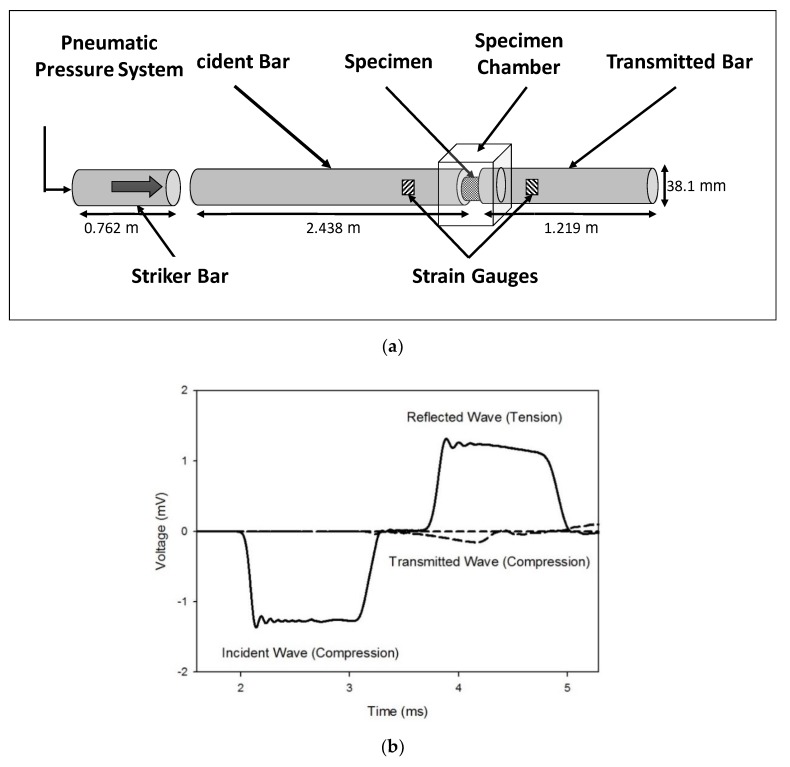
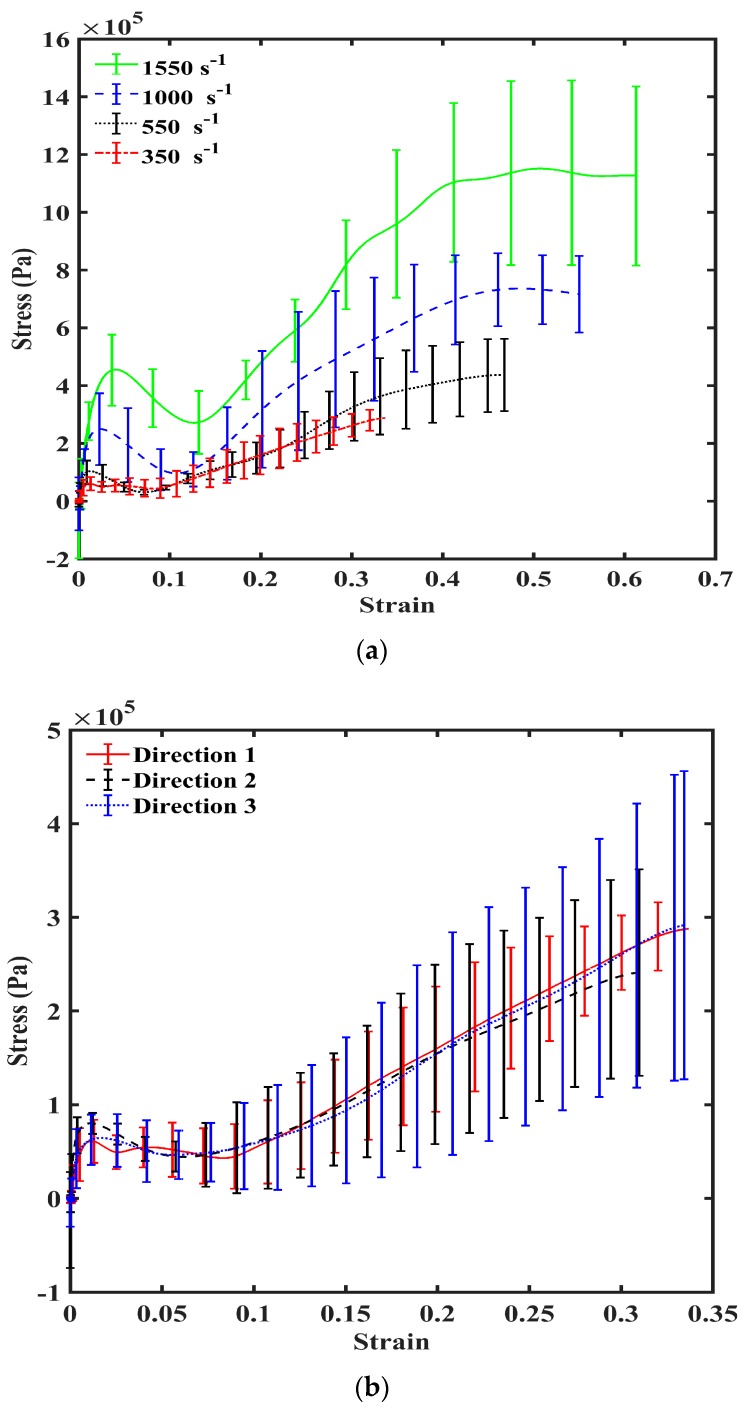
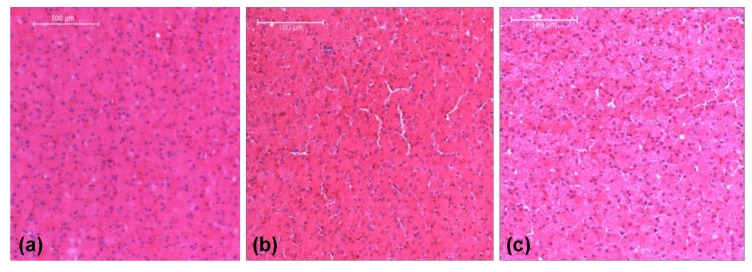
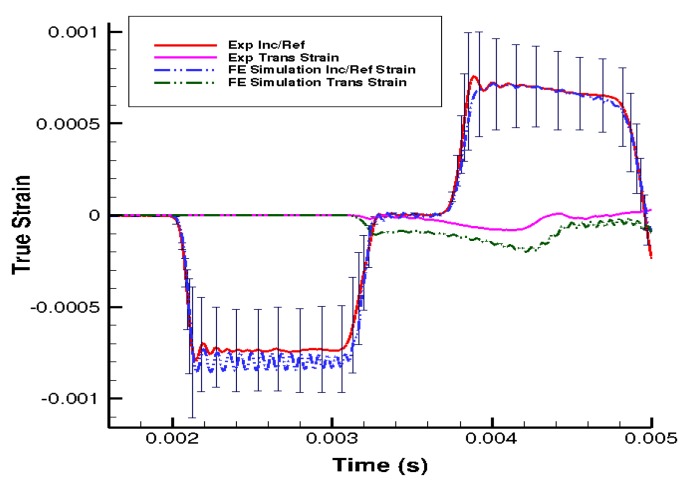
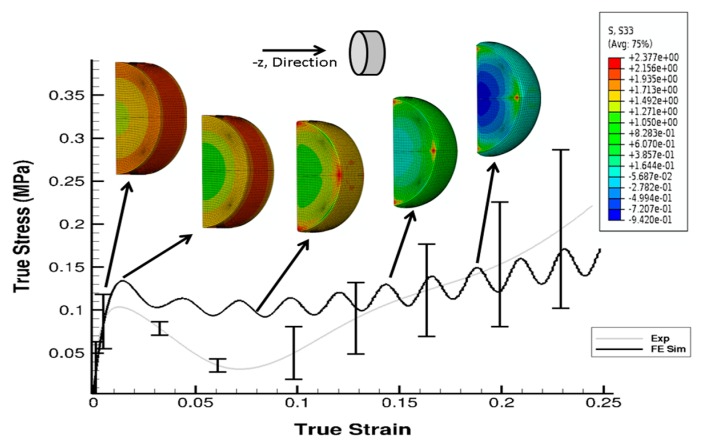
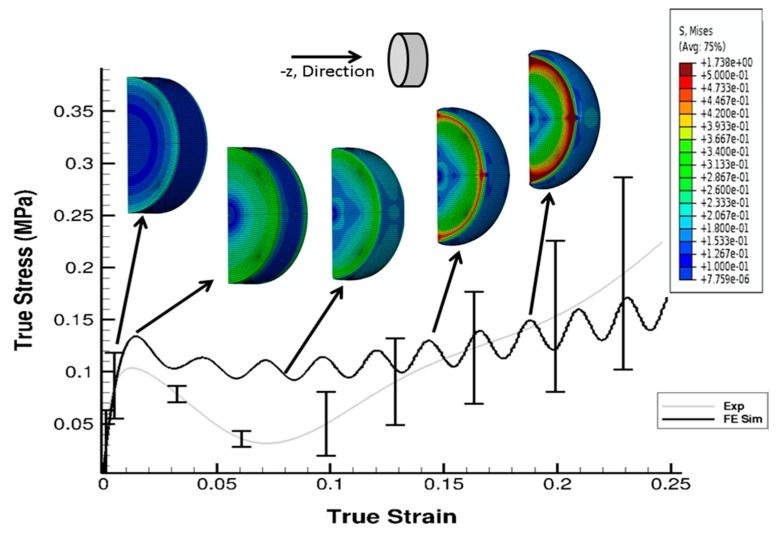
In automobile accidents, abdominal injuries are often life-threatening yet not apparent at the time of initial injury. The liver is the most commonly injured abdominal organ from this type of trauma. In contrast to current safety tests involving crash dummies, a more detailed, efficient approach to predict the risk of human injuries is computational modelling and simulations. Further, the development of accurate computational human models requires knowledge of the mechanical properties of tissues in various stress states, especially in high-impact scenarios. In this study, a polymeric split-Hopkinson pressure bar (PSHPB) was utilized to apply various high strain rates to porcine liver tissue to investigate its material behavior during high strain rate compression. Liver tissues were subjected to high strain rate impacts at 350, 550, 1000, and 1550 s. Tissue directional dependency was also explored by PSHPB testing along three orthogonal directions of liver at a strain rate of 350 s. Histology of samples from each of the three directions was performed to examine the structural properties of porcine liver. Porcine liver tissue showed an inelastic and strain rate-sensitive response at high strain rates. The liver tissue was found lacking directional dependency, which could be explained by the isotropic microstructure observed after staining and imaging. Furthermore, finite element analysis (FEA) of the PSHPB tests revealed the stress profile inside liver tissue and served as a validation of PSHPB methodology. The present findings can assist in the development of more accurate computational models of liver tissue at high-rate impact conditions allowing for understanding of subfailure and failure mechanisms.
在汽车事故中,腹部损伤往往危及生命,但在初次受伤时并不明显。肝脏是此类创伤中最常受伤的腹部器官。与目前涉及碰撞假人的安全测试不同,一种更详细、高效的预测人类受伤风险的方法是计算建模和模拟。此外,开发精确的计算人体模型需要了解各种应力状态下组织的力学性能,尤其是在高冲击场景中。在本研究中,使用聚合物分离式霍普金森压杆(PSHPB)对猪肝组织施加各种高应变率,以研究其在高应变率压缩过程中的材料行为。肝脏组织在350、550、1000和1550 s的应变率下受到高应变率冲击。还通过PSHPB测试沿肝脏的三个正交方向以350 s的应变率探索了组织方向依赖性。对来自三个方向的样本进行组织学检查,以研究猪肝的结构特性。猪肝组织在高应变率下表现出非弹性和应变率敏感响应。发现肝脏组织缺乏方向依赖性,这可以通过染色和成像后观察到的各向同性微观结构来解释。此外,PSHPB测试的有限元分析(FEA)揭示了肝脏组织内部的应力分布,并作为PSHPB方法的验证。本研究结果有助于开发更精确的肝脏组织在高速冲击条件下的计算模型,从而有助于理解亚失效和失效机制。