UMR 7245 MCAM, Muséum National d'Histoire Naturelle-CNRS, Paris, 12 rue Buffon, CP 39, 75231 Paris CEDEX 05, France.
Thermes de Balaruc-les-Bains, 1 rue du Mont Saint-Clair BP 45, 34540 Balaruc-Les-Bains, France.
Mar Drugs. 2019 May 30;17(6):320. doi: 10.3390/md17060320.
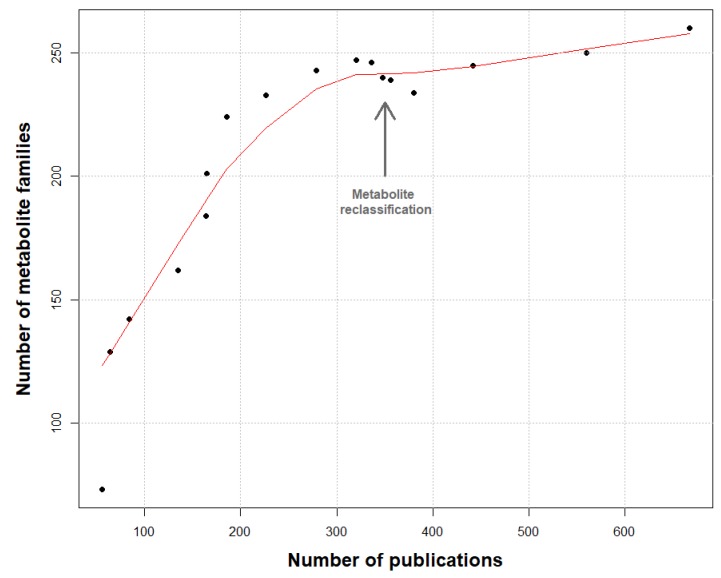
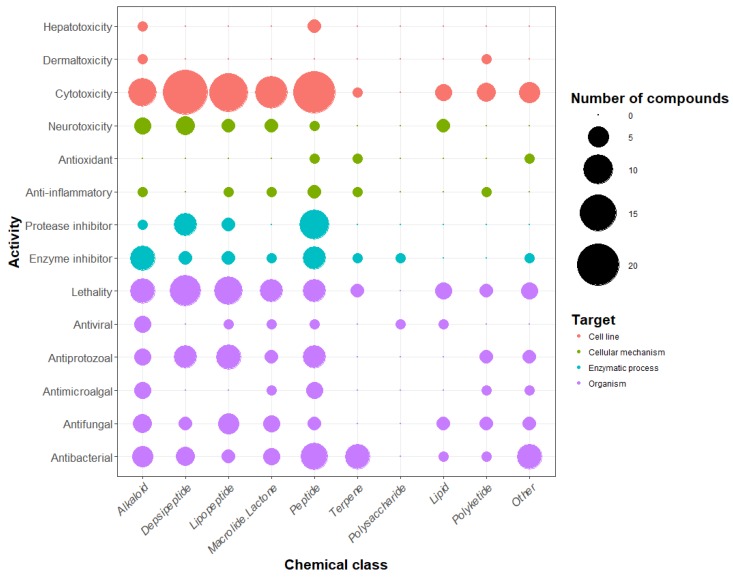
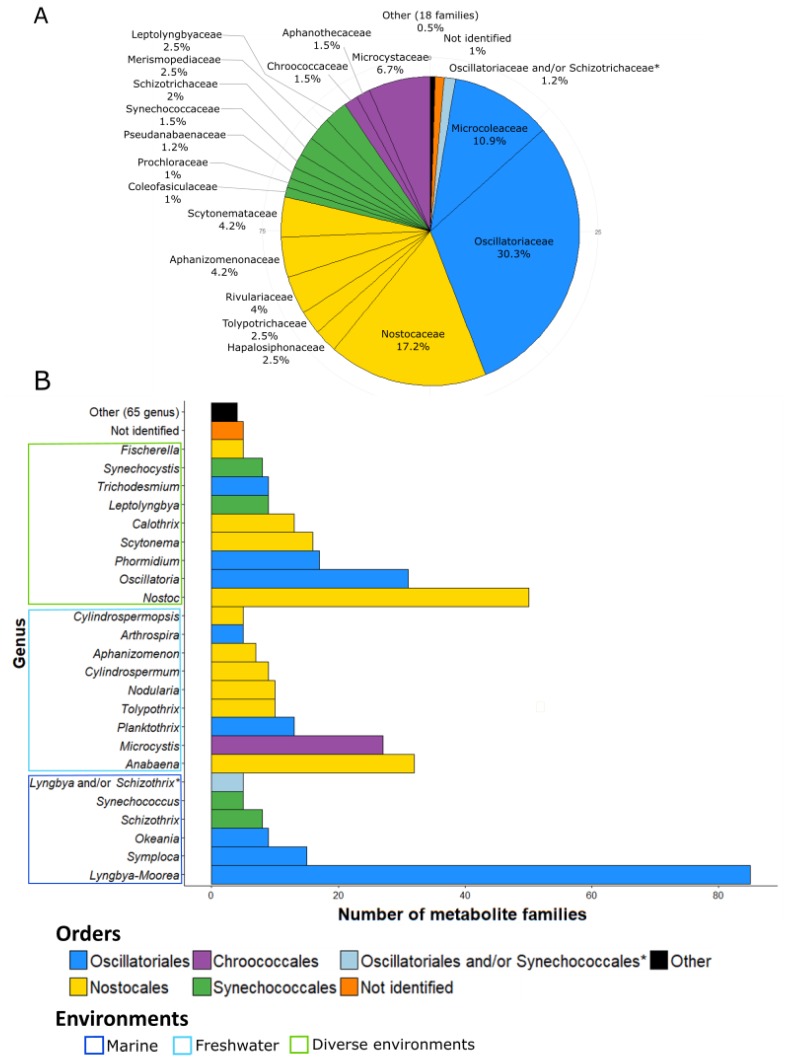
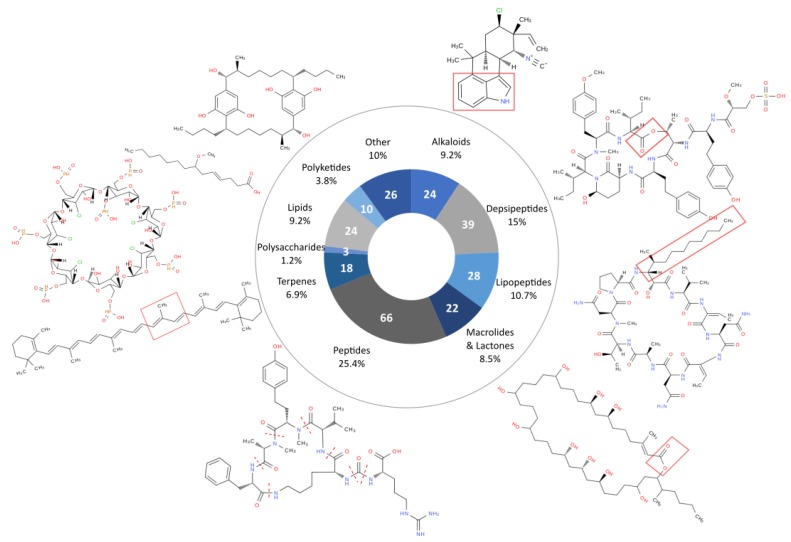
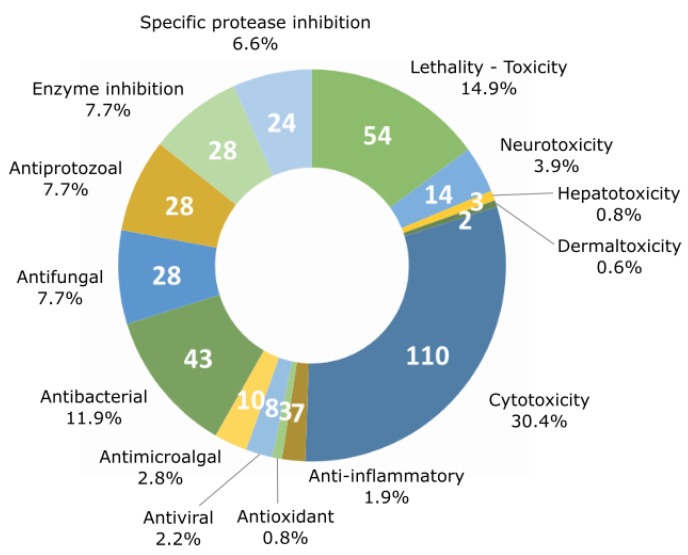
Cyanobacteria are photosynthetic microorganisms that colonize diverse environments worldwide, ranging from ocean to freshwaters, soils, and extreme environments. Their adaptation capacities and the diversity of natural products that they synthesize, support cyanobacterial success in colonization of their respective ecological niches. Although cyanobacteria are well-known for their toxin production and their relative deleterious consequences, they also produce a large variety of molecules that exhibit beneficial properties with high potential in various fields (e.g., a synthetic analog of dolastatin 10 is used against Hodgkin's lymphoma). The present review focuses on the beneficial activities of cyanobacterial molecules described so far. Based on an analysis of 670 papers, it appears that more than 90 genera of cyanobacteria have been observed to produce compounds with potentially beneficial activities in which most of them belong to the orders Oscillatoriales, Nostocales, Chroococcales, and Synechococcales. The rest of the cyanobacterial orders (i.e., Pleurocapsales, Chroococcidiopsales, and Gloeobacterales) remain poorly explored in terms of their molecular diversity and relative bioactivity. The diverse cyanobacterial metabolites possessing beneficial bioactivities belong to 10 different chemical classes (alkaloids, depsipeptides, lipopeptides, macrolides/lactones, peptides, terpenes, polysaccharides, lipids, polyketides, and others) that exhibit 14 major kinds of bioactivity. However, no direct relationship between the chemical class and the respective bioactivity of these molecules has been demonstrated. We further selected and specifically described 47 molecule families according to their respective bioactivities and their potential uses in pharmacology, cosmetology, agriculture, or other specific fields of interest. With this up-to-date review, we attempt to present new perspectives for the rational discovery of novel cyanobacterial metabolites with beneficial bioactivity.
蓝藻是一种能在全球各种环境中生存的光合微生物,包括海洋、淡水、土壤和极端环境。它们的适应能力和合成的天然产物多样性,支持了蓝藻在各自生态位中的成功定殖。尽管蓝藻以产生毒素及其相关的有害后果而闻名,但它们也产生了大量具有多种有益特性的分子,这些分子在各个领域都有很高的应用潜力(例如,合成的 dolastatin 10 类似物用于治疗霍奇金淋巴瘤)。本综述重点介绍了迄今为止描述的蓝藻分子的有益活性。基于对 670 篇论文的分析,似乎有超过 90 个蓝藻属被观察到能产生具有潜在有益活性的化合物,其中大多数属于颤藻目、念珠藻目、色球藻目和集胞藻目。其余的蓝藻目(即鱼腥藻目、色球藻目和绿菌目)在分子多样性和相对生物活性方面仍未得到充分探索。具有有益生物活性的蓝藻代谢产物种类繁多,属于 10 个不同的化学类群(生物碱、脱肽、脂肽、大环内酯/内酯、肽、萜类、多糖、脂类、聚酮和其他),表现出 14 种主要的生物活性。然而,这些分子的化学类群和相应的生物活性之间没有直接的关系。我们根据各自的生物活性和在药理学、美容学、农业或其他特定感兴趣领域的潜在用途,进一步选择并特别描述了 47 种分子家族。通过这篇最新的综述,我们试图为合理发现具有有益生物活性的新型蓝藻代谢产物提供新的视角。