Vasile Cornelia, Stoleru Elena, Darie-Niţa Raluca Nicoleta, Dumitriu Raluca Petronela, Pamfil Daniela, Tarţau Liliana
Department of Physical Chemistry of Polymers, "Petru Poni" Institute of Macromolecular Chemistry, Romanian Academy, 41A Gr. Ghica Voda Alley, 700487 Iasi, Romania.
"Grigore T. Popa" University of Medicine and Pharmacy Iasi, 16 University Street, 700115 Iasi, Romania.
Polymers (Basel). 2019 May 30;11(6):941. doi: 10.3390/polym11060941.
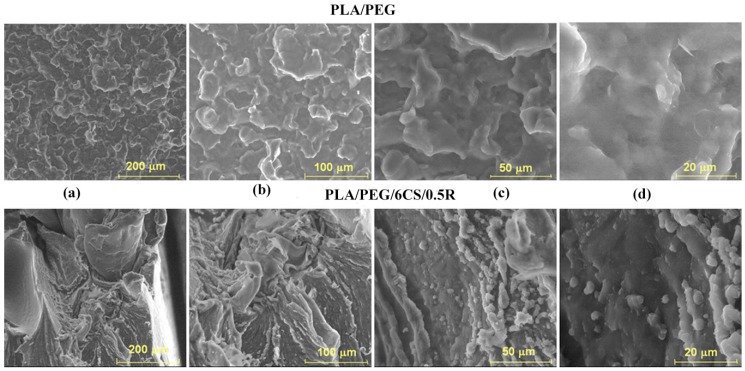
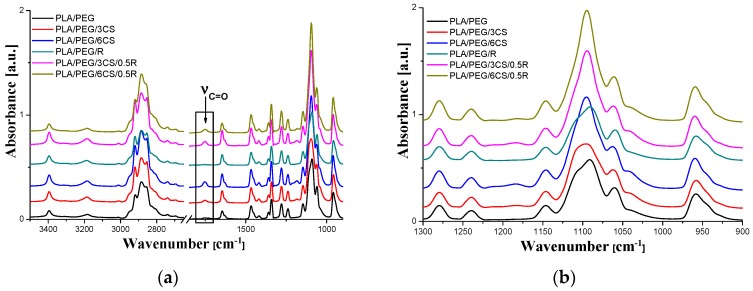
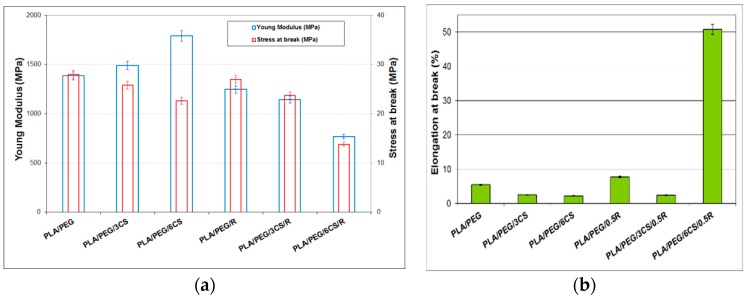
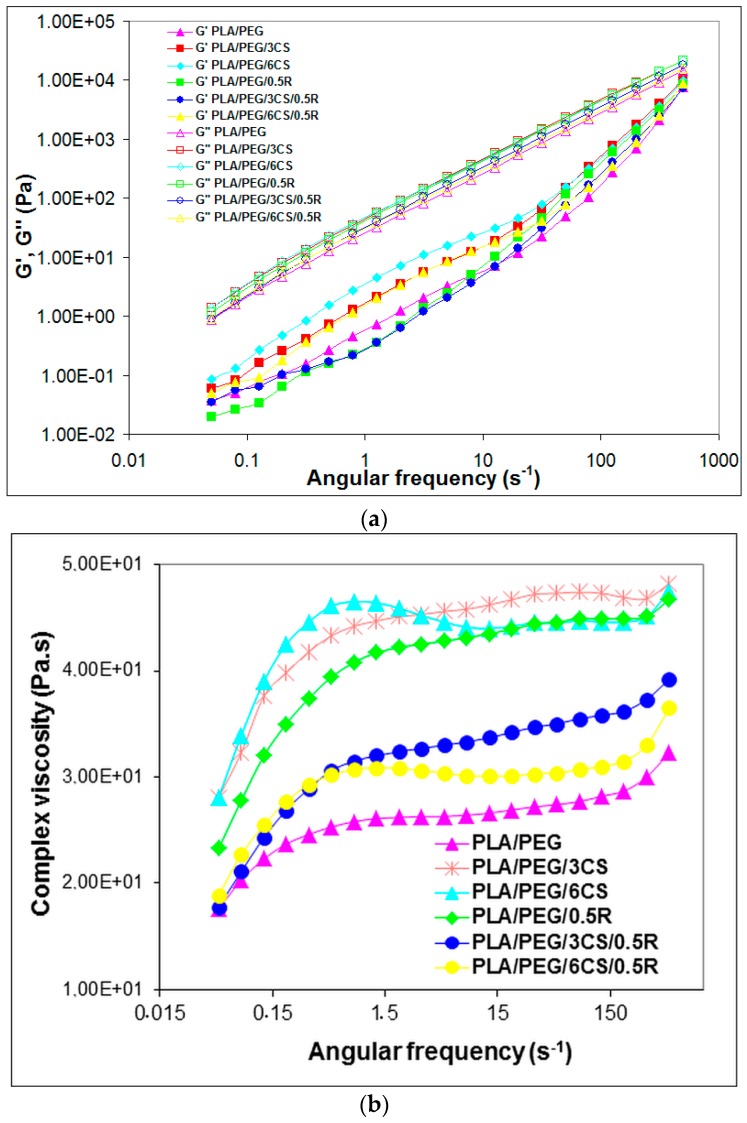
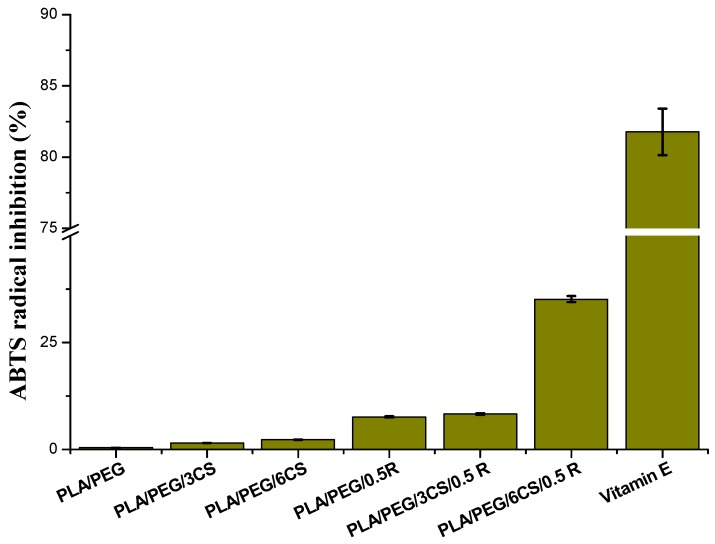
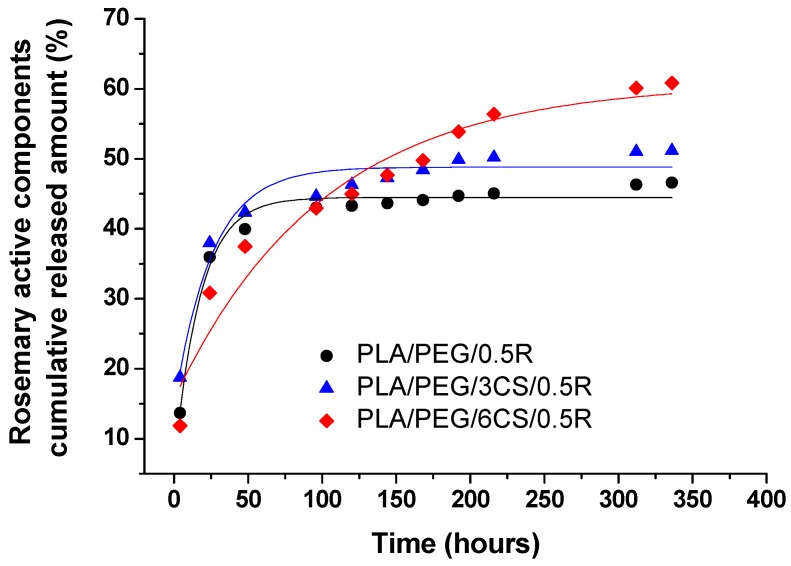
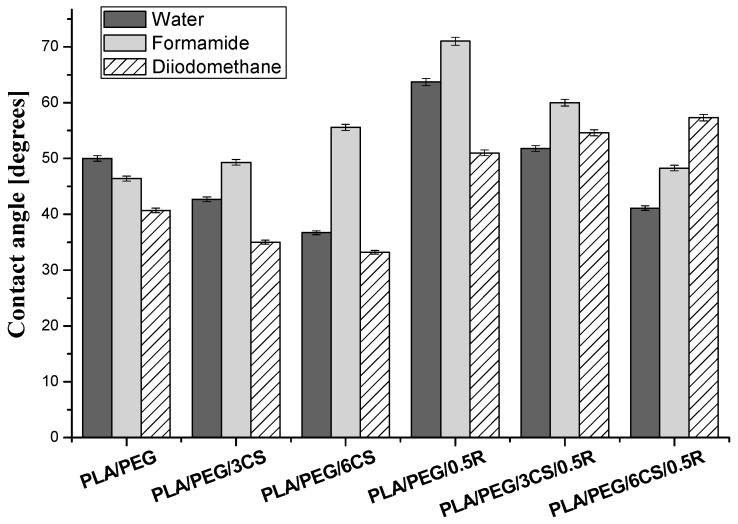
The purpose of the present study is to develop new multifunctional environmentally friendly materials having applications both in medical and food packaging fields. New poly(lactic acid) (PLA)-based multifunctional materials containing additives derived from natural resources like chitosan (CS) and rosemary extract (R) were obtained by melt mixing. Each of the selected components has its own specific properties such as: PLA is a biodegradable thermoplastic aliphatic polyester derived from renewable biomass, heat-resistant, with mechanical properties close to those of polystyrene and polyethylene terephthalate, and CS offers good antimicrobial activity and biological functions, while R significantly improves antioxidative action necessary in all applications. A synergy of their combination, an optimum choice of their ratio, and processing parameters led to high performance antimicrobial/antioxidant/biocompatible/environmentally degradable materials. The polyethylene glycol (PEG)-plasticized PLA/chitosan/powdered rosemary extract biocomposites of various compositions were characterized in respect to their mechanical and rheological properties, structure by spectroscopy, antioxidant and antimicrobial activities, and in vitro and in vivo biocompatibility. Scanning electron microscopy images evidence the morphology features added by rosemary powder presence in polymeric materials. Incorporation of additives improved elongation at break, antibacterial and antioxidant activity and also biocompatibility. Migration of bioactive components into D1 simulant is slower for PEG-plasticized PLA containing 6 wt % chitosan and 0.5 wt % rosemary extract (PLA/PEG/6CS/0.5 R) biocomposite and it occurred by a diffusion-controlled mechanism. The biocomposites show high hydrophilicity and good in vitro and in vivo biocompatibility. No hematological, biochemical and immunological modifications are induced by subcutaneous implantation of biocomposites. All characteristics of the PEG-plasticized PLA-based biocomposites recommend them as valuable materials for biomedical implants, and as well as for the design of innovative drug delivery systems. Also, the developed biocomposites could be a potential nature-derived active packaging with controlled release of antimicrobial/antioxidant compounds.
本研究的目的是开发新型多功能环保材料,使其在医疗和食品包装领域均有应用。通过熔融共混获得了新型聚乳酸(PLA)基多功能材料,其中含有壳聚糖(CS)和迷迭香提取物(R)等天然资源衍生的添加剂。所选的每种成分都有其自身的特定性能,例如:PLA是一种可生物降解的热塑性脂肪族聚酯,源自可再生生物质,耐热,其机械性能与聚苯乙烯和聚对苯二甲酸乙二酯相近,而CS具有良好的抗菌活性和生物学功能,同时R能显著提高所有应用中所需的抗氧化作用。它们组合的协同作用、比例的最佳选择以及加工参数导致了高性能的抗菌/抗氧化/生物相容性/环境可降解材料的产生。对各种组成的聚乙二醇(PEG)增塑的PLA/壳聚糖/迷迭香提取物粉末生物复合材料的力学和流变性能、光谱结构、抗氧化和抗菌活性以及体外和体内生物相容性进行了表征。扫描电子显微镜图像证明了迷迭香粉末在聚合物材料中所呈现的形态特征。添加剂的加入改善了断裂伸长率、抗菌和抗氧化活性以及生物相容性。对于含有6 wt%壳聚糖和0.5 wt%迷迭香提取物(PLA/PEG/6CS/0.5R)的PEG增塑PLA生物复合材料,生物活性成分向D1模拟物中的迁移较慢,且其迁移是由扩散控制机制引起的。这些生物复合材料表现出高亲水性以及良好的体外和体内生物相容性。皮下植入生物复合材料不会引起血液学、生物化学和免疫学改变。PEG增塑的PLA基生物复合材料的所有特性使其成为生物医学植入物以及创新药物递送系统设计的有价值材料。此外,所开发的生物复合材料可能是一种潜在的天然来源的活性包装材料,可控制抗菌/抗氧化化合物的释放。