Darie-Niță Raluca Nicoleta, Râpă Maria, Sivertsvik Morten, Rosnes Jan Thomas, Popa Elisabeta Elena, Dumitriu Raluca Petronela, Marincaș Octaviana, Matei Ecaterina, Predescu Cristian, Vasile Cornelia
"Petru Poni" Institute of Macromolecular Chemistry, Physical Chemistry of Polymers Department, 41A Gr. Ghica Voda Alley, 700487 Iasi, Romania.
Faculty of Materials Science and Engineering, University POLITEHNICA of Bucharest, 313 Splaiul Independentei, 060042 Bucharest, Romania.
Polymers (Basel). 2021 May 17;13(10):1610. doi: 10.3390/polym13101610.
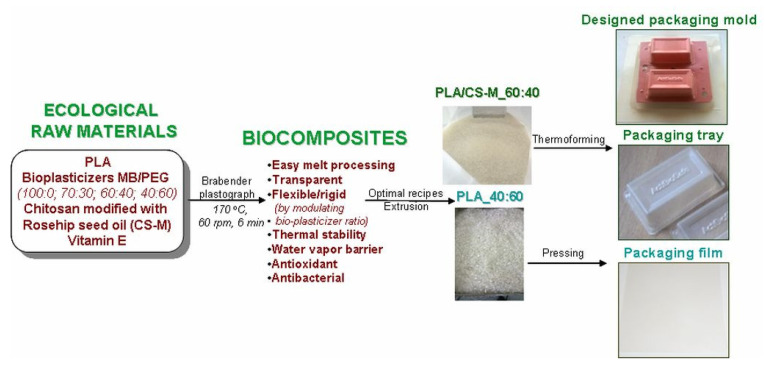
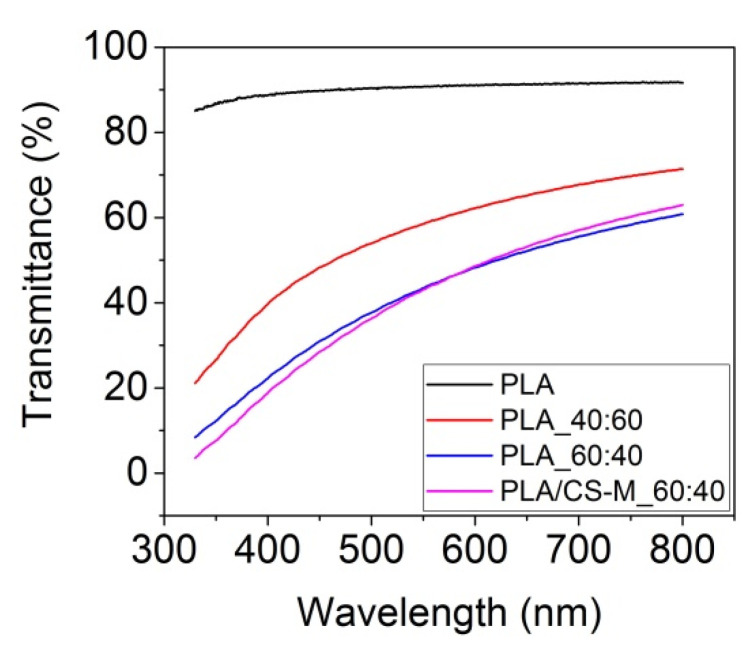
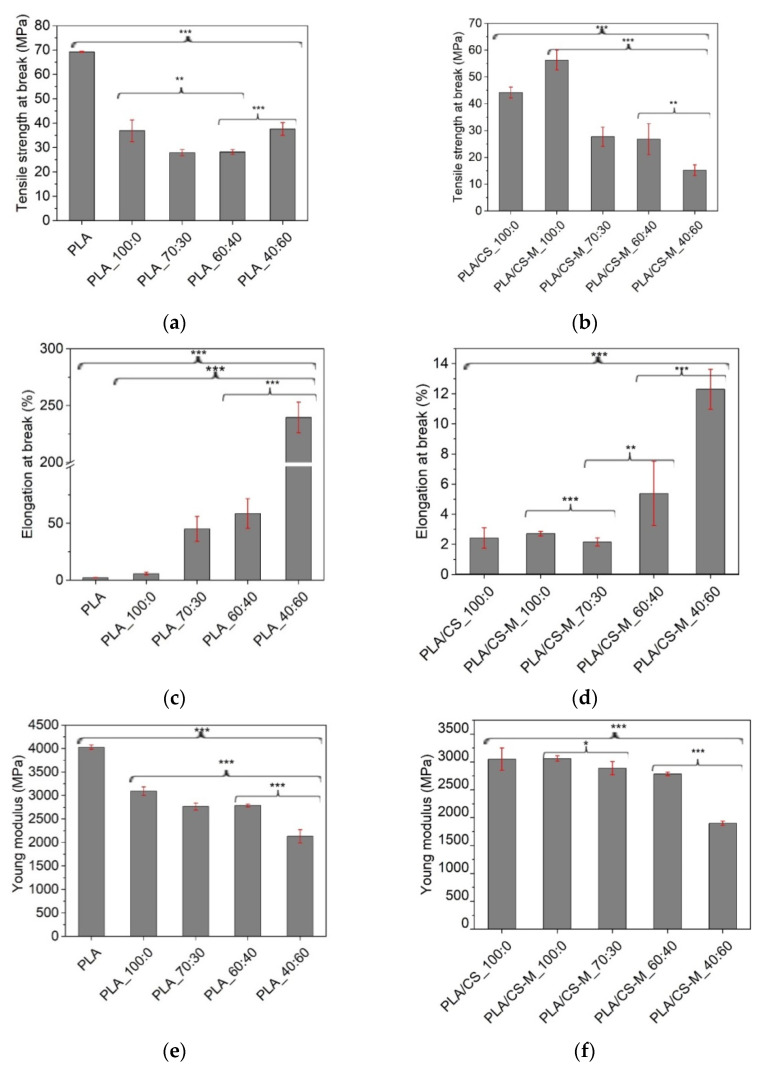
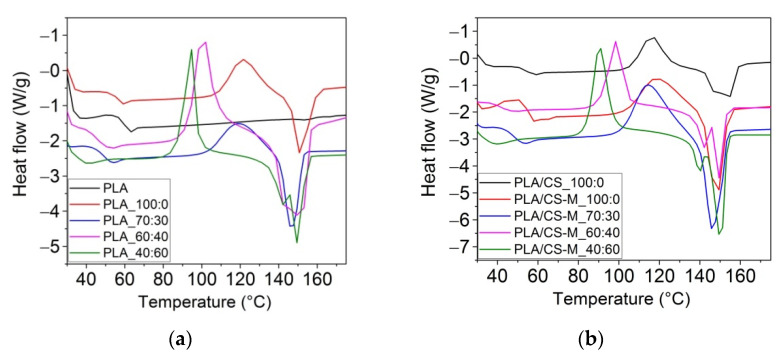
Several recipes based on PLA, bio-plasticizers, and active agents such as vitamin E and cold-pressed rosehip seed oil encapsulated into chitosan by the emulsion method named here as chitosan modified (CS-M) were elaborated by melt compounding for food packaging applications. Resulted biocomposites have been investigated from the point of view of physical-mechanical, thermal, barrier, antimicrobial, and antioxidant properties to select the formulations with the optimum features to produce food trays and films for packaging applications. The obtained results showed that the elaborated formulations exhibit tensile strength and flexibility dependent on their composition being either rigid or flexible, as well as antimicrobial and antioxidant activity, which will potentially lead to prolonged use for food packaging. The recipe with PLA matrix and 40:60 Lapol108 as masterbarch/polyethylene glycol (MB/PEG) bio-plasticizers ratio was distinguished by an improvement of over 100 times in terms of flexibility compared with neat PLA, while the highest antioxidant activity (36.27%) was recorded for the sample containing a CS-M and MB/PEG ratio of 60:40. An enhancement of ~50% for the water vapor barrier was recorded for PLA/CS-M_100:0 material. By modulating the MB and PEG bio-plasticizers ratio, the design of new eco-friendly food packaging materials with antimicrobial/antioxidant characteristics by using the existing technologies for processing synthetic polymers (melt mixing, compounding, pressing, thermoforming) has been successfully realized.
通过熔融共混法制备了几种基于聚乳酸(PLA)、生物增塑剂以及维生素E和冷榨玫瑰果籽油等活性剂的配方,这些活性剂通过乳液法封装在壳聚糖中,在此称为壳聚糖改性(CS-M),用于食品包装应用。从物理机械、热学、阻隔、抗菌和抗氧化性能等方面对所得生物复合材料进行了研究,以选择具有最佳特性的配方,用于生产食品托盘和包装薄膜。所得结果表明,所制备的配方表现出取决于其组成的拉伸强度和柔韧性,既可以是刚性的也可以是柔性的,同时还具有抗菌和抗氧化活性,这可能会延长其在食品包装中的使用时间。以PLA为基体、主母料/聚乙二醇(MB/PEG)生物增塑剂比例为40:60的Lapol108的配方,与纯PLA相比,柔韧性提高了100倍以上,而壳聚糖改性和MB/PEG比例为60:40的样品的抗氧化活性最高(36.27%)。PLA/CS-M_100:0材料的水蒸气阻隔性能提高了约50%。通过调节MB和PEG生物增塑剂的比例,利用现有的合成聚合物加工技术(熔融混合、复合、压制、热成型)成功实现了具有抗菌/抗氧化特性的新型环保食品包装材料的设计。