Oh Jooyoung, Ham Jinsil, Cho Dongrae, Park Jin Young, Kim Jae-Jin, Lee Boreom
Department of Psychiatry, Gangnam Severance Hospital, Yonsei University Health System, Seoul, South Korea.
Institute of Behavioral Science in Medicine, Yonsei University College of Medicine, Seoul, South Korea.
Front Psychiatry. 2019 May 7;10:291. doi: 10.3389/fpsyt.2019.00291. eCollection 2019.
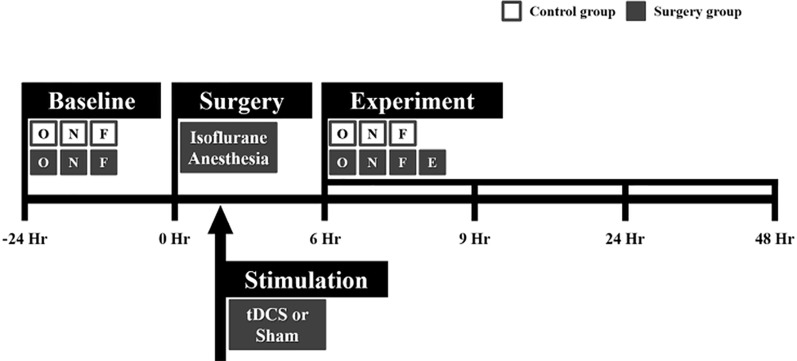
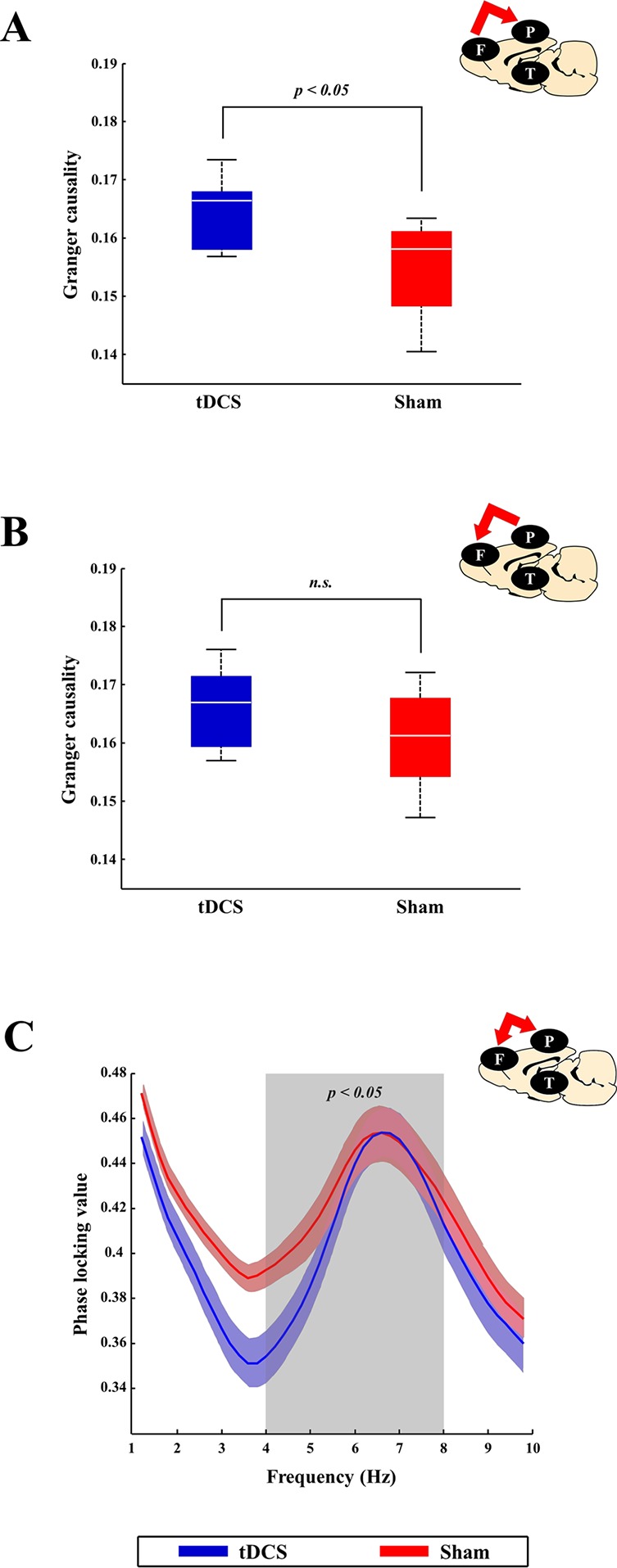
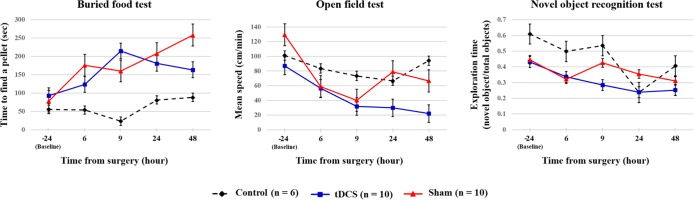
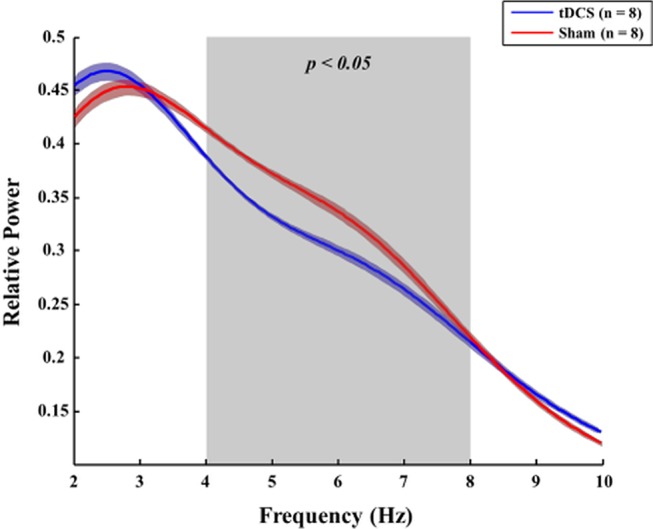
Postoperative delirium can lead to increased morbidity and mortality, and may even be a potentially life-threatening clinical syndrome. However, the neural mechanism underlying this condition has not been fully understood and there is little knowledge regarding potential preventive strategies. To date, investigation of transcranial direct current stimulation (tDCS) for the relief of symptoms caused by neuropsychiatric disorders and the enhancement of cognitive performance has led to promising results. In this study, we demonstrated that tDCS has a possible effect on the fast recovery from delirium in rats after microelectrode implant surgery, as demonstrated by postoperative behavior and neurophysiology compared with sham stimulation. This is the first study to describe the possible effects of tDCS for the fast recovery from delirium based on the study of both electroencephalography and behavioral changes. Postoperative rats showed decreased attention, which is the core symptom of delirium. However, anodal tDCS over the right frontal area immediately after surgery exhibited positive effects on acute attentional deficit. It was found that relative power of theta was lower in the tDCS group than in the sham group after surgery, suggesting that the decrease might be the underlying reason for the positive effects of tDCS. Connectivity analysis revealed that tDCS could modulate effective connectivity and synchronization of brain activity among different brain areas, including the frontal cortex, parietal cortex, and thalamus. It was concluded that anodal tDCS on the right frontal regions may have the potential to help patients recover quickly from delirium.
术后谵妄可导致发病率和死亡率增加,甚至可能是一种潜在的危及生命的临床综合征。然而,这种情况背后的神经机制尚未完全了解,关于潜在预防策略的知识也很少。迄今为止,经颅直流电刺激(tDCS)用于缓解神经精神疾病引起的症状和提高认知能力的研究已取得了有前景的结果。在本研究中,我们证明了tDCS对大鼠微电极植入手术后谵妄的快速恢复可能有影响,与假刺激相比,术后行为和神经生理学结果证明了这一点。这是第一项基于脑电图和行为变化研究描述tDCS对谵妄快速恢复可能影响的研究。术后大鼠注意力下降,这是谵妄的核心症状。然而,术后立即在右侧额叶区域进行阳极tDCS对急性注意力缺陷有积极影响。研究发现,术后tDCS组的θ波相对功率低于假刺激组,这表明这种降低可能是tDCS产生积极效果的潜在原因。连接性分析表明,tDCS可以调节不同脑区(包括额叶皮质、顶叶皮质和丘脑)之间脑活动的有效连接和同步。研究得出结论,右侧额叶区域的阳极tDCS可能有帮助患者从谵妄中快速恢复的潜力。