Lamb Ruth, Rohrer Jonathan D, Real Raquel, Lubbe Steven J, Waite Adrian J, Blake Derek J, Walters R Jon, Lashley Tammaryn, Revesz Tamas, Holton Janice L, Morris Huw R
Department of Clinical and Movement Neurosciences, Dementia Research Centre, UCL Queen Square Institute of Neurology, London WC1N 3BG, United Kingdom.
Department of Neurodegenerative Disease, Dementia Research Centre, UCL Queen Square Institute of Neurology, London WC1N 3BG, United Kingdom.
Cold Spring Harb Mol Case Stud. 2019 Jun 3;5(3). doi: 10.1101/mcs.a003913. Print 2019 Jun.
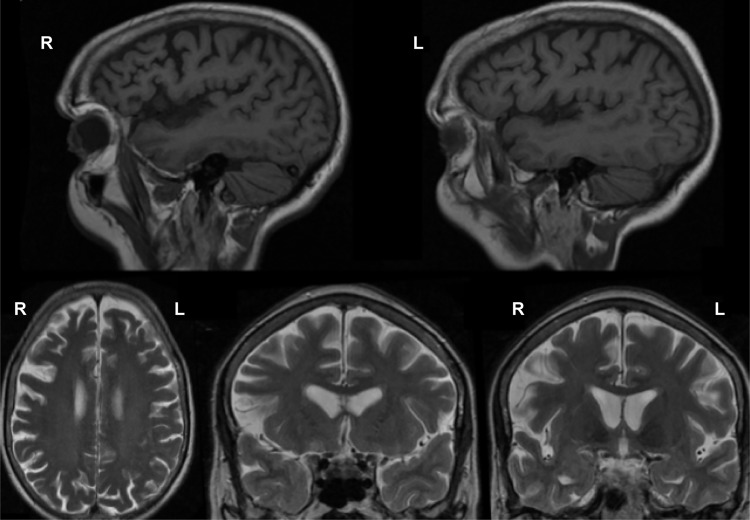
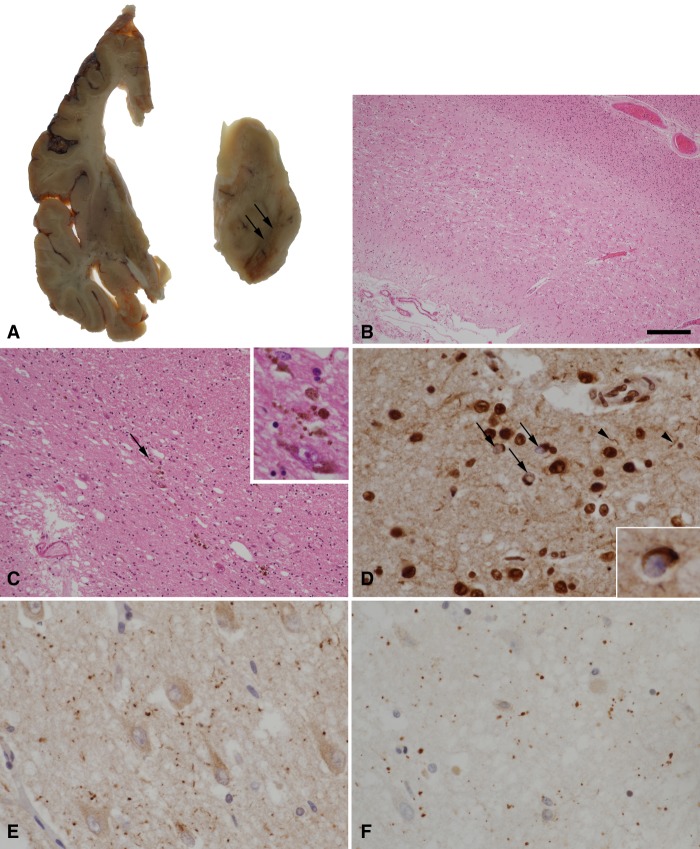
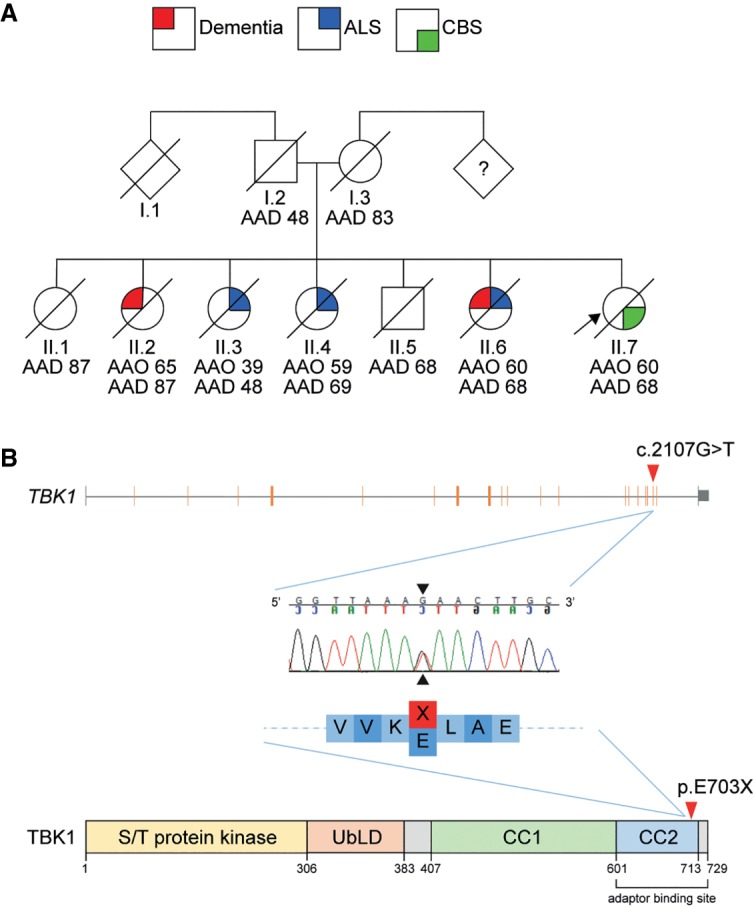
Mutations in the TANK-binding kinase 1 () gene have recently been shown to cause frontotemporal dementia (FTD) and amyotrophic lateral sclerosis (ALS). The phenotype is highly variable and has been associated with behavioral variant FTD, primary progressive aphasia, and pure ALS. We describe the clinical, anatomical, and pathological features of a patient who developed corticobasal syndrome (CBS)/progressive nonfluent aphasia (PNFA) overlap. The patient presented with progressive speech difficulties and later developed an asymmetric akinetic-rigid syndrome. Neuroimaging showed asymmetrical frontal atrophy, predominantly affecting the right side. There was a strong family history of neurodegenerative disease with four out of seven siblings developing either dementia or ALS in their 50s and 60s. The patient died at the age of 71 and the brain was donated for postmortem analysis. Histopathological examination showed frontotemporal lobar degeneration TDP-43 type A pathology. Genetic screening did not reveal a mutation in the , , or genes, but exome sequencing revealed a novel p.E703X mutation in the gene. Although segregation data were not available, this loss-of-function mutation is highly likely to be pathogenic because it is predicted to disrupt TBK1/optineurin interaction and impair cellular autophagy. In conclusion, we show that mutations can be a cause of an atypical parkinsonian syndrome and screening should be considered in CBS patients with a family history of dementia or ALS.
近期研究表明,TANK结合激酶1()基因的突变可导致额颞叶痴呆(FTD)和肌萎缩侧索硬化症(ALS)。其表型具有高度变异性,与行为变异型FTD、原发性进行性失语症和单纯性ALS相关。我们描述了一名出现皮质基底节综合征(CBS)/进行性非流畅性失语症(PNFA)重叠症状患者的临床、解剖学和病理学特征。该患者起初出现进行性言语困难,随后发展为不对称性运动不能-强直综合征。神经影像学检查显示额叶不对称性萎缩,主要累及右侧。患者有强烈的神经退行性疾病家族史,七个兄弟姐妹中有四个在50多岁和60多岁时患上痴呆症或ALS。患者于71岁去世,其大脑被捐赠用于尸检分析。组织病理学检查显示为额颞叶变性TDP-43 A型病理改变。基因筛查未在、或基因中发现突变,但外显子测序在基因中发现了一个新的p.E703X突变。尽管没有分离数据,但这种功能丧失突变极有可能具有致病性,因为它预计会破坏TBK1/视紫质相互作用并损害细胞自噬。总之,我们表明突变可能是一种非典型帕金森综合征的病因,对于有痴呆症或ALS家族史的CBS患者应考虑进行筛查。