Translational Neuroimaging Laboratory, The McGill University Research Centre for Studies in Aging, H4H 1R3, Montreal, Canada.
Montreal Neurological Institute, H3A 2B4, Montreal, Canada.
Nat Commun. 2019 Jun 4;10(1):2353. doi: 10.1038/s41467-019-10217-w.
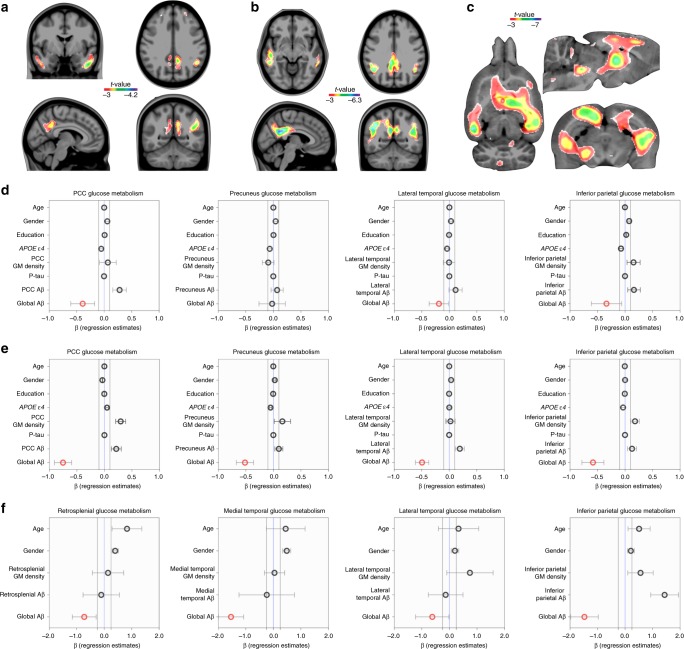
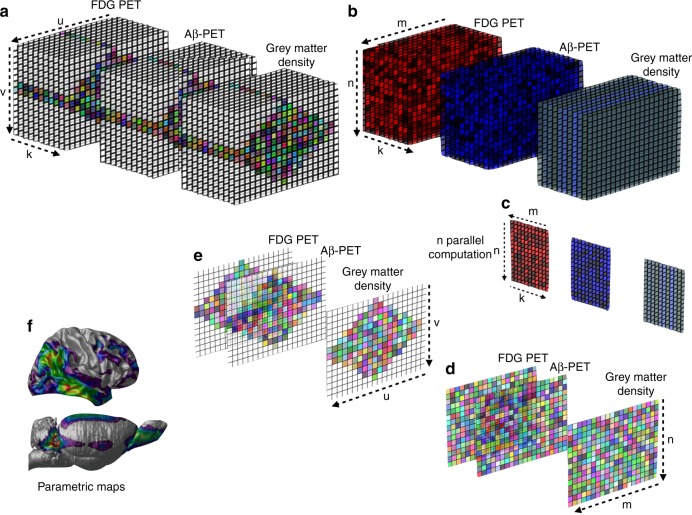
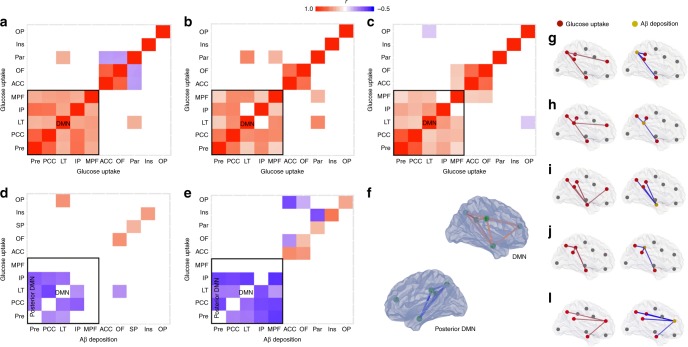
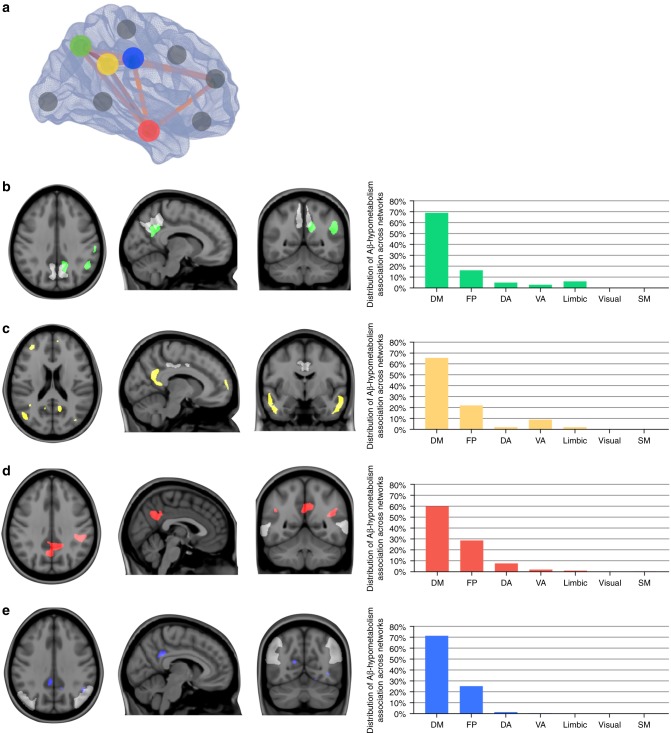
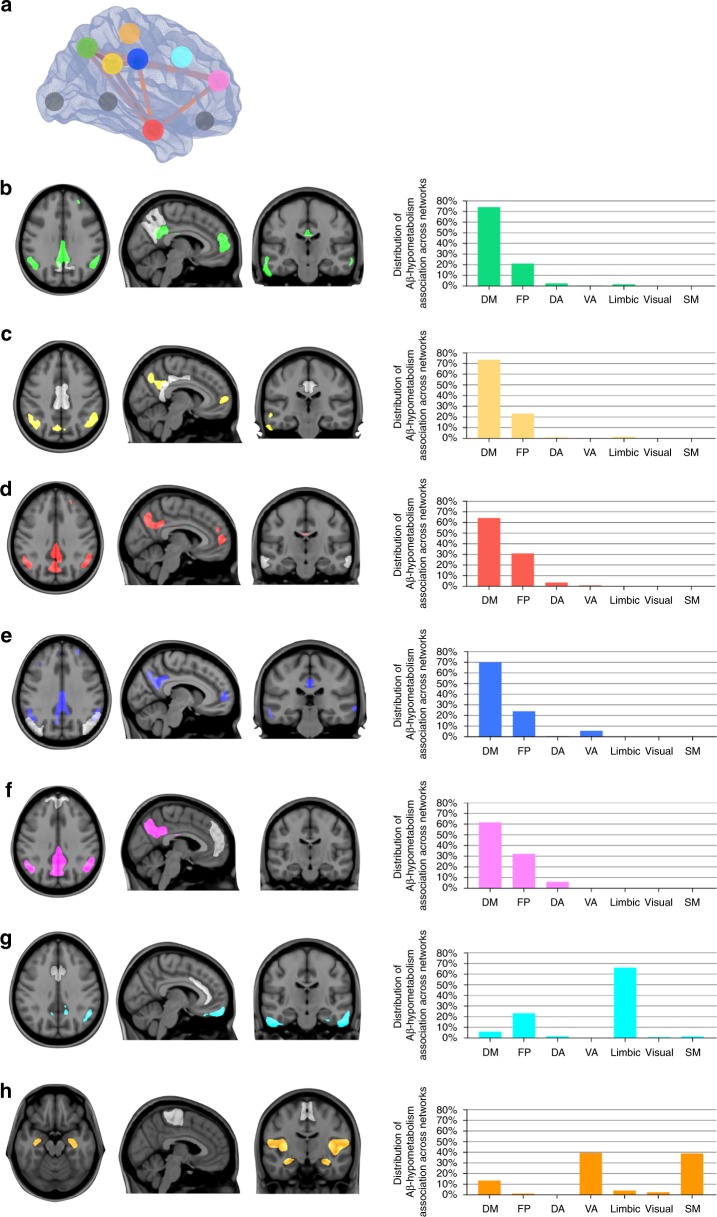
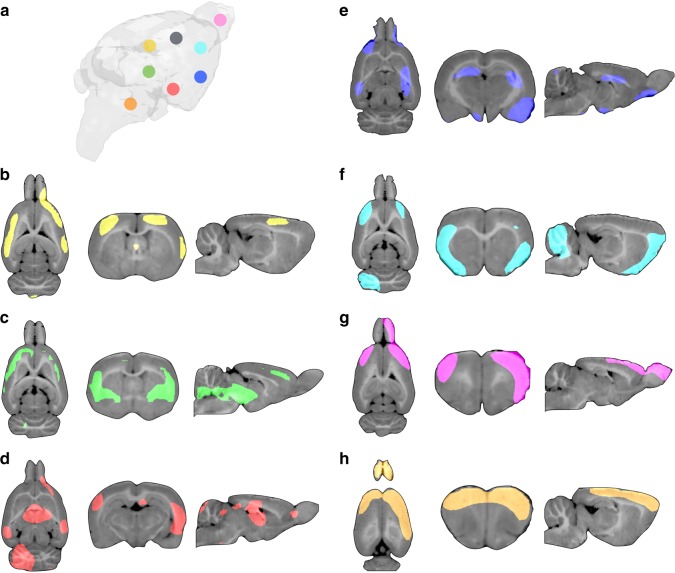
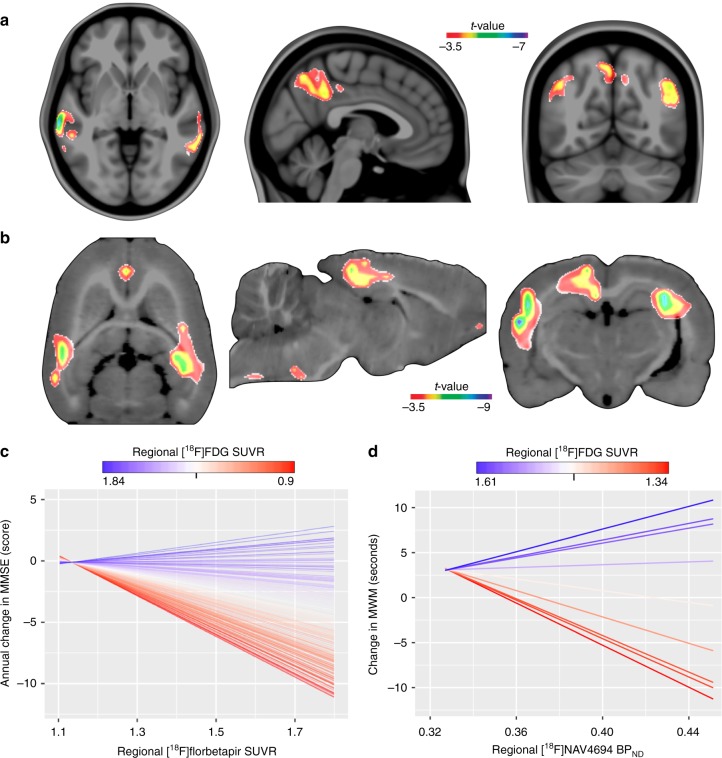
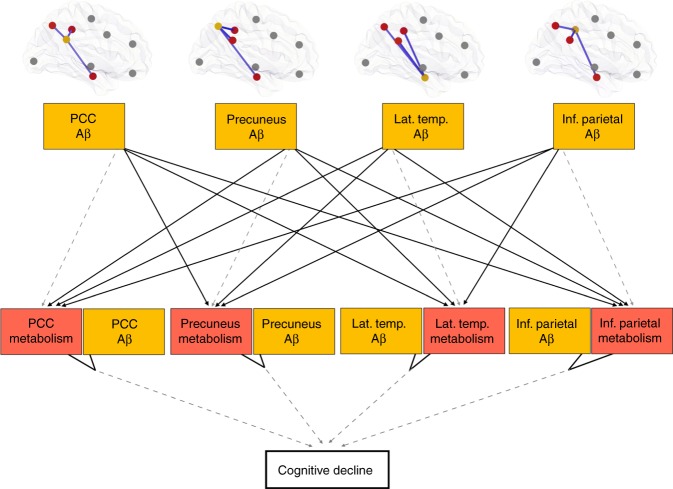
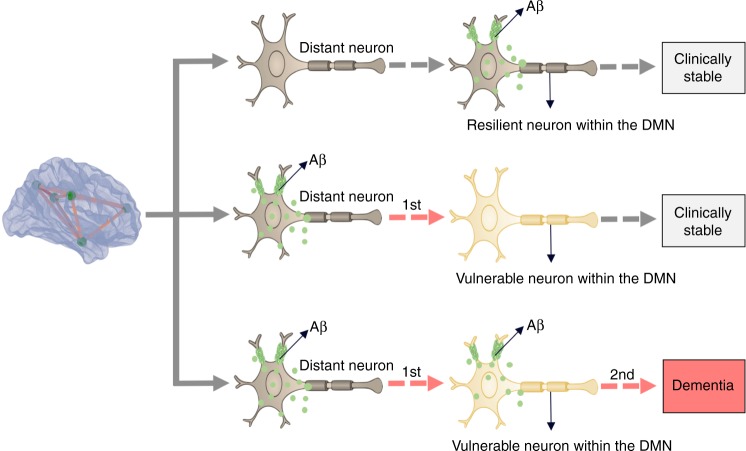
The link between brain amyloid-β (Aβ), metabolism, and dementia symptoms remains a pressing question in Alzheimer's disease. Here, using positron emission tomography ([F]florbetapir tracer for Aβ and [F]FDG tracer for glucose metabolism) with a novel analytical framework, we found that Aβ aggregation within the brain's default mode network leads to regional hypometabolism in distant but functionally connected brain regions. Moreover, we found that an interaction between this hypometabolism with overlapping Aβ aggregation is associated with subsequent cognitive decline. These results were also observed in transgenic Aβ rats that do not form neurofibrillary tangles, which support these findings as an independent mechanism of cognitive deterioration. These results suggest a model in which distant Aβ induces regional metabolic vulnerability, whereas the interaction between local Aβ with a vulnerable environment drives the clinical progression of dementia.
大脑淀粉样蛋白-β(Aβ)、代谢与痴呆症状之间的关联仍是阿尔茨海默病领域的一个紧迫问题。在这里,我们采用正电子发射断层扫描([F]florbetapir 示踪剂用于 Aβ,[F]FDG 示踪剂用于葡萄糖代谢)和一种新的分析框架,发现大脑默认模式网络内的 Aβ聚集导致远距离但功能连接的脑区出现局部代谢低下。此外,我们发现这种代谢低下与重叠 Aβ聚集的相互作用与随后的认知能力下降有关。这些结果在不形成神经原纤维缠结的转基因 Aβ大鼠中也观察到,这支持了这些发现是认知恶化的一种独立机制。这些结果表明,一种模型是,远距离的 Aβ导致局部代谢脆弱性,而局部 Aβ与脆弱环境之间的相互作用则推动痴呆的临床进展。