Haferkamp Sebastian, Paul Andrea, Michalchuk Adam A L, Emmerling Franziska
BAM Federal Institute for Materials Research and Testing, Richard-Willstaetter-Straße 11, 12489 Berlin, Germany.
Humboldt-Universität zu Berlin, Brook-Taylor-Straße 2, 12489 Berlin, Germany.
Beilstein J Org Chem. 2019 May 21;15:1141-1148. doi: 10.3762/bjoc.15.110. eCollection 2019.
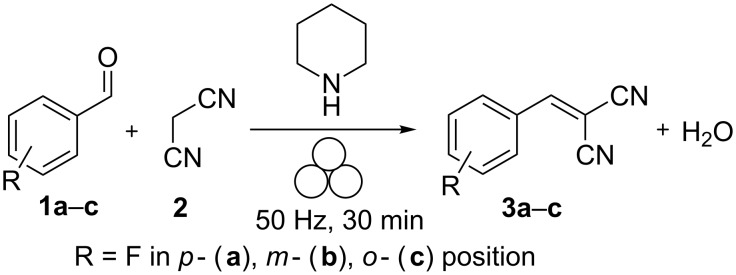
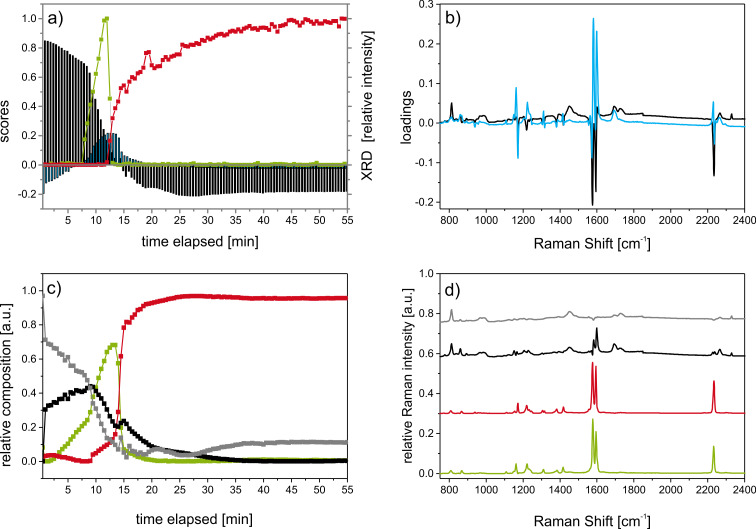
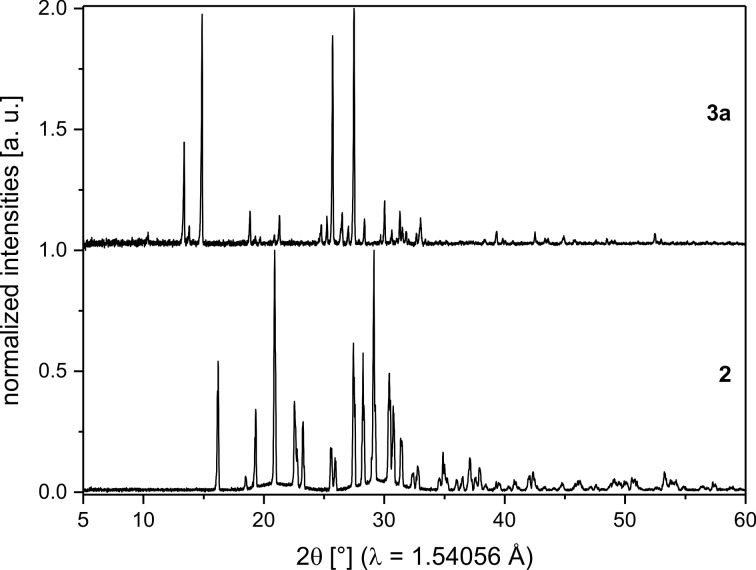
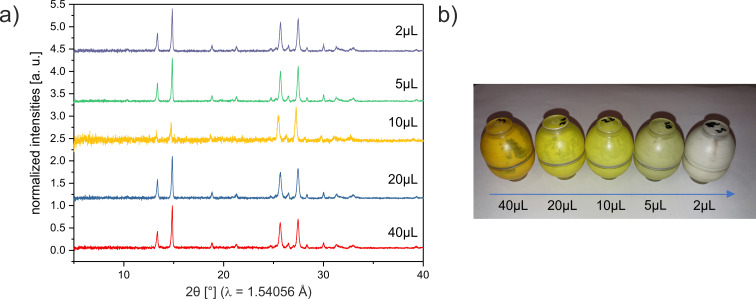
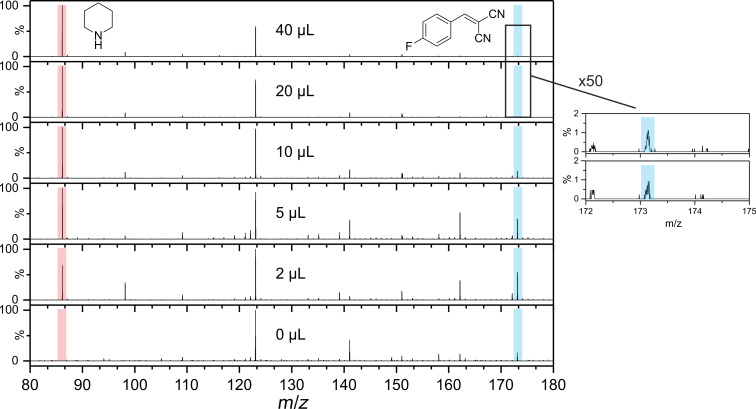
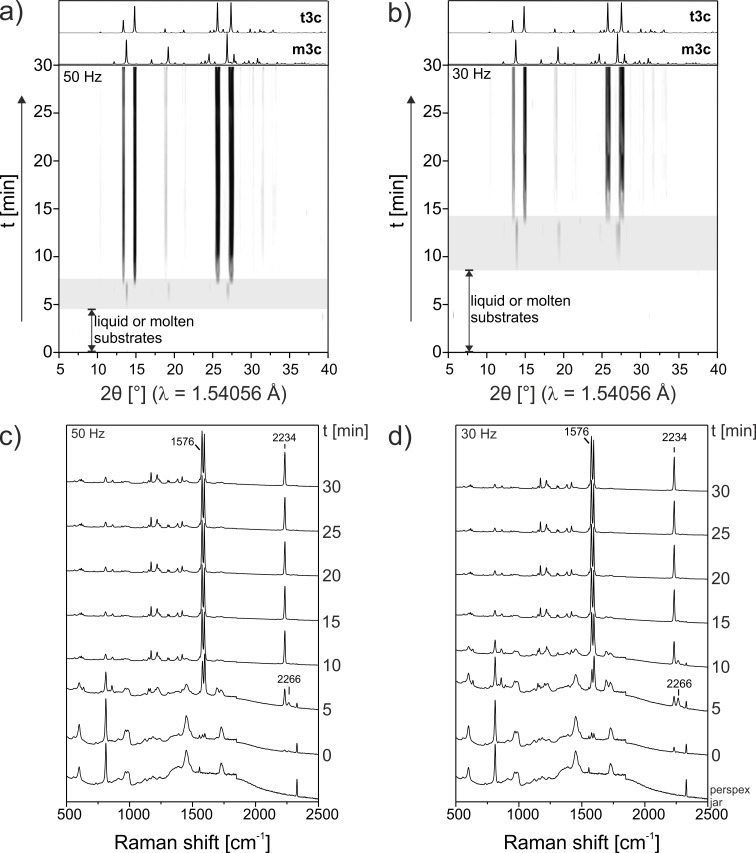
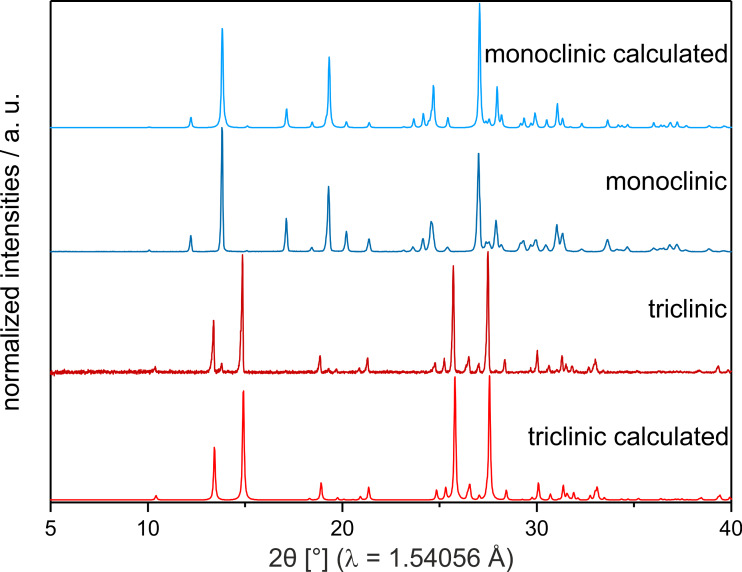
The transformation of a base-catalyzed, mechano-assisted Knoevenagel condensation of mono-fluorinated benzaldehyde derivatives (-, -, -benzaldehyde) with malonodinitrile was investigated in situ and in real time. Upon milling, the -substituted product was found to crystallize initially into two different polymorphic forms, depending on the quantity of catalyst used. For low catalyst concentrations, a mechanically metastable phase (monoclinic) was initially formed, converting to the mechanically stable phase (triclinic) upon further grinding. Instead, higher catalyst concentrations crystallize directly as the triclinic product. Inclusion of catalyst in the final product, as evidenced by mass spectrometric analysis, suggests this complex polymorphic pathway may be due to seeding effects. Multivariate analysis for the in situ Raman spectra supports this complex formation pathway, and offers a new approach to monitoring multi-phase reactions during ball milling.
对单氟苯甲醛衍生物(-、-、-苯甲醛)与丙二腈的碱催化、机械辅助Knoevenagel缩合反应进行了原位实时研究。研磨时,根据所用催化剂的量,发现取代产物最初结晶为两种不同的多晶型物。对于低催化剂浓度,最初形成机械亚稳相(单斜晶),进一步研磨后转变为机械稳定相(三斜晶)。相反,较高的催化剂浓度直接结晶为三斜晶产物。质谱分析表明最终产物中含有催化剂,这表明这种复杂的多晶型途径可能是由于晶种效应。原位拉曼光谱的多变量分析支持这种复杂的形成途径,并为监测球磨过程中的多相反应提供了一种新方法。