Department of Diagnostic Medicine and Pathobiology, Kansas State University, Manhattan, Kansas, USA.
Division of Virology, Department of Pathology, University of Cambridge, Cambridge, United Kingdom.
J Virol. 2019 Jul 30;93(16). doi: 10.1128/JVI.00370-19. Print 2019 Aug 15.
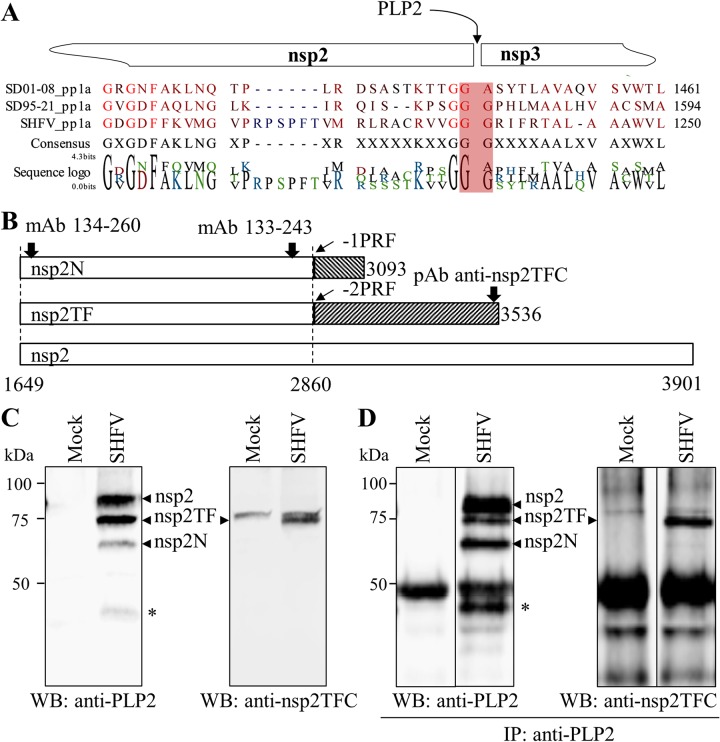
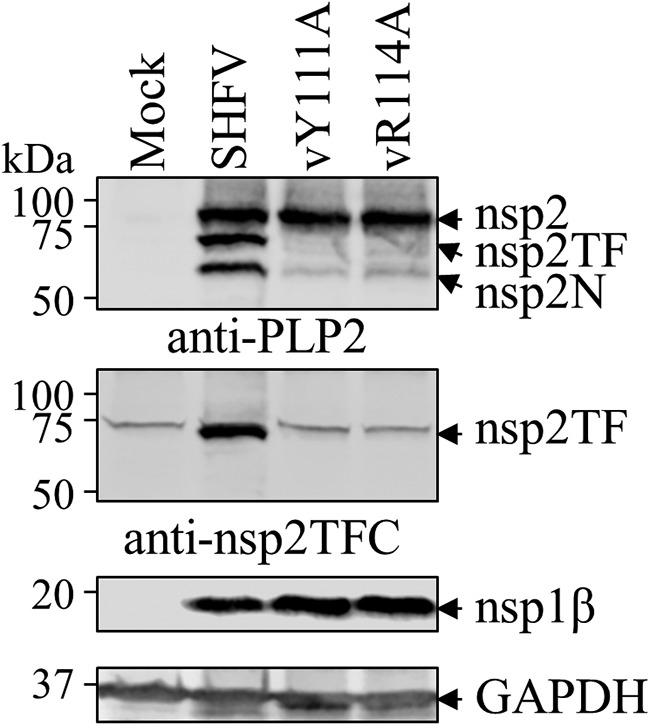
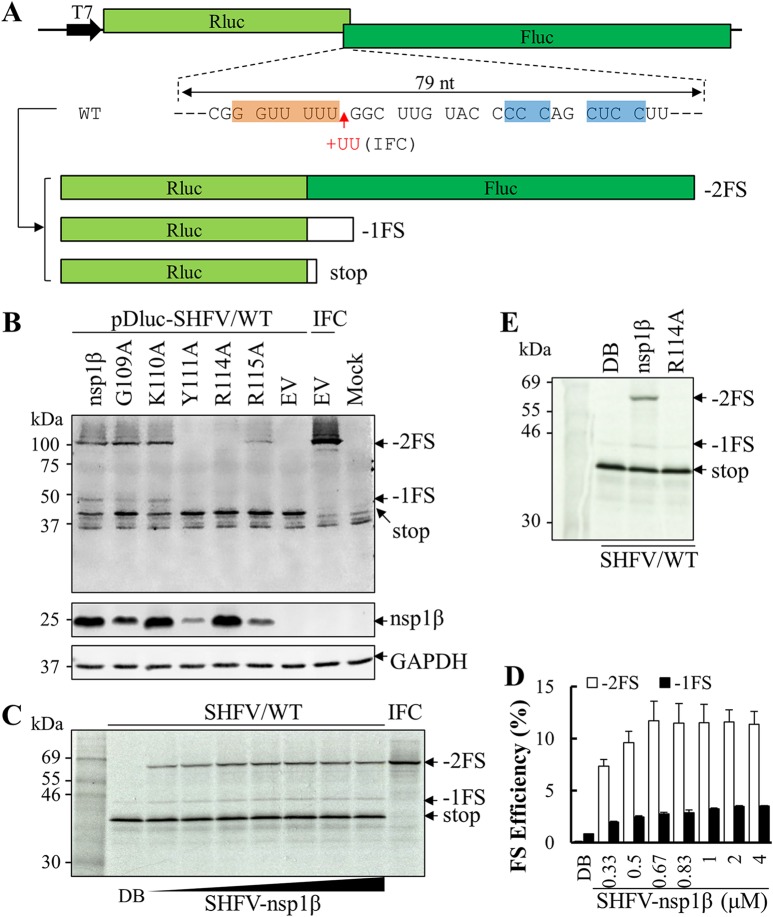
The -2/-1 programmed ribosomal frameshifting (-2/-1 PRF) mechanism in porcine reproductive and respiratory syndrome virus (PRRSV) leads to the translation of two additional viral proteins, nonstructural protein 2TF (nsp2TF) and nsp2N. This -2/-1 PRF mechanism is transactivated by a viral protein, nsp1β, and cellular poly(rC) binding proteins (PCBPs). Critical elements for -2/-1 PRF, including a slippery sequence and a downstream C-rich motif, were also identified in 11 simarteriviruses. However, the slippery sequences (XXXUCUCU instead of XXXUUUUU) in seven simarteriviruses can only facilitate -2 PRF to generate nsp2TF. The nsp1β of simian hemorrhagic fever virus (SHFV) was identified as a key factor that transactivates both -2 and -1 PRF, and the universally conserved Tyr111 and Arg114 in nsp1β are essential for this activity. translation experiments demonstrated the involvement of PCBPs in simarterivirus -2/-1 PRF. Using SHFV reverse genetics, we confirmed critical roles of nsp1β, slippery sequence, and C-rich motif in -2/-1 PRF in SHFV-infected cells. Attenuated virus growth ability was observed in SHFV mutants with impaired expression of nsp2TF and nsp2N. Comparative genomic sequence analysis showed that key elements of -2/-1 PRF are highly conserved in all known arteriviruses except equine arteritis virus (EAV) and wobbly possum disease virus (WPDV). Furthermore, -2/-1 PRF with SHFV PRF signal RNA can be stimulated by heterotypic nsp1βs of all non-EAV arteriviruses tested. Taken together, these data suggest that -2/-1 PRF is an evolutionarily conserved mechanism employed in non-EAV/-WPDV arteriviruses for the expression of additional viral proteins that are important for viral replication. Simarteriviruses are a group of arteriviruses infecting nonhuman primates, and a number of new species have been established in recent years. Although these arteriviruses are widely distributed among African nonhuman primates of different species, and some of them cause lethal hemorrhagic fever disease, this group of viruses has been undercharacterized. Since wild nonhuman primates are historically important sources or reservoirs of human pathogens, there is concern that simarteriviruses may be preemergent zoonotic pathogens. Thus, molecular characterization of simarteriviruses is becoming a priority in arterivirology. In this study, we demonstrated that an evolutionarily conserved ribosomal frameshifting mechanism is used by simarteriviruses and other distantly related arteriviruses for the expression of additional viral proteins. This mechanism is unprecedented in eukaryotic systems. Given the crucial role of ribosome function in all living systems, the potential impact of the in-depth characterization of this novel mechanism reaches beyond the field of virology.
猪繁殖与呼吸综合征病毒(PRRSV)中的 -2/-1 程序性核糖体移码(-2/-1 PRF)机制导致两种额外的病毒蛋白,非结构蛋白 2TF(nsp2TF)和 nsp2N 的翻译。这种 -2/-1 PRF 机制被病毒蛋白 nsp1β和细胞聚(C)结合蛋白(PCBPs)反式激活。在 11 种 simarteriviruses 中,也鉴定出了 -2/-1 PRF 的关键元件,包括滑链序列和下游富含 C 的基序。然而,七种 simarteriviruses 中的滑链序列(XXXUCUCU 而不是 XXXUUUUU)只能促进 -2 PRF 生成 nsp2TF。猴出血热病毒(SHFV)的 nsp1β被鉴定为反式激活 -2 和 -1 PRF 的关键因素,nsp1β 中普遍保守的 Tyr111 和 Arg114 对于这种活性是必不可少的。翻译实验表明 PCBPs 参与了 simarterivirus -2/-1 PRF。使用 SHFV 反向遗传学,我们在 SHFV 感染的细胞中证实了 nsp1β、滑链序列和 C 富含基序在 -2/-1 PRF 中的关键作用。在 nsp2TF 和 nsp2N 表达受损的 SHFV 突变体中观察到病毒生长能力减弱。比较基因组序列分析表明,所有已知的动脉炎病毒中除马动脉炎病毒(EAV)和 wobbly possum disease virus(WPDV)外,-2/-1 PRF 的关键元件高度保守。此外,具有 SHFV PRF 信号 RNA 的 -2/-1 PRF 可以被测试的所有非 EAV 动脉炎病毒的异源 nsp1β 刺激。总之,这些数据表明 -2/-1 PRF 是一种在非 EAV/-WPDV 动脉炎病毒中进化保守的机制,用于表达对病毒复制很重要的额外病毒蛋白。Simarteriviruses 是一组感染非人类灵长类动物的动脉炎病毒,近年来已经建立了许多新的物种。尽管这些动脉炎病毒广泛分布于不同物种的非洲非人类灵长类动物中,其中一些会导致致命的出血热疾病,但该病毒群尚未得到充分描述。由于野生非人类灵长类动物历来是人类病原体的重要来源或储存库,因此人们担心 simarteriviruses 可能是新兴的人畜共患病原体。因此,simarteriviruses 的分子特征正在成为动脉病毒学的优先事项。在这项研究中,我们证明了一种进化保守的核糖体移码机制被 simarteriviruses 和其他远缘相关的动脉炎病毒用于表达额外的病毒蛋白。这种机制在真核系统中是前所未有的。鉴于核糖体功能在所有生命系统中的关键作用,对这种新型机制的深入表征的潜在影响超出了病毒学领域。