Developmental Neurocognition Lab.
MTA-ELTE Theoretical Biology and Evolutionary Ecology Research Group.
Psychol Rev. 2019 Oct;126(5):693-726. doi: 10.1037/rev0000151. Epub 2019 Jun 6.
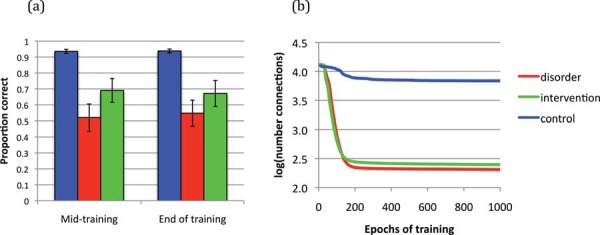
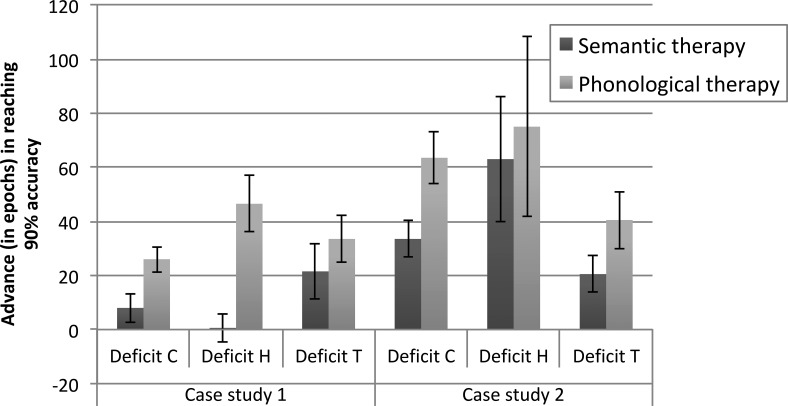
We evaluate the potential of connectionist models of developmental disorders to offer insights into the efficacy of interventions. Based on a range of computational simulation results, we assess factors that influence the effectiveness of interventions for reading, language, and other cognitive developmental disorders. The analysis provides a level of mechanistic detail that is generally lacking in behavioral approaches to intervention. We review an extended program of modeling work in four sections. In the first, we consider long-term outcomes and the possibility of compensated outcomes and resolution of early delays. In the second section, we address methods to remediate atypical development in a single network. In the third section, we address interventions to encourage compensation via alternative pathways. In the final section, we consider the key issue of individual differences in response to intervention. Together with advances in understanding the neural basis of developmental disorders and neural responses to training, formal computational approaches can spur theoretical progress to narrow the gap between the theory and practice of intervention. (PsycINFO Database Record (c) 2019 APA, all rights reserved).
我们评估了发展障碍的连接主义模型在提供干预效果的见解方面的潜力。基于一系列计算模拟结果,我们评估了影响阅读、语言和其他认知发展障碍干预效果的因素。该分析提供了一种通常在行为干预方法中缺乏的机制细节水平。我们在四个部分中回顾了一个扩展的建模工作方案。在第一部分中,我们考虑了长期结果以及补偿结果和早期延迟解决的可能性。在第二部分中,我们解决了在单个网络中纠正异常发育的方法。在第三部分中,我们探讨了通过替代途径鼓励补偿的干预措施。在最后一节中,我们考虑了对干预反应的个体差异这一关键问题。随着对发展障碍的神经基础和神经对训练反应的理解的进步,形式化的计算方法可以促进理论的进步,缩小干预的理论和实践之间的差距。(PsycINFO 数据库记录(c)2019 APA,保留所有权利)。