Division of Blood Purification, Nagasaki University Hospital, Nagasaki, Japan.
Department of Nephrology, Nagasaki University Hospital, Nagasaki, Japan.
BMC Nephrol. 2019 Jun 7;20(1):210. doi: 10.1186/s12882-019-1400-4.
High serum calcium levels should be avoided in patients on hemodialysis (HD) because they can induce cardiovascular diseases and worsen the patient's prognosis. In contrast, low serum calcium levels worsen the prognosis of patients with cerebral hemorrhage in the general population. So far, whether serum calcium levels in patients on HD are associated with cerebral hemorrhage remains unknown. This study aimed to reveal the association between serum calcium and cerebral hemorrhage in patients on HD, including in-hospital death, volume of hematoma, and onset of cerebral hemorrhage.
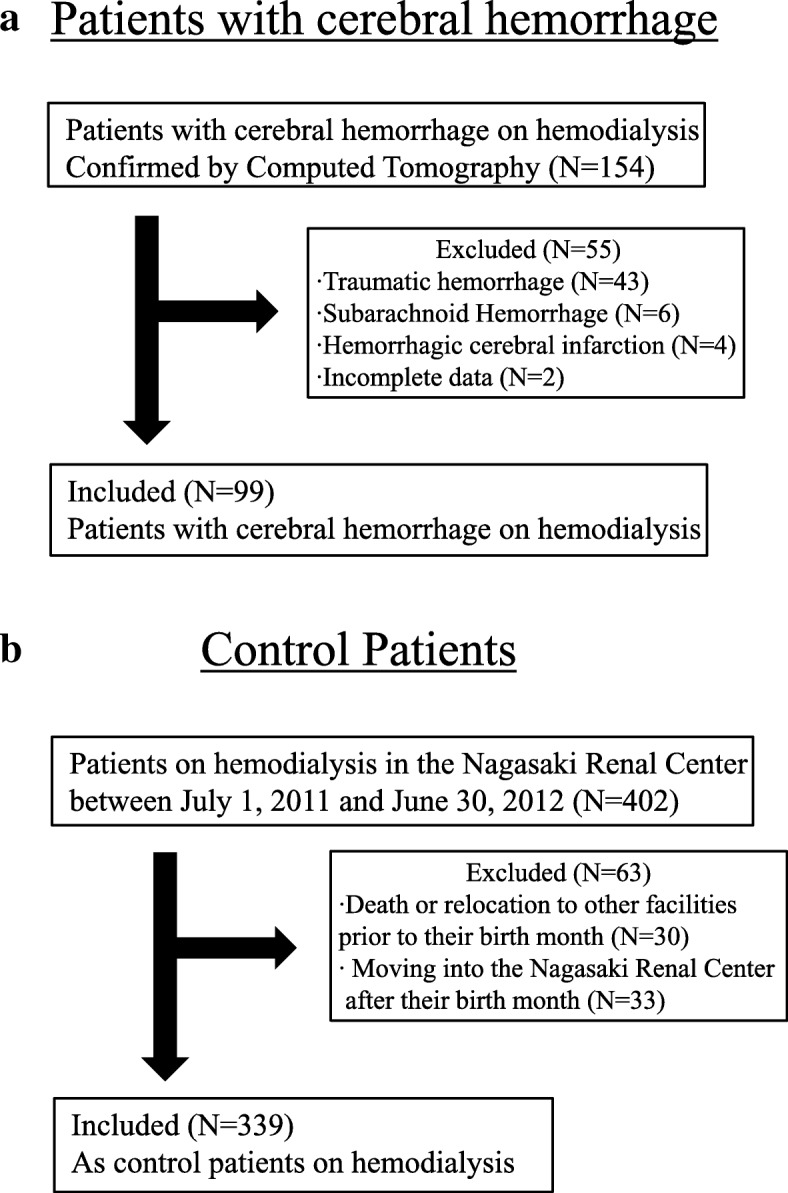
This cross-sectional case-control study included 99 patients on HD with cerebral hemorrhage at a single center between July 1, 2007 and December 31, 2017. Controls included 339 patients on HD at a single HD center between July 1, 2011 and June 30, 2012. Data on serum calcium level, patient demographics, and comorbid conditions were collected, and associations between cerebral hemorrhage and subsequent death were evaluated by multivariate logistic regression analysis. Further, the association of these backgrounds and hematoma volume was evaluated by multiple regression analysis.
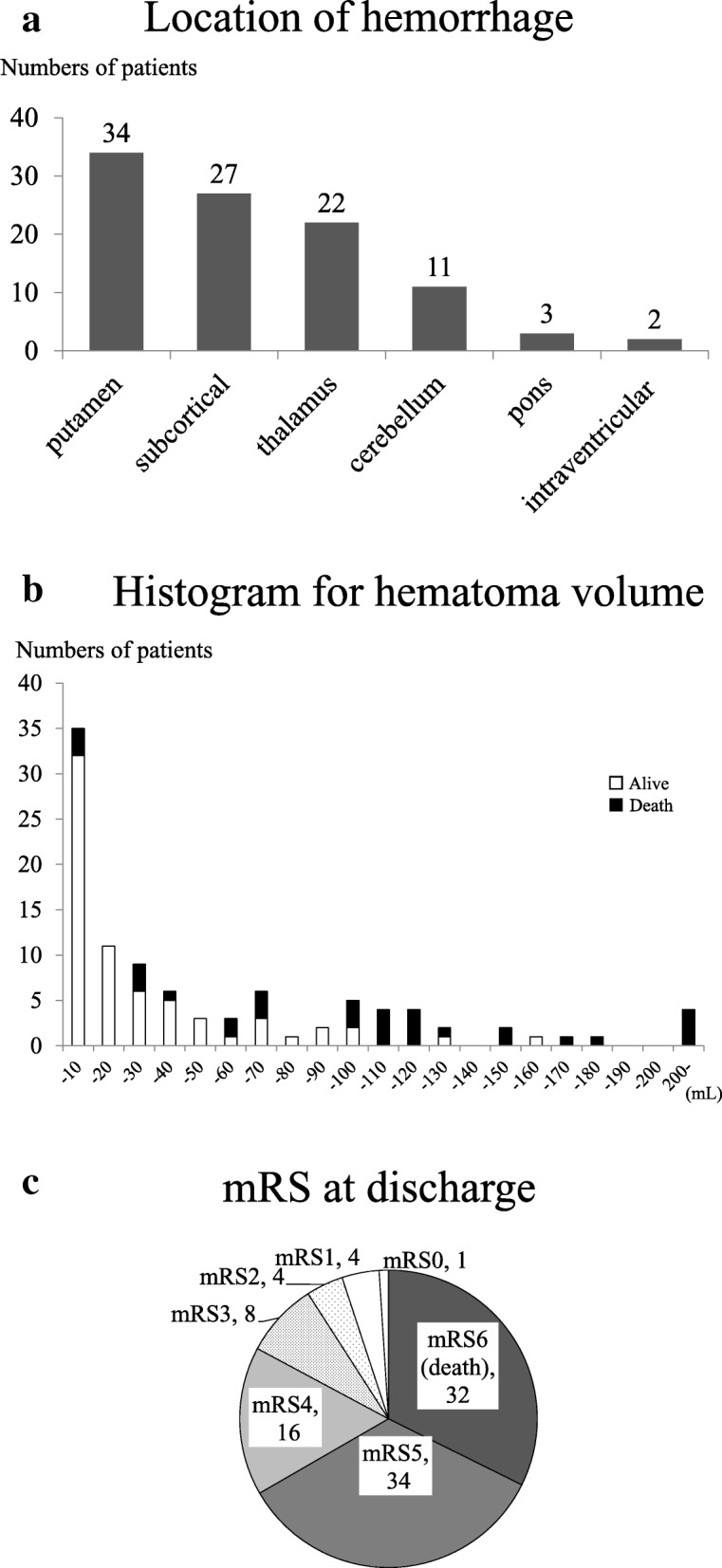
Of the 99 patients, 32 (32%) died from cerebral hemorrhage. The corrected serum calcium level (odds ratio [OR], 2.49; 95% confidence interval [CI], 1.43-4.35; P < 0.001) and antiplatelet drug use (OR, 3.95; 95% CI, 1.50-10.4; P = 0.005) had significant effects on the prognosis. Moreover, the corrected serum calcium (P = 0.003) and antiplatelet drug use (P = 0.01) were significantly correlated with hematoma volume. In the patients, the corrected serum calcium level (OR, 1.54; 95% CI, 1.07-2.22; P = 0.02) was associated with the onset of cerebral hemorrhage, as was pre-hemodialysis systolic blood pressure (per 10 mmHg) (OR, 1.40; 95% CI, 1.23-1.59; P < 0.001).
Although the precise mechanisms remain unknown, a high serum calcium level is associated with cerebral hemorrhage in patients on HD. Thus, we should pay attentions to a patient's calcium level.
高血清钙水平应避免在血液透析(HD)患者中出现,因为它会导致心血管疾病并使患者的预后恶化。相反,低血清钙水平会使脑出血患者的预后恶化。到目前为止,尚不清楚 HD 患者的血清钙水平是否与脑出血有关。本研究旨在揭示 HD 患者血清钙与脑出血之间的关系,包括住院期间死亡、血肿量和脑出血发病。
这项横断面病例对照研究包括 2007 年 7 月 1 日至 2017 年 12 月 31 日期间在单一中心接受 HD 治疗并发脑出血的 99 例患者。对照组为 2011 年 7 月 1 日至 2012 年 6 月 30 日在同一 HD 中心接受 HD 治疗的 339 例患者。收集了血清钙水平、患者人口统计学和合并症的数据,并通过多变量逻辑回归分析评估了脑出血与随后死亡之间的关系。此外,通过多元回归分析评估了这些背景与血肿量之间的关系。
在 99 例患者中,有 32 例(32%)死于脑出血。校正后的血清钙水平(比值比 [OR],2.49;95%置信区间 [CI],1.43-4.35;P<0.001)和抗血小板药物的使用(OR,3.95;95%CI,1.50-10.4;P=0.005)对预后有显著影响。此外,校正后的血清钙(P=0.003)和抗血小板药物的使用(P=0.01)与血肿量显著相关。在这些患者中,校正后的血清钙水平(OR,1.54;95%CI,1.07-2.22;P=0.02)与脑出血的发病有关,而透析前收缩压(每 10mmHg)(OR,1.40;95%CI,1.23-1.59;P<0.001)也是如此。
尽管确切的机制尚不清楚,但高血清钙水平与 HD 患者的脑出血有关。因此,我们应该注意患者的钙水平。