Szeto Victor, Kosirog Justin, Eilbert Wesley
Department of Emergency Medicine, University of Illinois College of Medicine, 1819 West Polk St., Room 469 COME, Chicago, IL, 60612, USA.
Int J Emerg Med. 2018 Sep 6;11(1):36. doi: 10.1186/s12245-018-0199-2.
Intracranial subdural hematoma occurring as a result of a procedure that causes a puncture of the spinal dura mater is extremely rare, with less than 100 cases reported. Often, this condition is initially misdiagnosed and treated as a post dural puncture headache.
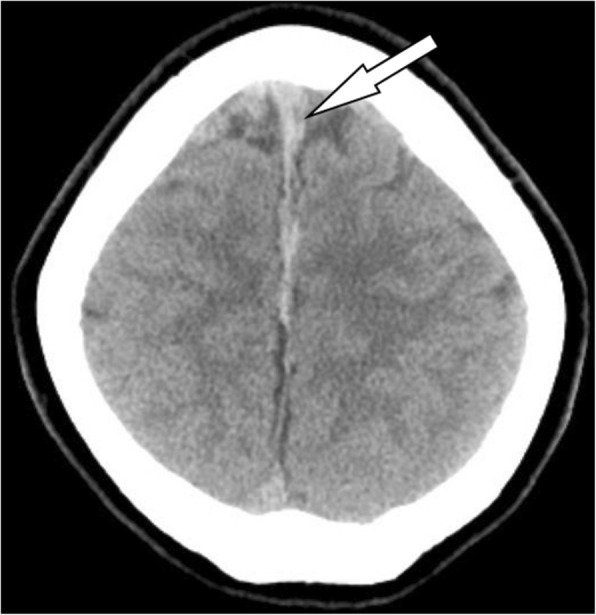
A woman presented to our emergency department complaining of a headache 4 days after receiving epidural anesthesia during uncomplicated childbirth. The headache's characteristics were consistent with a post dural puncture headache, and the patient was initially treated as such. Computed tomography later revealed the presence of bilateral intracranial subdural hematomas. In light of the patient's clinical status, treatment involved cautious observation only. Repeat imaging revealed spontaneous resolution of the hematomas, and the patient had a benign clinical course.
Headaches are common in the postpartum period, often after receiving epidural or spinal anesthesia. While exceptionally rare, intracranial subdural hematoma may occur as a complication of any procedure that results in spinal dural puncture. The possibility of this potentially life-threatening complication must be kept in mind when evaluating these patients.
因导致硬脊膜穿刺的操作而发生的颅内硬膜下血肿极为罕见,报告病例不足100例。这种情况通常最初被误诊为硬膜穿刺后头痛并按此进行治疗。
一名女性在顺产时接受硬膜外麻醉4天后因头痛前来我院急诊科就诊。头痛特点与硬膜穿刺后头痛相符,患者最初也按此进行治疗。随后的计算机断层扫描显示双侧颅内硬膜下血肿。鉴于患者的临床状况,治疗仅包括谨慎观察。重复影像学检查显示血肿自行消退,患者临床过程良好。
头痛在产后时期很常见,常在接受硬膜外或脊髓麻醉后出现。虽然极为罕见,但颅内硬膜下血肿可能作为任何导致硬脊膜穿刺的操作的并发症而发生。在评估这些患者时,必须牢记这种潜在危及生命的并发症的可能性。