Department of Biliary-Pancreatic Surgery, Renji Hospital, School of Medicine, Shanghai Jiao Tong University, 160 Pujian Road, Shanghai, 200127, China.
Department of Biochemistry and Molecular Cell Biology, Shanghai Key Laboratory of Tumor Microenvironment and Inflammation, Institutes of Medical Sciences, School of Medicine, Shanghai Jiao Tong University, Shanghai, 200025, China.
J Exp Clin Cancer Res. 2019 Jun 10;38(1):247. doi: 10.1186/s13046-019-1250-8.
Gallbladder cancer (GBC) is an extremely malignant tumor with a high mortality rate. Little is known about its invasion and metastasis mechanism so far.
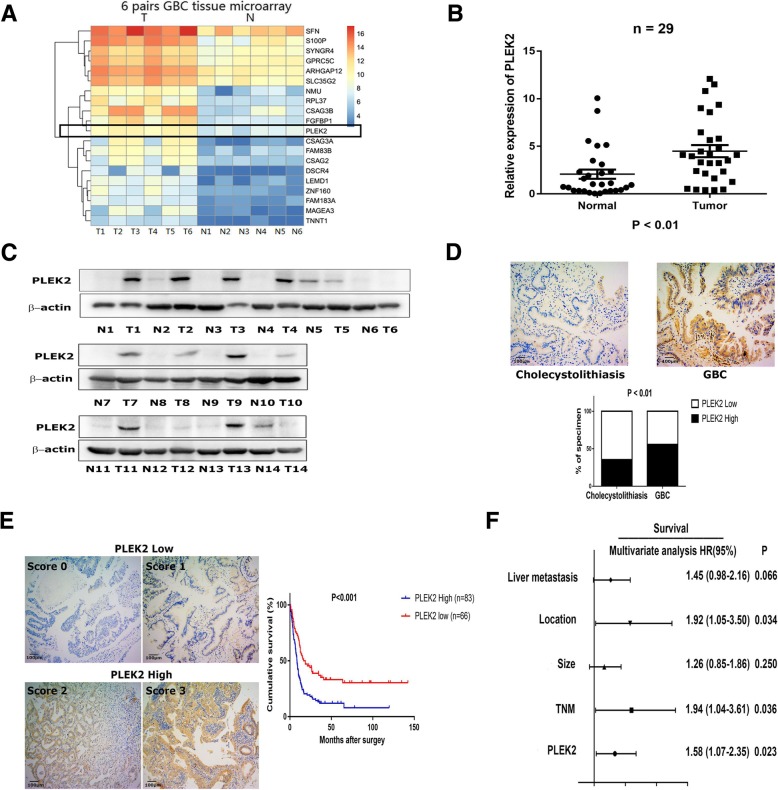
To identify the driver genes in GBC metastasis, we performed a mRNA microarray of metastatic GBC and paired non-tumor samples, and found PLEK2 was markedly upregulated in GBC tissues. Next, the expression of PLEK2 in GBC were examined in a larger cohort of patients by qRT-PCR, western blot and IHC staining. The clinicopathologic correlation of PLEK2 was determined by statistical analyses. The biological involvement of PLEK2 in GBC metastasis and the underlying mechanisms were investigated.
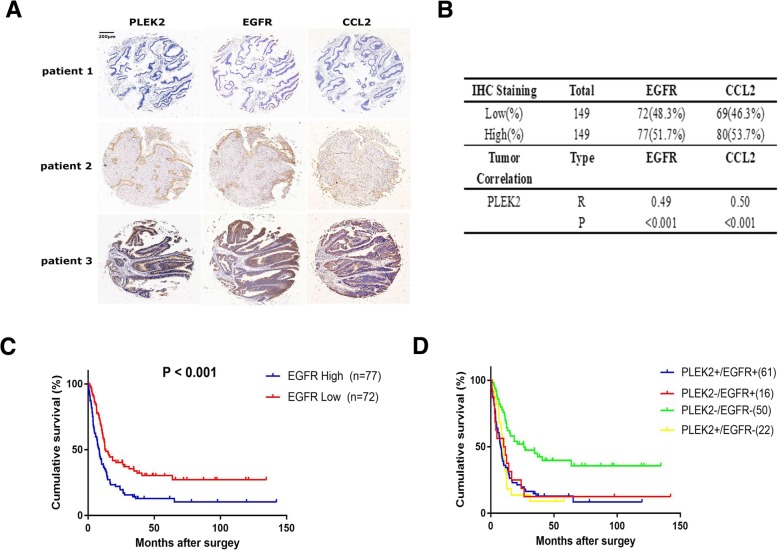
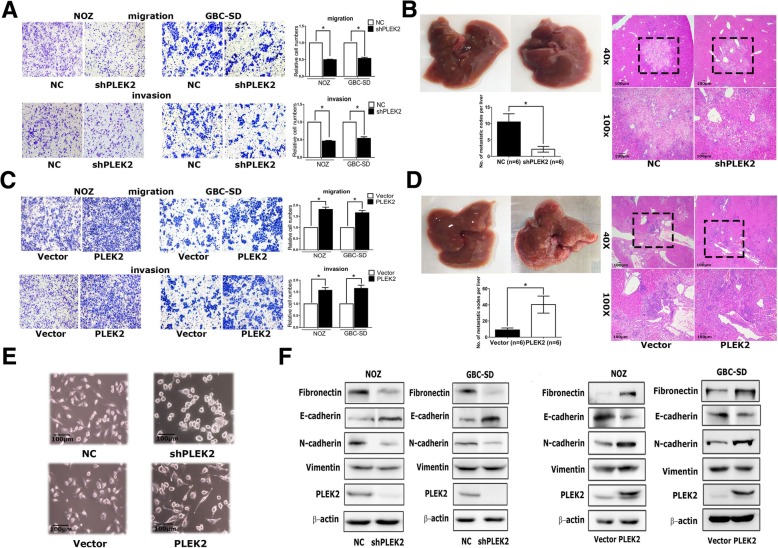
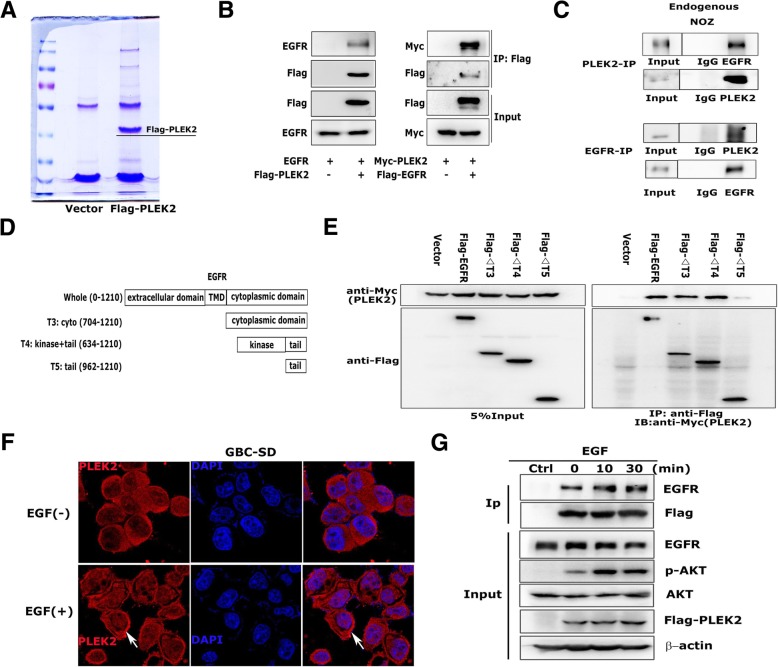
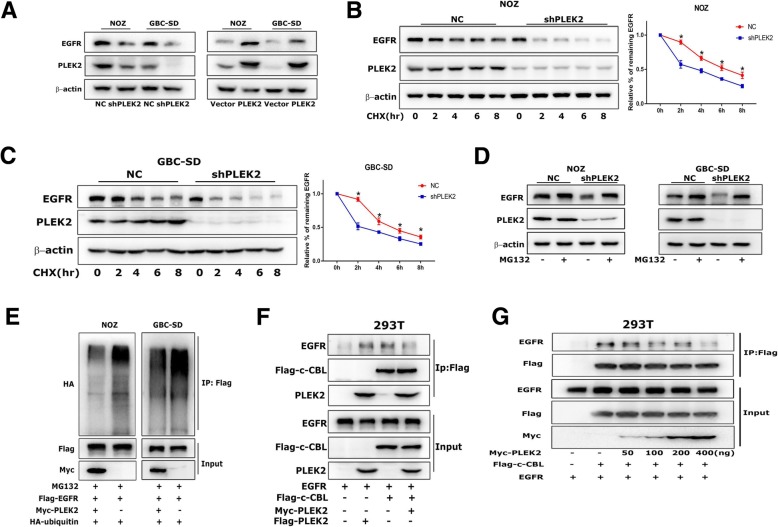
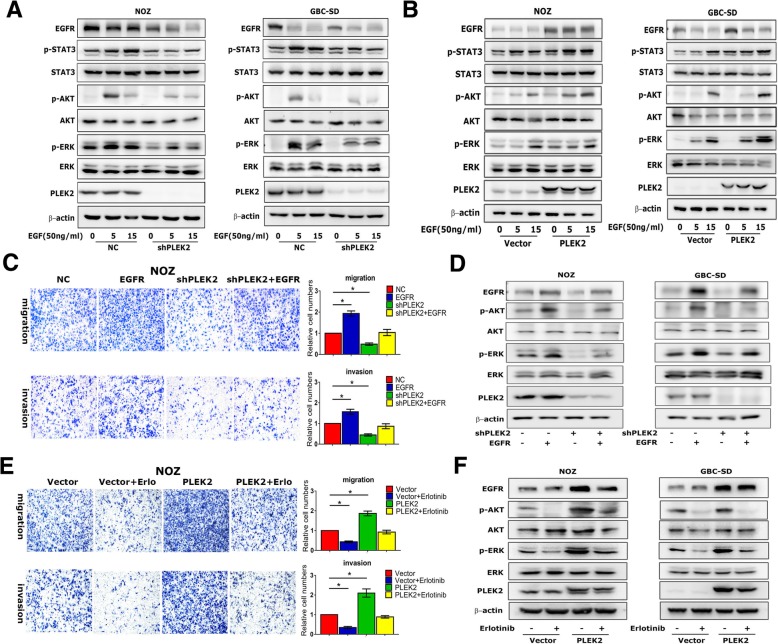
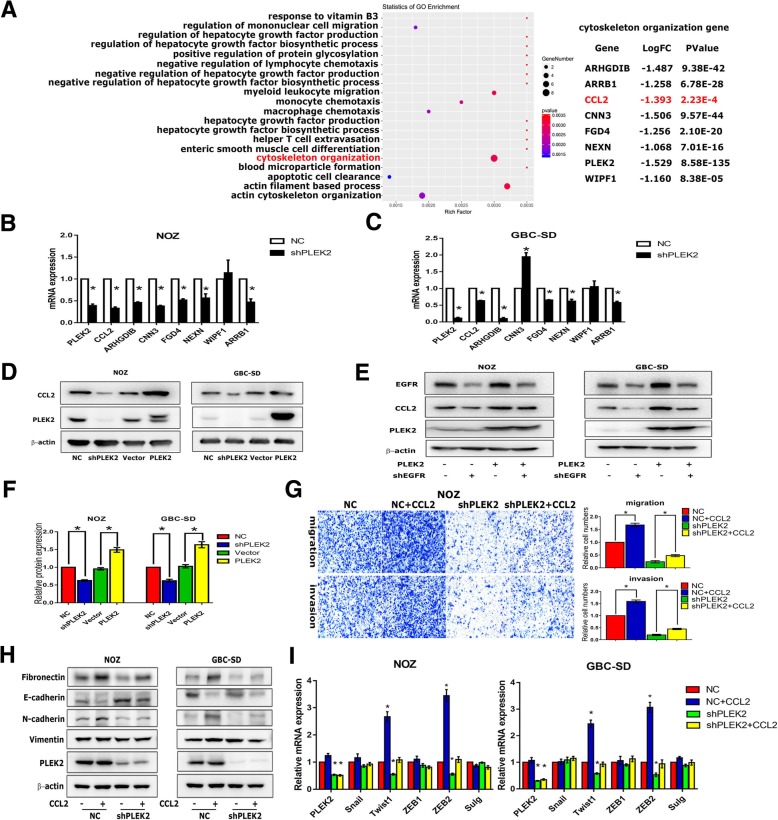
In this study, we found that PLEK2 had higher expression in GBC tumor tissues compared to non-cancerous adjacent tissues and cholecystolithiasis tissues. The clinicopathologic analyses showed PLEK2 expression was positively correlated with tumor TNM stage, distant metastasis and PLEK2 was an independent predictor of overall survival (OS) in GBC patients. The cellular function assays showed PLEK2 promoted GBC cells migration, invasion and liver metastasis in mouse model via the regulation of epithelial-mesenchymal transition (EMT) process. Our mass spectrum and co-immunoprecipitation (co-IP) assays demonstrated that PLEK2 could interact with the kinase domain of EGFR and suppress EGFR ubiquitination mediated by c-CBL, leading to constitutive activation of EGFR signaling. Furthermore, RNA-sequencing and qRT-PCR results demonstrated chemokine (C-C motif) ligand 2 (CCL2), a target gene downstream of PLEK2/EGFR signaling, mediated the motility-promoting function of PLEK2.
On the basis of these collective data, we propose that PLEK2 promotes the invasion and metastasis of GBC by EGFR/CCL2 pathway and PLEK2 can serve as a potential therapeutic target for GBC treatment.
胆囊癌(GBC)是一种恶性程度极高的肿瘤,死亡率很高。目前对其侵袭和转移机制知之甚少。
为了鉴定 GBC 转移中的驱动基因,我们对转移性 GBC 和配对的非肿瘤样本进行了 mRNA 微阵列分析,发现 PLEK2 在 GBC 组织中明显上调。接下来,我们通过 qRT-PCR、western blot 和 IHC 染色检测了更大的 GBC 患者队列中 PLEK2 的表达。通过统计分析确定了 PLEK2 的临床病理相关性。研究了 PLEK2 在 GBC 转移中的生物学作用及其潜在机制。
在这项研究中,我们发现 PLEK2 在 GBC 肿瘤组织中的表达高于非癌旁组织和胆石症组织。临床病理分析显示,PLEK2 的表达与肿瘤 TNM 分期、远处转移呈正相关,并且 PLEK2 是 GBC 患者总生存期(OS)的独立预测因子。细胞功能分析表明,PLEK2 通过调节上皮-间充质转化(EMT)过程促进 GBC 细胞迁移、侵袭和在小鼠模型中的肝转移。我们的质谱和免疫共沉淀(co-IP)实验表明,PLEK2 可以与 EGFR 的激酶结构域相互作用,并抑制 c-CBL 介导的 EGFR 泛素化,导致 EGFR 信号的组成性激活。此外,RNA-seq 和 qRT-PCR 结果表明,PLEK2 的下游靶基因趋化因子(C-C 基元)配体 2(CCL2)介导了 PLEK2 的促迁移功能。
基于这些综合数据,我们提出 PLEK2 通过 EGFR/CCL2 通路促进 GBC 的侵袭和转移,PLEK2 可以作为 GBC 治疗的潜在治疗靶点。