State & Local Joint Engineering Research Center of Green Pesticide Invention and Application, College of Plant Protection, Nanjing Agricultural University, Nanjing, China.
Department of Neurobiology, Duke University, Durham, United States.
Elife. 2019 Jun 11;8:e46165. doi: 10.7554/eLife.46165.
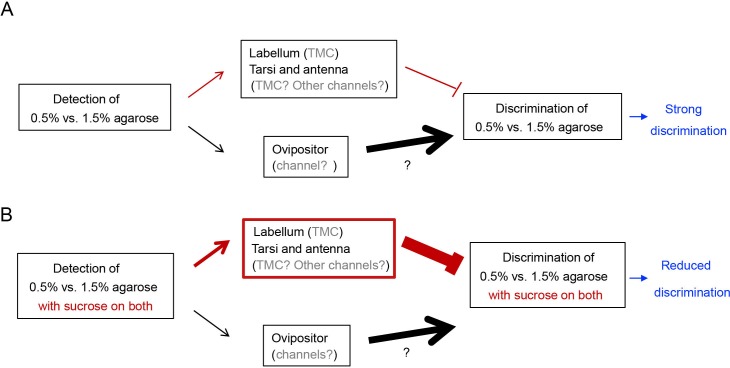
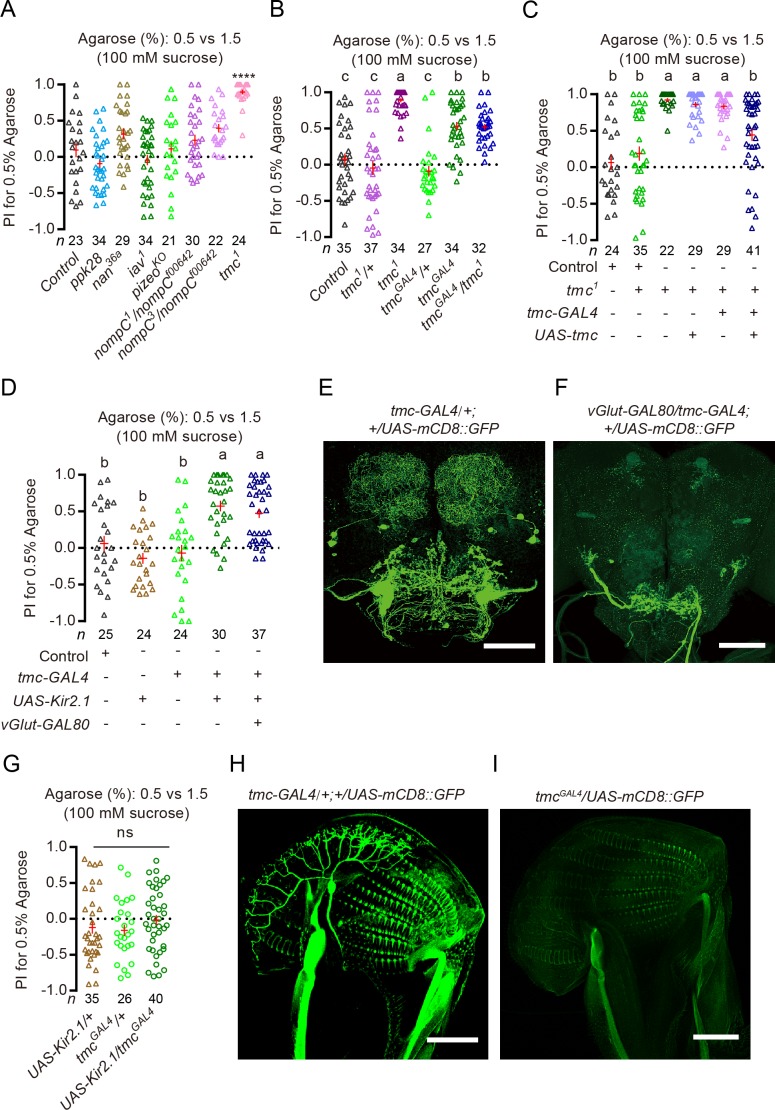
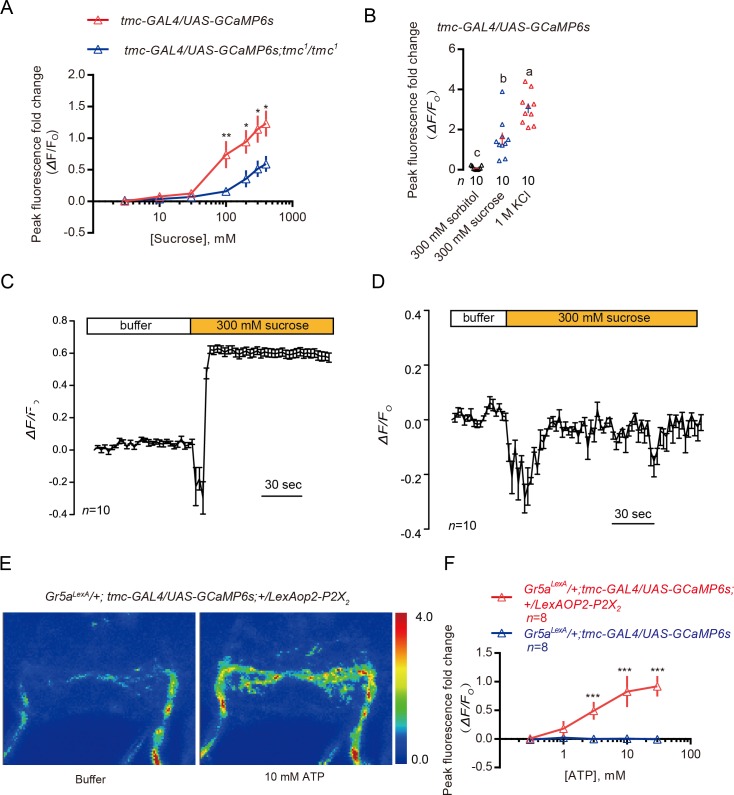
Integration of stimuli of different modalities is an important but incompletely understood process during decision making. Here, we show that are capable of integrating mechanosensory and chemosensory information of choice options when deciding where to deposit their eggs. Specifically, females switch from preferring the softer option for egg-laying when both options are sugar free to being indifferent between them when both contain sucrose. Such sucrose-induced indifference between options of different hardness requires functional sweet neurons, and, curiously, the Transmembrane Channel-like (TMC)-expressing mechanosensitive neurons that have been previously shown to promote discrimination of substrate hardness during feeding. Further, axons of sweet neurons directly contact axons of TMC-expressing neurons in the brain and stimulation of sweet neurons increases Ca influx into axons of TMC-expressing neurons. These results uncover one mechanism by which integrate taste and tactile information when deciding where to deposit their eggs and reveal that TMC-expressing neurons play opposing roles in hardness discrimination in two different decisions.
不同感觉模式的刺激整合是决策过程中的一个重要但尚未完全理解的过程。在这里,我们表明,在决定将卵产在哪里时,能够整合机械感觉和化学感觉信息。具体来说,当两个选项都无糖时,雌性会从更喜欢产卵的柔软选项转变为对两者都含有蔗糖的选项无差别。这种蔗糖诱导的不同硬度选项之间的无差别需要功能性甜味神经元,而且,有趣的是,先前已经表明表达跨膜通道样(TMC)的机械敏感神经元在进食时促进对基质硬度的辨别。此外,甜味神经元的轴突直接接触大脑中表达 TMC 的神经元的轴突,并且刺激甜味神经元会增加 TMC 表达神经元轴突中的钙内流。这些结果揭示了一种机制,即 在决定将卵产在哪里时整合味觉和触觉信息,并表明表达 TMC 的神经元在两个不同决策中的硬度辨别中发挥相反的作用。