Ueberall Michael A, Essner Ute, Mueller-Schwefe Gerhard Hh
Institute of Neurological Sciences, 90411 Nuernberg, Germany.
O.Meany Consultancy, 22339 Hamburg, Germany.
J Pain Res. 2019 May 20;12:1577-1604. doi: 10.2147/JPR.S192174. eCollection 2019.
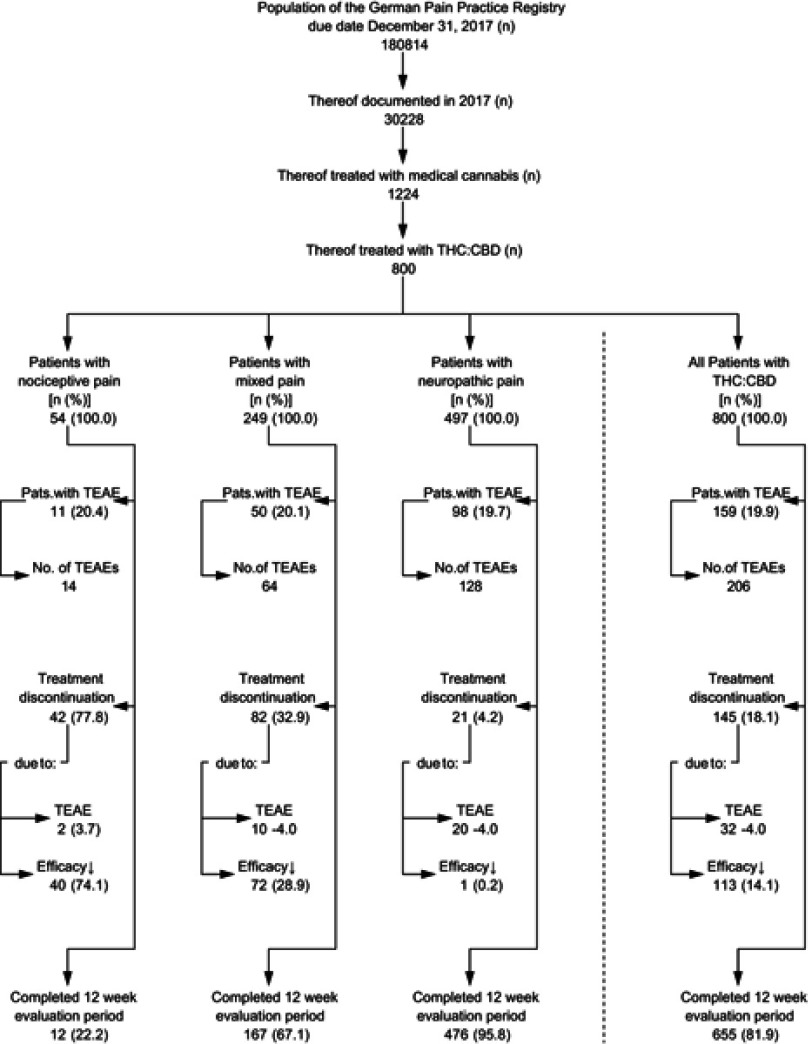
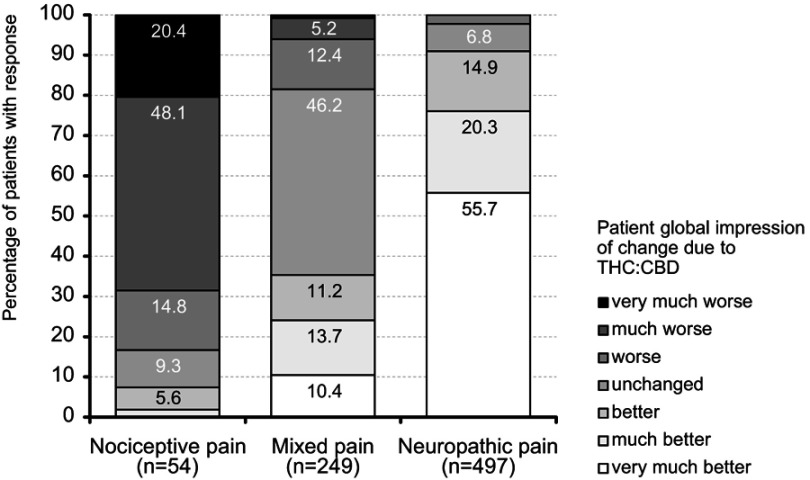
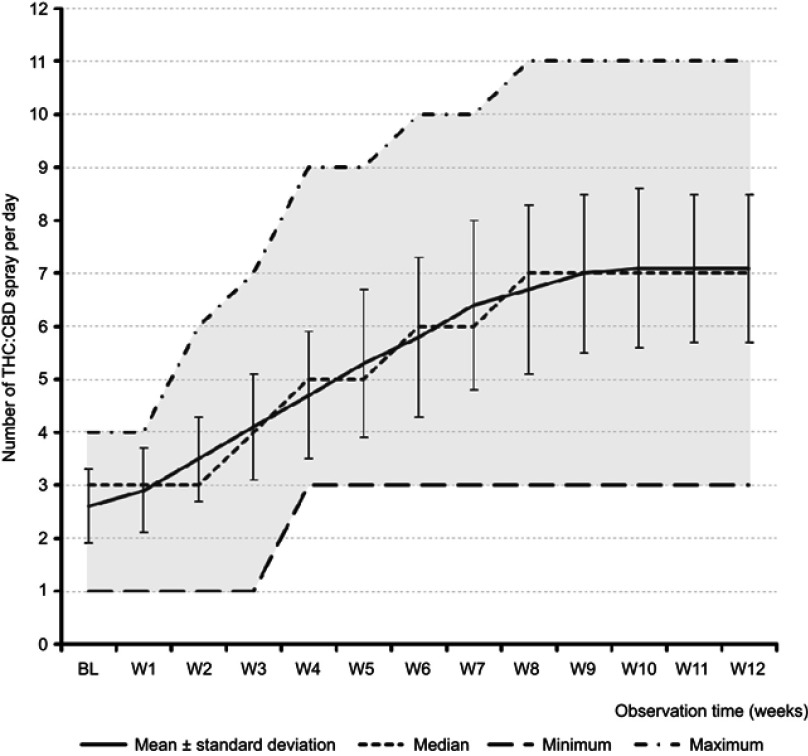
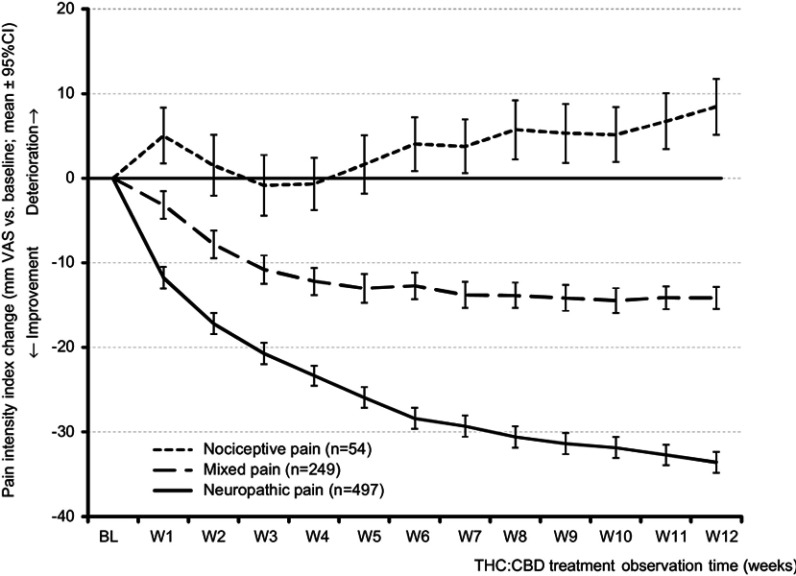
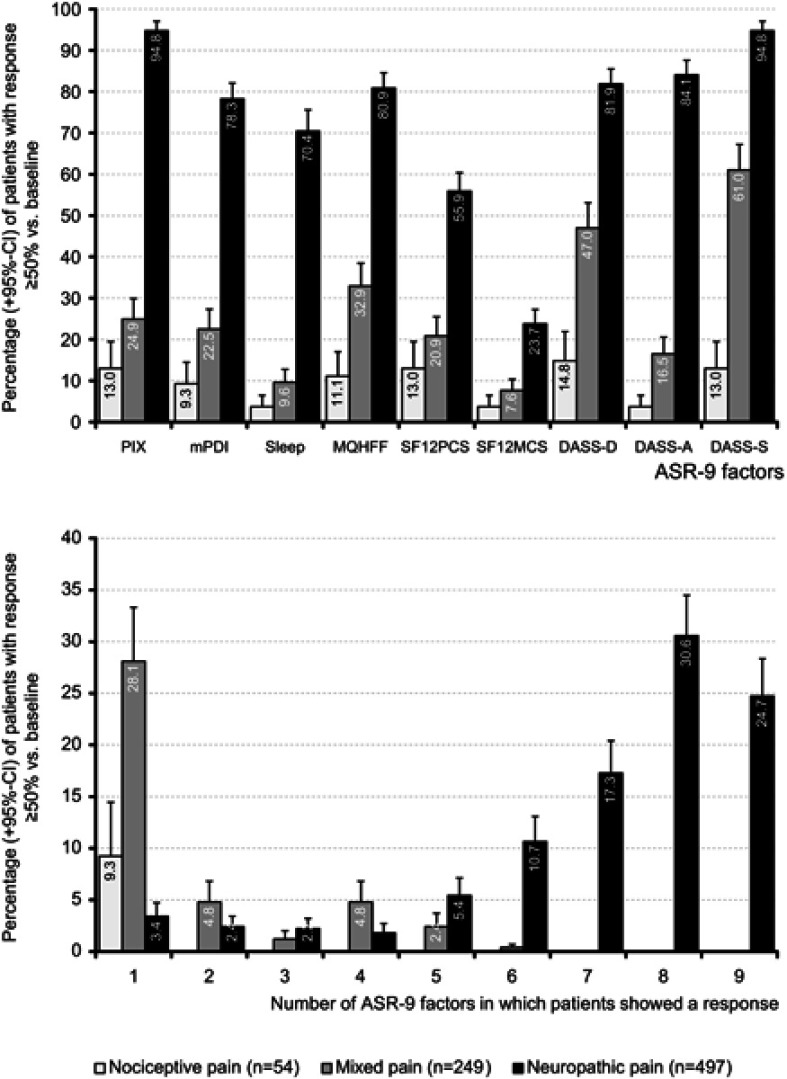
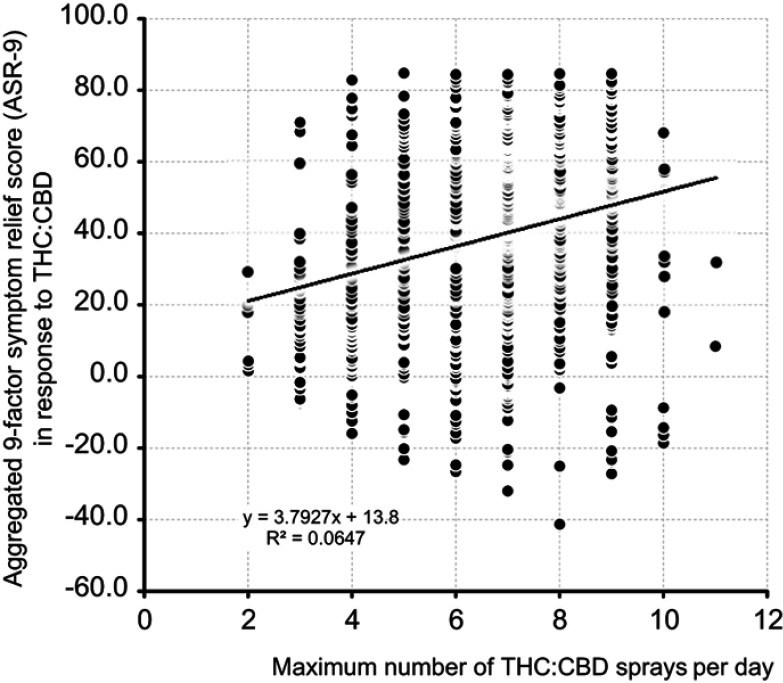
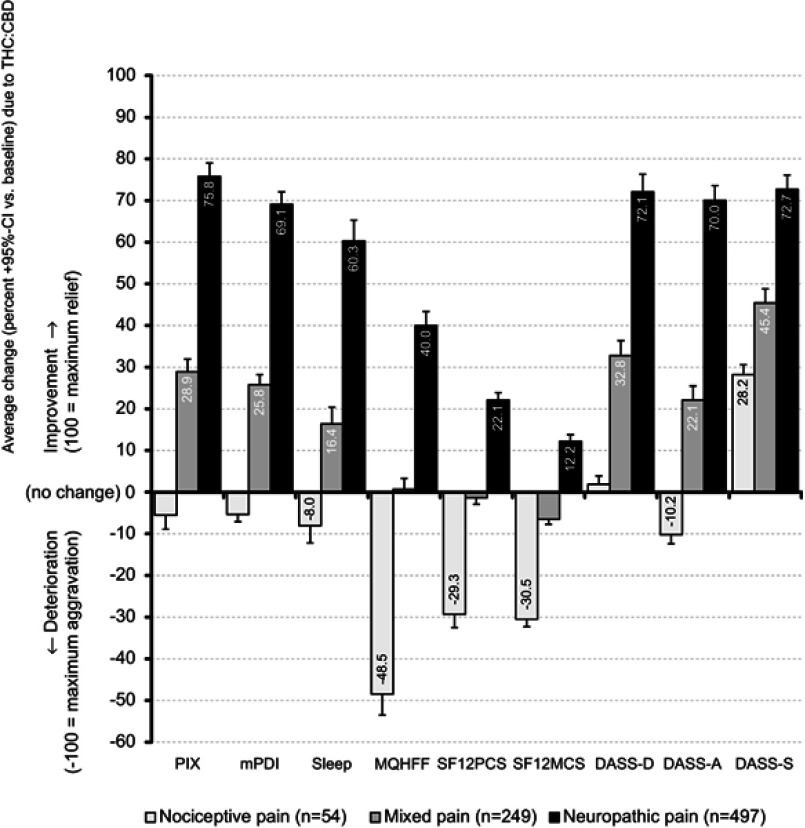
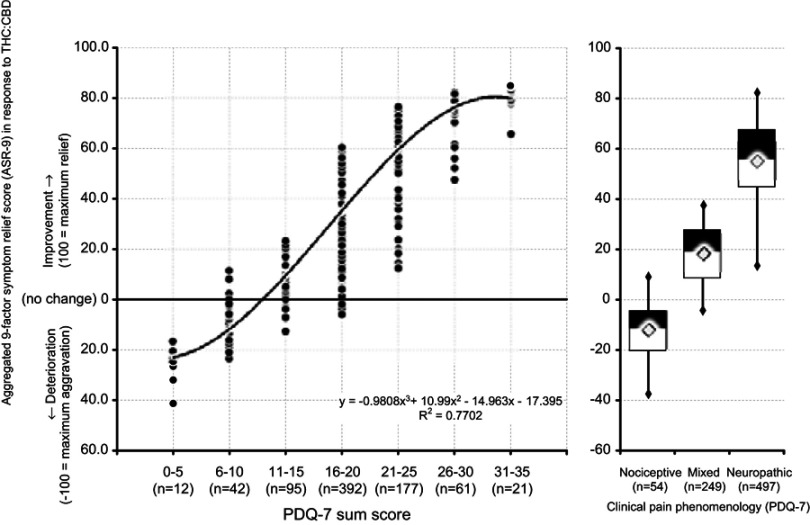
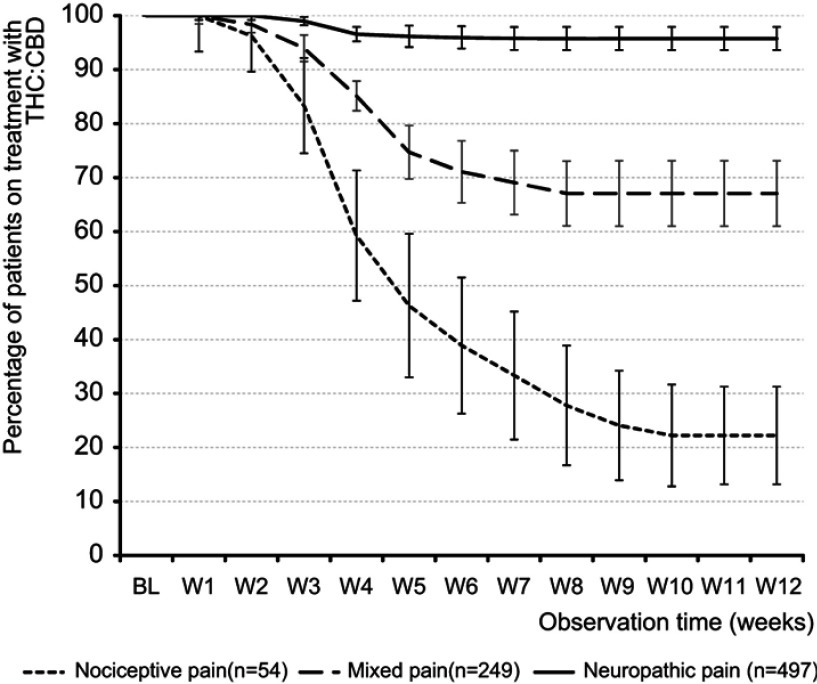
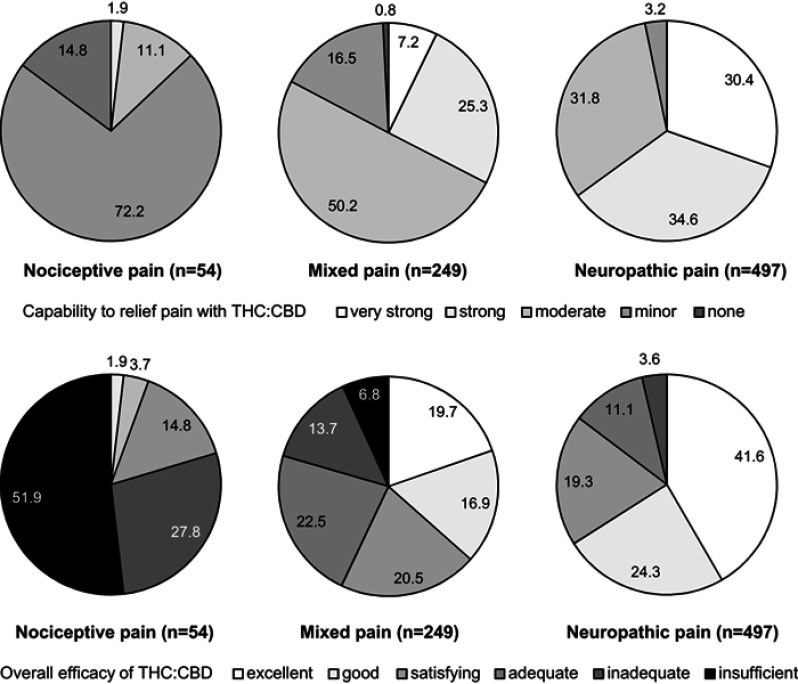
To evaluate effectiveness, tolerability and safety of an oromucosal spray containing Δ9-tetrahydrocannabinol (THC) and cannabidiol (CBD), as add-on treatment in patients with severe chronic pain (SCP). Exploratory analysis of anonymized 12-week routine/open-label data provided by the German Pain e-Registry (GPR) on adult SCP patients treated with THC:CBD oromucosal spray in 2017. Among those 30.228 cases documented in the GPR in 2017, 800 (2.6%; 57% female, mean ± SD age: 46.3±9.7 years) received a treatment with THC:CBD. All patients fulfilled the legislative preconditions for a treatment with cannabis as medicine as defined by the German Act Amending Narcotics and Other Regulations. THC:CBD-treatment was followed by an aggregated nine-factor symptom relief (ASR-9) improvement at end of week 12 vs baseline of 39.0±26.5% (95%-CI: 36.9-41.1, median: 42, range -41 to 85). A full ASR-9 response (ie, a 50%-improvement in all 9 factors) was found for 123 patients (15.4%), while 488 patients (56.0%) presented with an ≥50% improvement in at least 5 of 9 ASR factors. With a 54.9±17.2% (median: 56%, range: -6 to 85) improvement was significantly superior in the neuropathic pain subgroup (n=497, 62.1%) vs those with mixed (n=249, 31.1%; ASR-9: 18.2±12.0, median: 19, range: -12 to 42%) or nociceptive pain (n=54, 6.8%; ASR-9: -11.9±10.5, median: -11, range: -41% to 12%; <0.001 for each). 159 patients (19.9%) reported at least one of 206 TEAEs, most of them of mild intensity (n=81.6%). Most frequently reported TEAEs were increased appetite (n=50, 6.3%) and dysgeusia (n=23, 2.9%). TEAE-related discontinuations were reported for 32 patients (4.0%). 113 (14.1%) patients discontinued due to inadequate pain relief, most of them with nociceptive pain (n=40, 74.1%), least with neuropathic pain (n=1, 0.2%; <0.001). THC:CBD oromucosal spray proved to be an effective and well-tolerated add-on treatment for patients with elsewhere refractory chronic pain - especially of neuropathic origin.
评估含Δ9-四氢大麻酚(THC)和大麻二酚(CBD)的口腔黏膜喷雾剂作为重度慢性疼痛(SCP)患者附加治疗的有效性、耐受性和安全性。对德国疼痛电子注册中心(GPR)提供的2017年接受THC:CBD口腔黏膜喷雾剂治疗的成年SCP患者的12周常规/开放标签匿名数据进行探索性分析。在2017年GPR记录的30228例病例中,800例(2.6%;57%为女性,平均±标准差年龄:46.3±9.7岁)接受了THC:CBD治疗。所有患者均符合德国《麻醉品及其他法规修订法案》所定义的大麻作为药物治疗的法律前提条件。与基线相比,在第12周结束时,接受THC:CBD治疗的患者综合九因素症状缓解(ASR-9)改善了39.0±26.5%(95%置信区间:36.9-41.1,中位数:42,范围-41至85)。123例患者(15.4%)实现了ASR-9完全缓解(即所有9个因素均改善50%),而488例患者(56.0%)在9个ASR因素中的至少5个因素上改善了≥50%。神经病理性疼痛亚组(n=497,62.1%)的改善率为54.9±17.2%(中位数:56%,范围:-6至85),显著优于混合性疼痛亚组(n=249,31.1%;ASR-9:18.2±12.0,中位数:19,范围:-12至42%)或伤害性疼痛亚组(n=54,6.8%;ASR-9:-11.9±10.5,中位数:-11,范围:-41%至12%;各亚组间P<0.001)。159例患者(19.9%)报告了206种治疗中出现的不良事件(TEAE)中的至少一种,其中大多数为轻度(n=81.6%)。最常报告的TEAE是食欲增加(n=50,6.3%)和味觉障碍(n=23,2.9%)。32例患者(4.0%)报告了与TEAE相关的停药情况。113例(14.1%)患者因疼痛缓解不足而停药,其中大多数为伤害性疼痛患者(n=40,74.1%),最少为神经病理性疼痛患者(n=1,0.2%;P<0.001)。THC:CBD口腔黏膜喷雾剂被证明是一种对其他治疗难治的慢性疼痛患者,尤其是神经病理性疼痛患者有效的且耐受性良好的附加治疗方法。