Goepfert Katrin, Dinsart Christiane, Rommelaere Jean, Foerster Friedrich, Moehler Markus
Department of Medicine I, University Medical Center of the Johannes Gutenberg University Mainz, Mainz, Germany.
Infection, Inflammation and Cancer Program, Tumor Virology Division (F010), German Cancer Research Center (DKFZ), Heidelberg, Germany.
Front Oncol. 2019 May 28;9:425. doi: 10.3389/fonc.2019.00425. eCollection 2019.
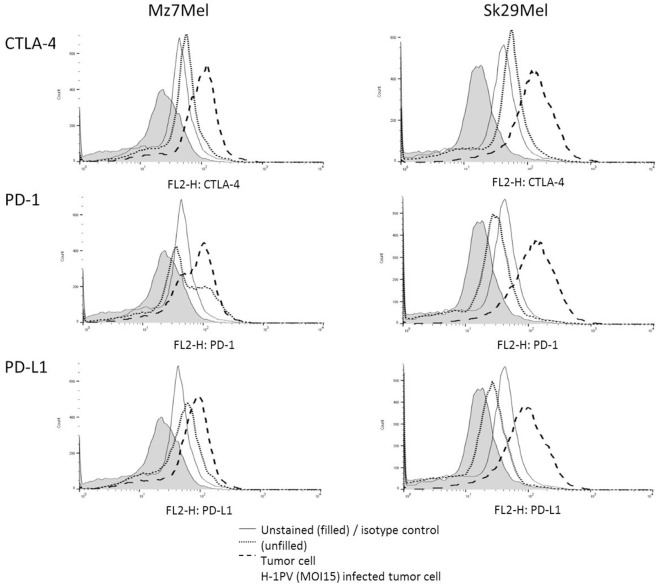
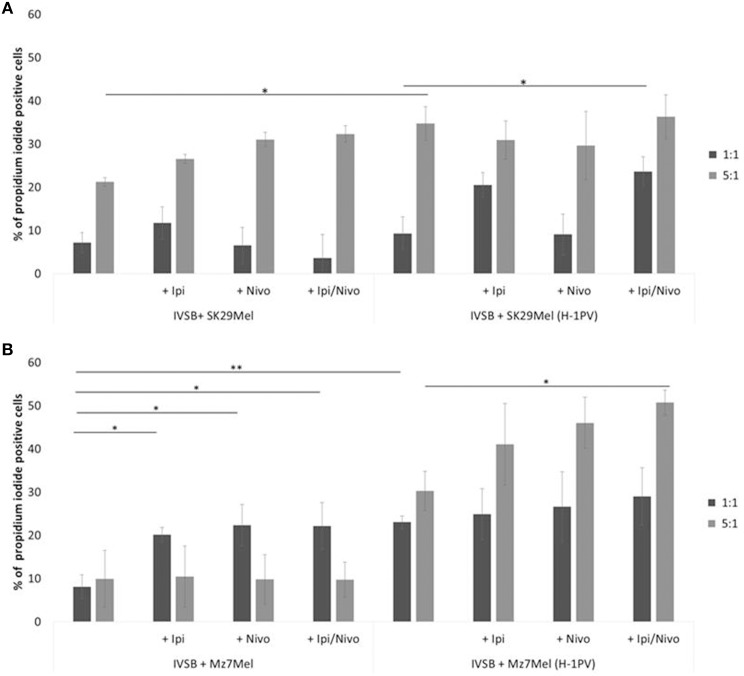
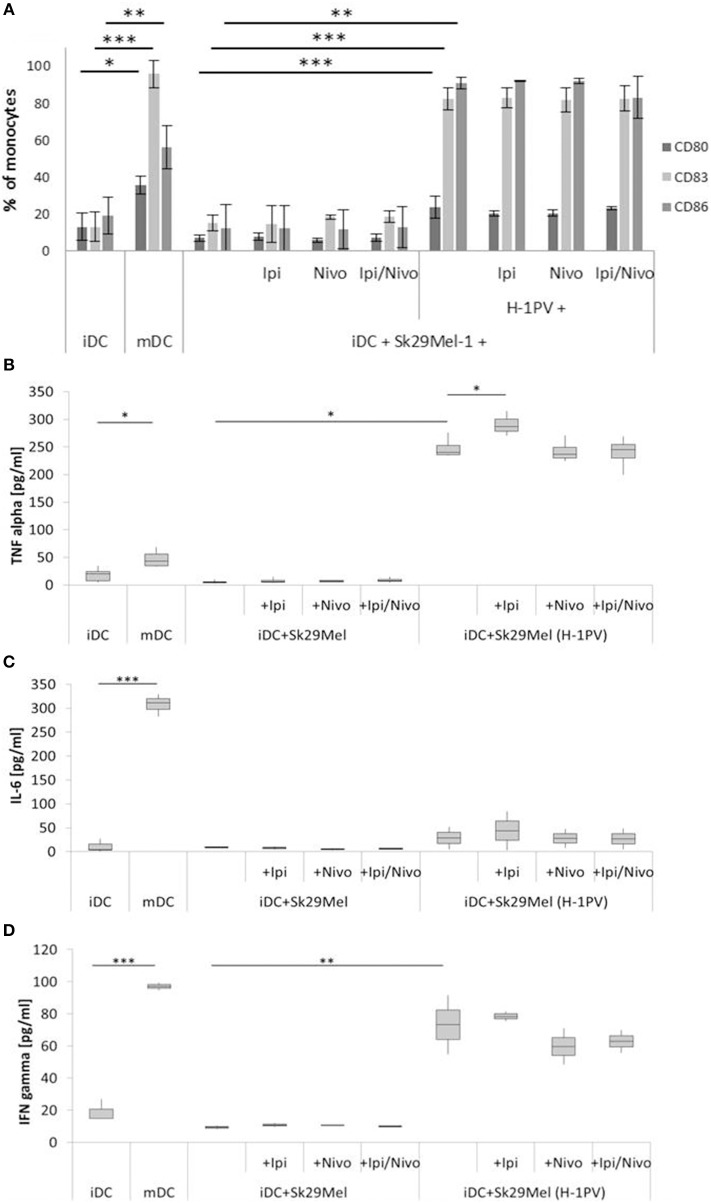
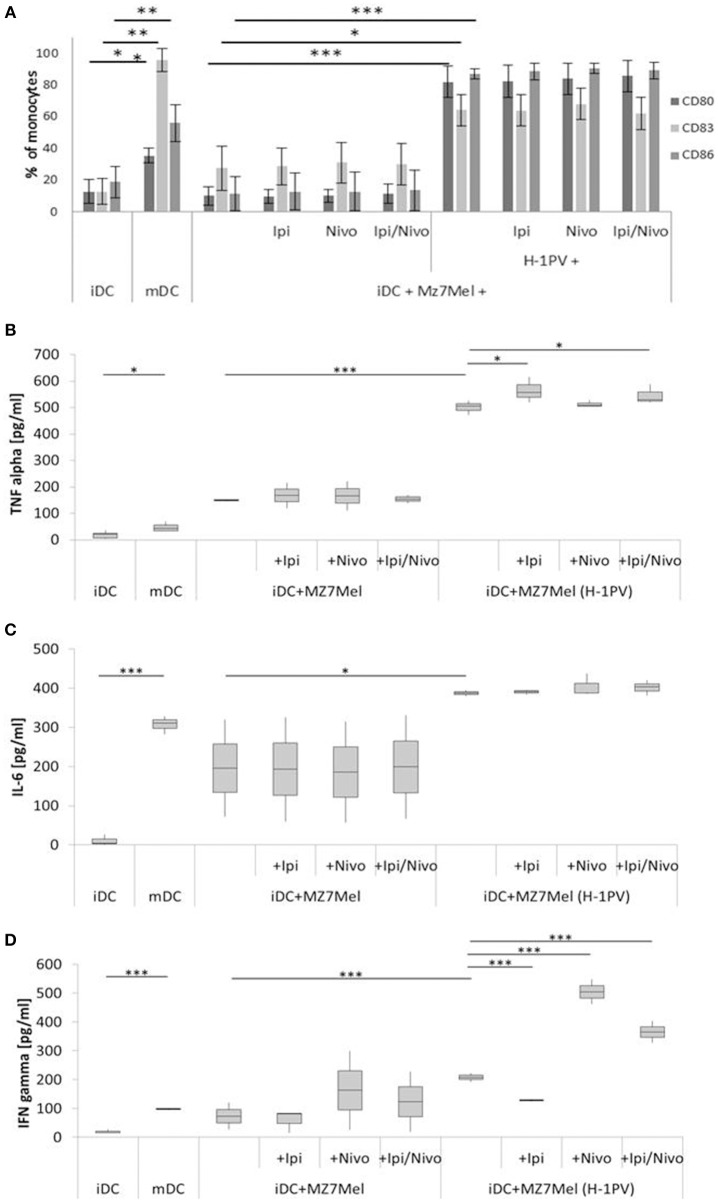
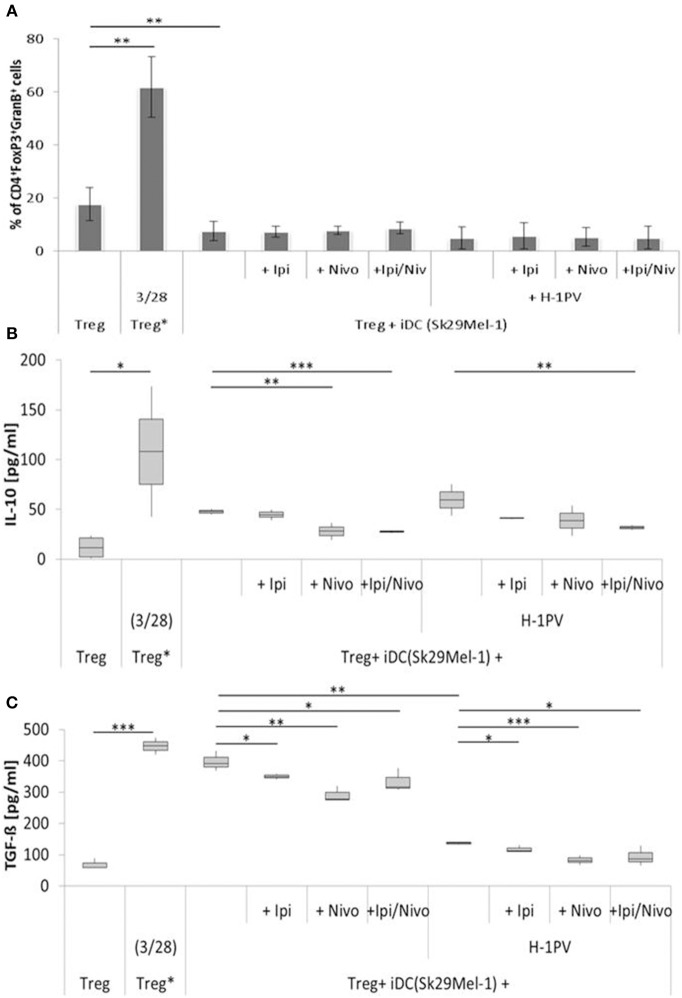
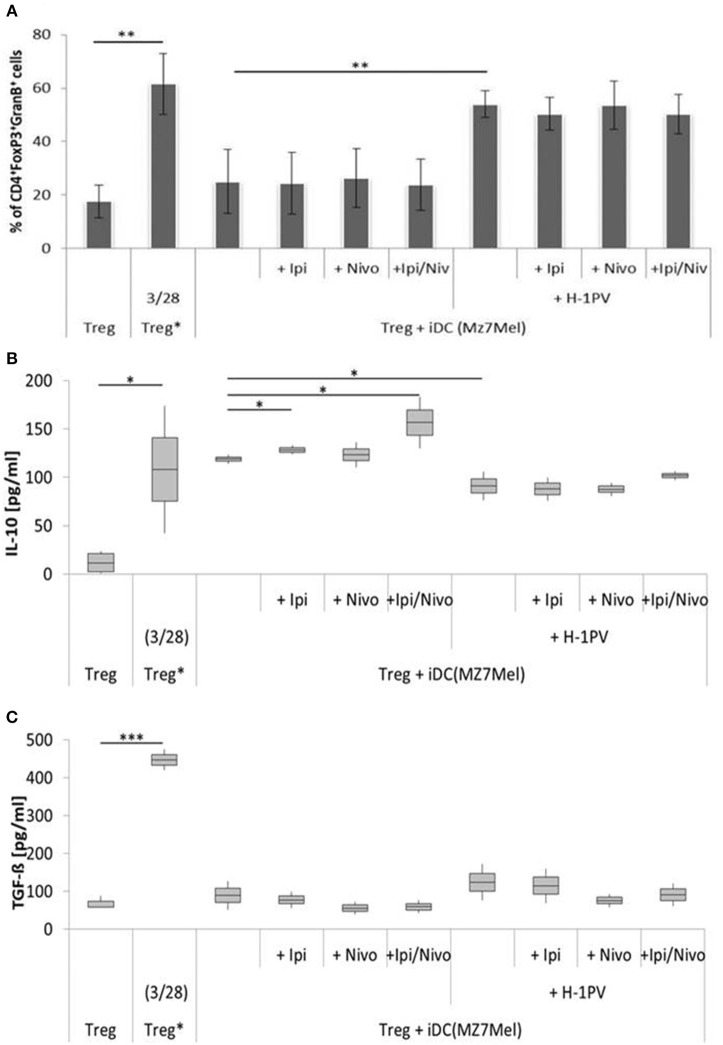
The recent therapeutic success of immune checkpoint inhibitors in the treatment of advanced melanoma highlights the potential of cancer immunotherapy. Oncolytic virus-based therapies may further improve the outcome of these cancer patients. A human melanoma model was used to investigate the oncolytic parvovirus H-1 (H-1PV) in combination with ipilimumab and/or nivolumab. The effect of this combination on activation of human T lymphocytes was demonstrated. Expression of CTLA-4, PD-1, and PD-L1 immune checkpoint proteins was upregulated in H-1PV-infected melanoma cells. Nevertheless, maturation of antigen presenting cells such as dendritic cells was triggered by H-1PV infected melanoma cells. Combining H-1PV with checkpoint inhibitors, ipilimumab enhanced TNFα release during maturation of dendritic cells; nivolumab increased the amount of IFNγ release. H-1PV mediated reduction of regulatory T cell activity was demonstrated by lower TGF-ß levels. The combination of ipilimumab and nivolumab resulted in a further decline of TGF-ß levels. Similar results were obtained regarding the activation of cytotoxic T cells. H-1PV infection alone and in combination with both checkpoint inhibitors caused strong activation of CTLs, which was reflected by an increased number of CD8GranB cells and increased release of granzyme B, IFNγ, and TNFα. Our data support the concept of a treatment benefit from combining oncolytic H-1PV with the checkpoint inhibitors ipilimumab and nivolumab, with nivolumab inducing stronger effects on cytotoxic T cells, and ipilimumab strengthening T lymphocyte activity.
免疫检查点抑制剂在晚期黑色素瘤治疗中近期取得的治疗成功凸显了癌症免疫疗法的潜力。基于溶瘤病毒的疗法可能会进一步改善这些癌症患者的治疗结果。使用人黑色素瘤模型研究溶瘤细小病毒H-1(H-1PV)与伊匹单抗和/或纳武单抗联合使用的情况。证明了这种联合对人T淋巴细胞激活的作用。在H-1PV感染的黑色素瘤细胞中,CTLA-4、PD-1和PD-L1免疫检查点蛋白的表达上调。然而,H-1PV感染的黑色素瘤细胞触发了抗原呈递细胞如树突状细胞的成熟。将H-1PV与检查点抑制剂联合使用时,伊匹单抗在树突状细胞成熟过程中增强了TNFα的释放;纳武单抗增加了IFNγ的释放量。较低的TGF-β水平证明了H-1PV介导的调节性T细胞活性降低。伊匹单抗和纳武单抗联合使用导致TGF-β水平进一步下降。关于细胞毒性T细胞的激活也获得了类似结果。单独的H-1PV感染以及与两种检查点抑制剂联合使用均引起细胞毒性T淋巴细胞的强烈激活,这表现为CD8GranB细胞数量增加以及颗粒酶B释放增加、IFNγ和TNFα释放增加。我们的数据支持溶瘤性H-1PV与检查点抑制剂伊匹单抗和纳武单抗联合使用具有治疗益处的概念,其中纳武单抗对细胞毒性T细胞诱导更强的作用,而伊匹单抗增强T淋巴细胞活性。