Angelova Assia, Ferreira Tiago, Bretscher Clemens, Rommelaere Jean, Marchini Antonio
German Cancer Research Center (DKFZ), Research Program Infection, Inflammation and Cancer, Clinical Cooperation Unit Virotherapy, Im Neuenheimer Feld 242, 69120 Heidelberg, Germany.
German Cancer Research Center (DKFZ), Laboratory of Oncolytic-Virus-Immunotherapeutics (LOVIT), Im Neuenheimer Feld 242, 69120 Heidelberg, Germany.
Cancers (Basel). 2021 Jan 19;13(2):342. doi: 10.3390/cancers13020342.
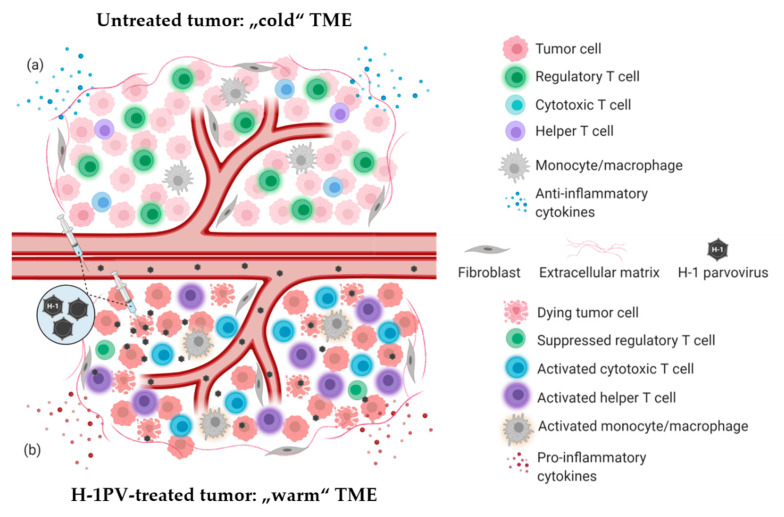
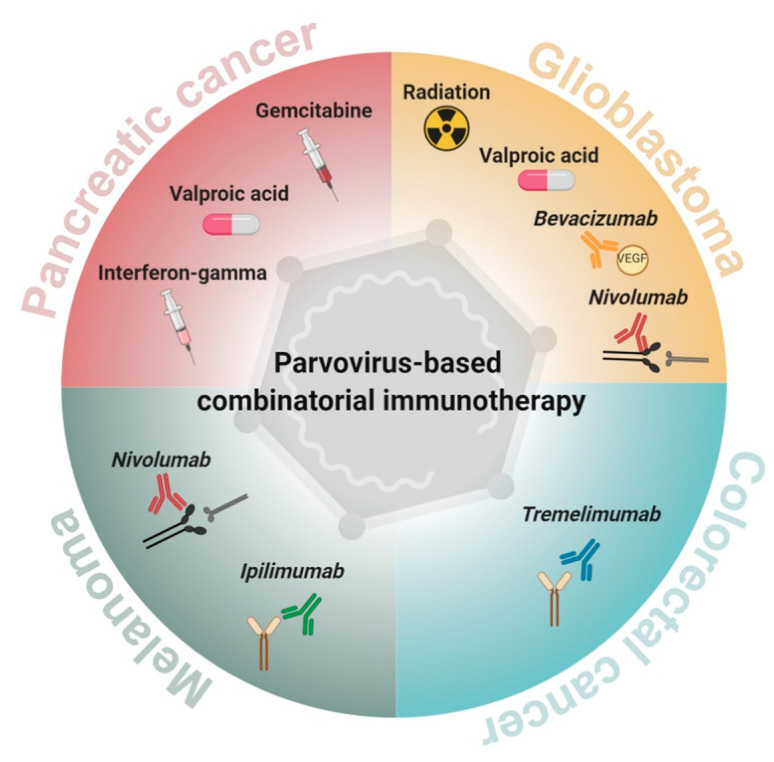
Resistance to anticancer treatments poses continuing challenges to oncology researchers and clinicians. The underlying mechanisms are complex and multifactorial. However, the immunologically "cold" tumor microenvironment (TME) has recently emerged as one of the critical players in cancer progression and therapeutic resistance. Therefore, TME modulation through induction of an immunological switch towards inflammation ("warming up") is among the leading approaches in modern oncology. Oncolytic viruses (OVs) are seen today not merely as tumor cell-killing (oncolytic) agents, but also as cancer therapeutics with multimodal antitumor action. Due to their intrinsic or engineered capacity for overcoming immune escape mechanisms, warming up the TME and promoting antitumor immune responses, OVs hold the potential for creating a proinflammatory background, which may in turn facilitate the action of other (immunomodulating) drugs. The latter provides the basis for the development of OV-based immunostimulatory anticancer combinations. This review deals with the smallest among all OVs, the H-1 parvovirus (H-1PV), and focuses on H-1PV-based combinatorial approaches, whose efficiency has been proven in preclinical and/or clinical settings. Special focus is given to cancer types with the most devastating impact on life expectancy that urgently call for novel therapies.
对抗癌治疗的耐药性持续给肿瘤学研究人员和临床医生带来挑战。其潜在机制复杂且多因素。然而,免疫“冷”肿瘤微环境(TME)最近已成为癌症进展和治疗耐药性的关键因素之一。因此,通过诱导免疫转变为炎症(“升温”)来调节TME是现代肿瘤学的主要方法之一。溶瘤病毒(OVs)如今不仅被视为肿瘤细胞杀伤(溶瘤)剂,还被视为具有多模式抗肿瘤作用的癌症治疗药物。由于其内在或工程化的克服免疫逃逸机制、使TME升温并促进抗肿瘤免疫反应的能力,OVs具有创造促炎背景的潜力,这反过来可能促进其他(免疫调节)药物的作用。后者为基于OV的免疫刺激抗癌联合疗法的开发提供了基础。本综述探讨了所有OVs中最小的H-1细小病毒(H-1PV),并重点关注基于H-1PV的联合方法,其有效性已在临床前和/或临床环境中得到证实。特别关注对预期寿命影响最大且迫切需要新疗法的癌症类型。